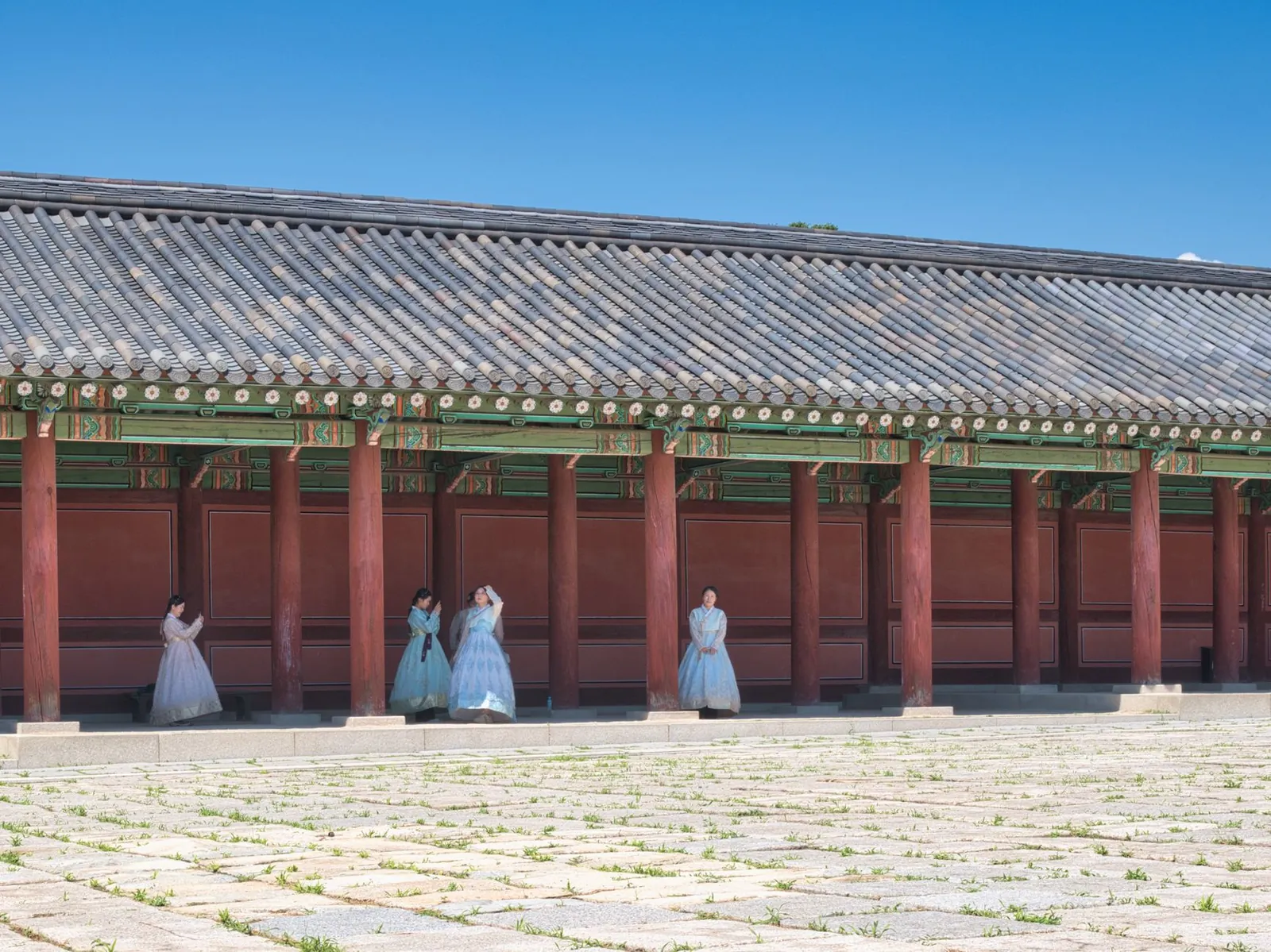
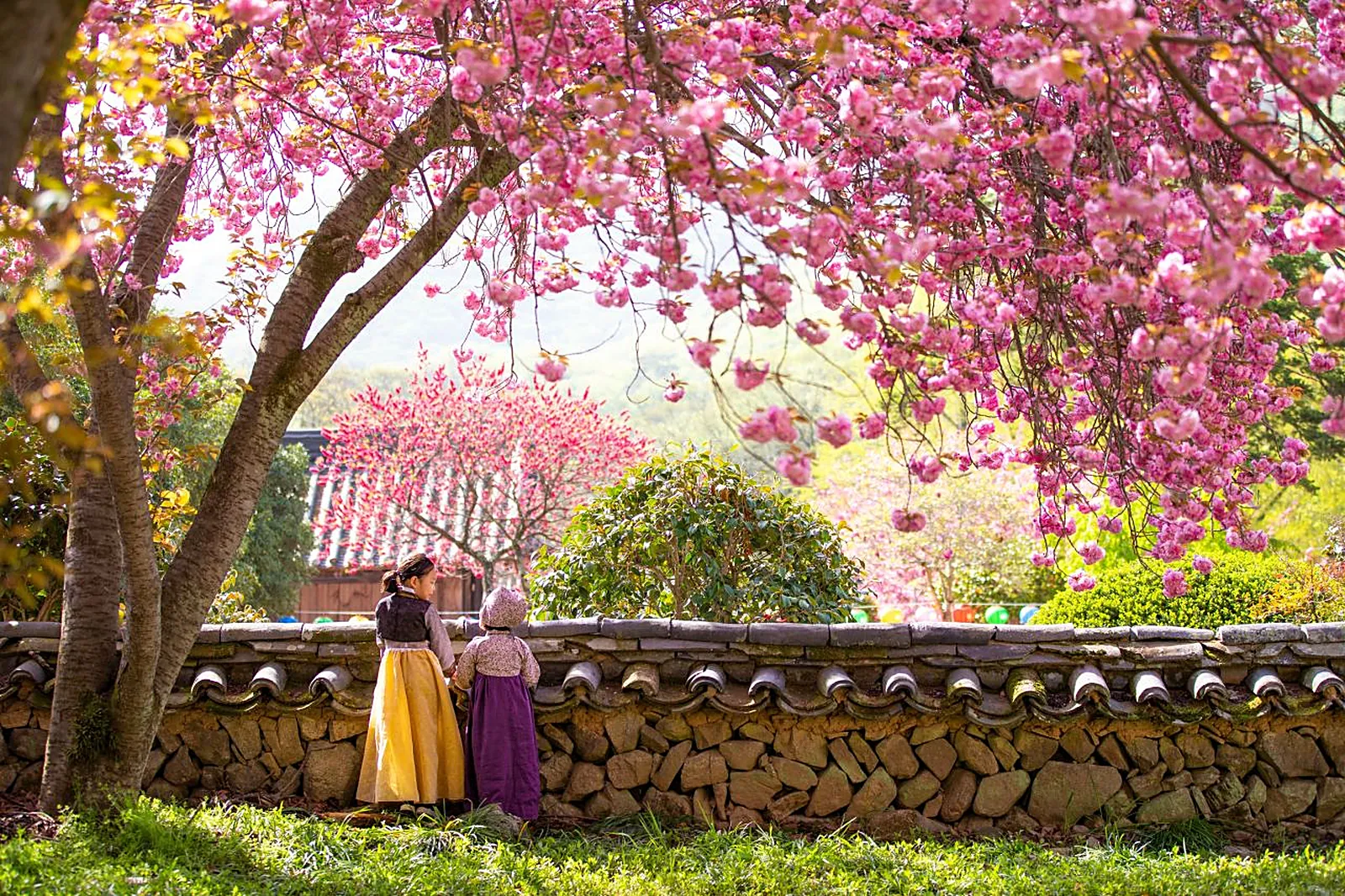
One of Seoul's loveliest traditions is also a small bargain: wear a hanbok, the traditional Korean dress, and you get into the royal palaces for free. What started as a way to encourage interest in Korean heritage has turned into one of the city's most popular experiences — and on a sunny spring or autumn day, the palace courtyards are full of colour.
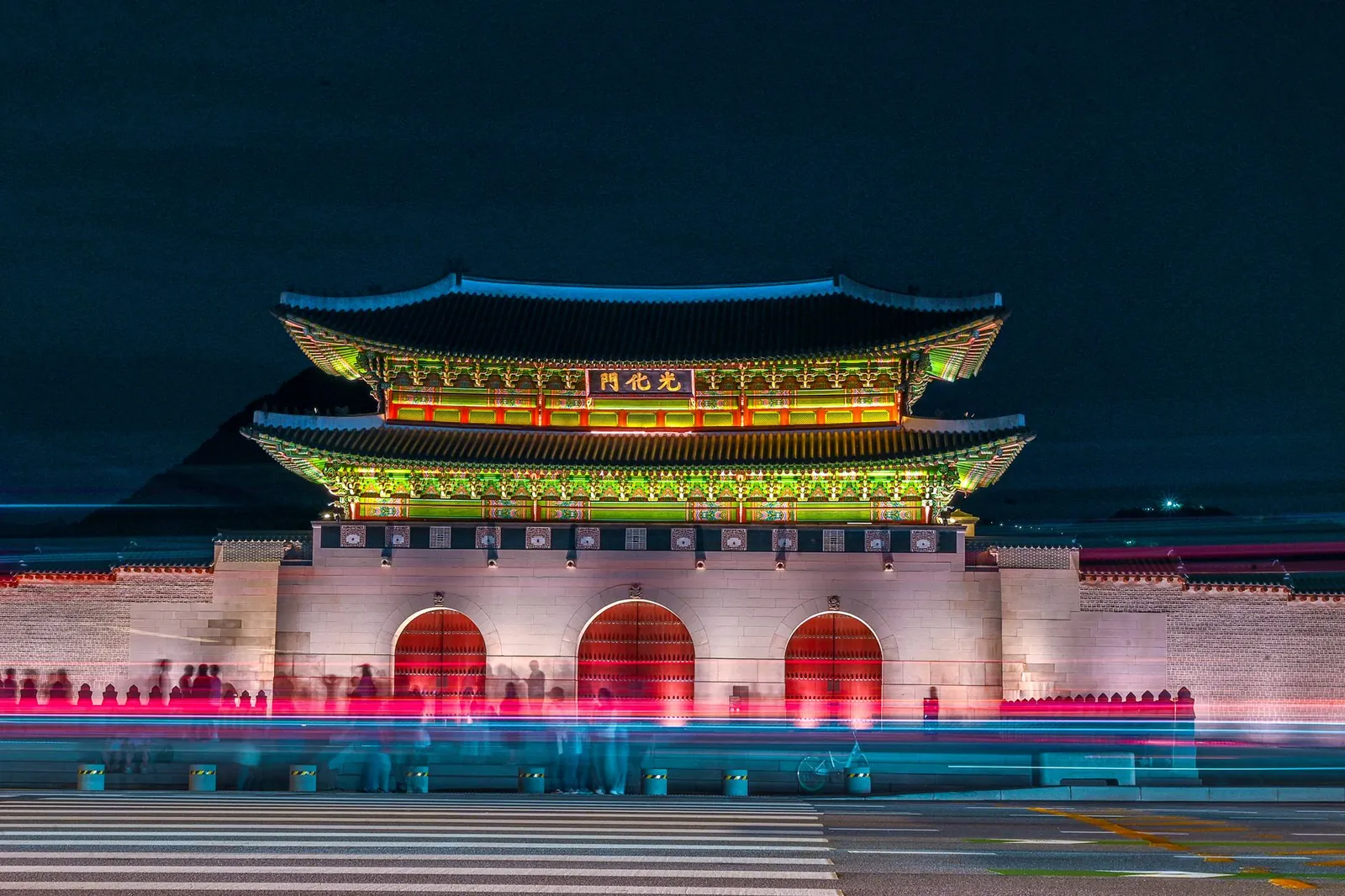
Where the free entry applies
Wearing a hanbok gets you free admission at:
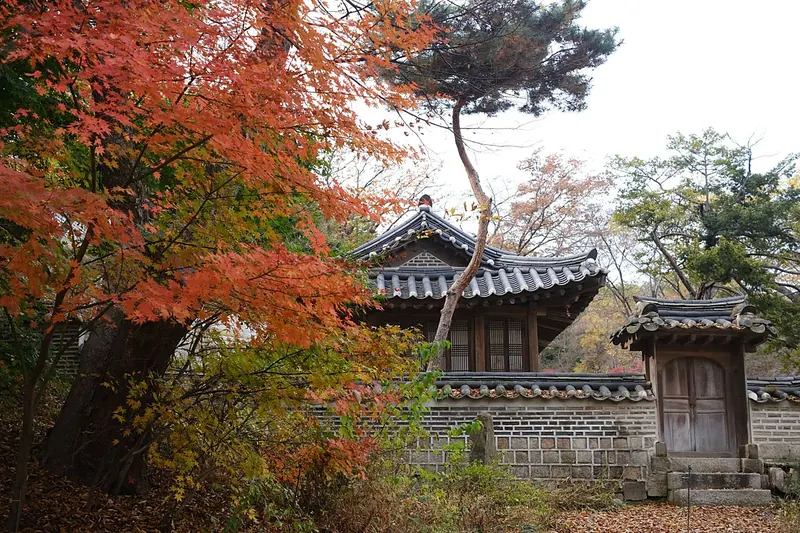
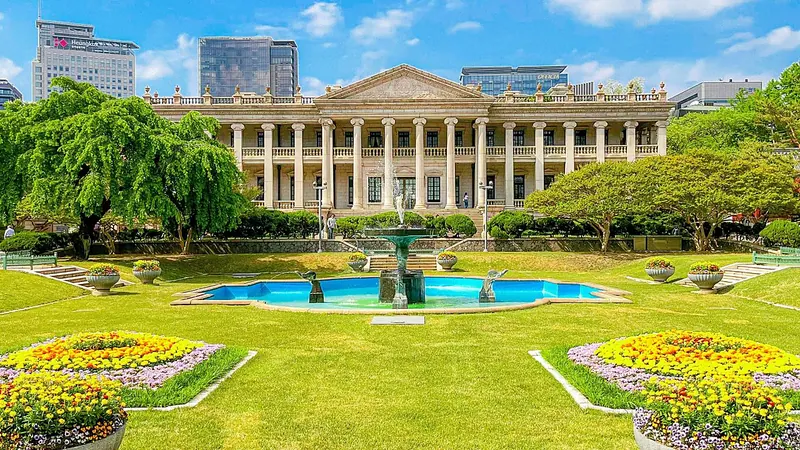
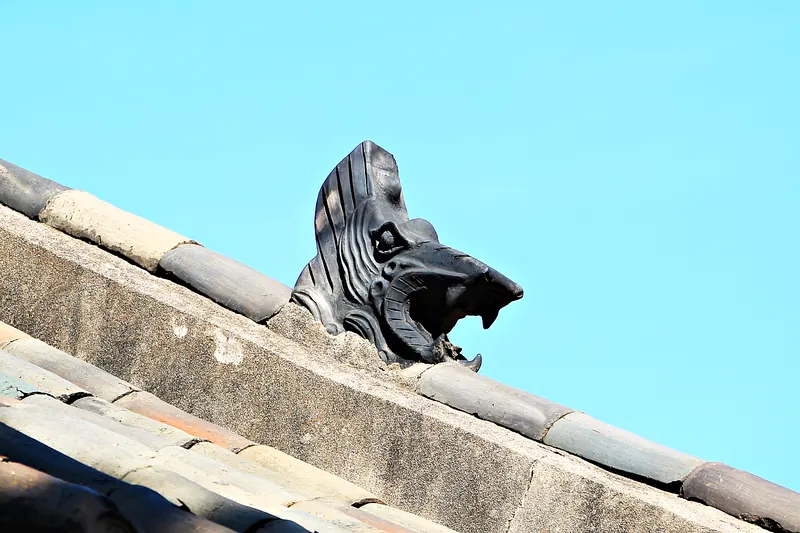
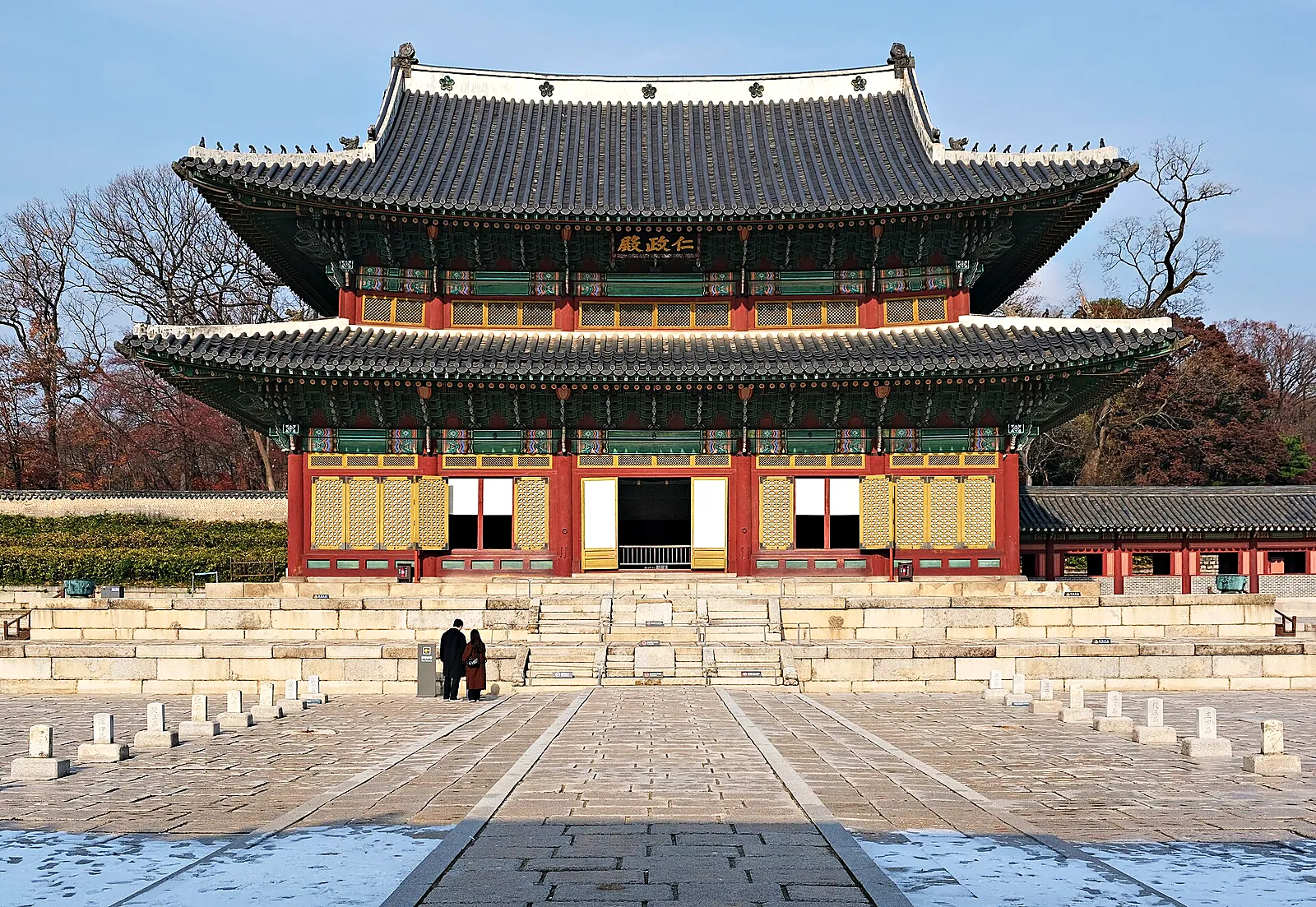
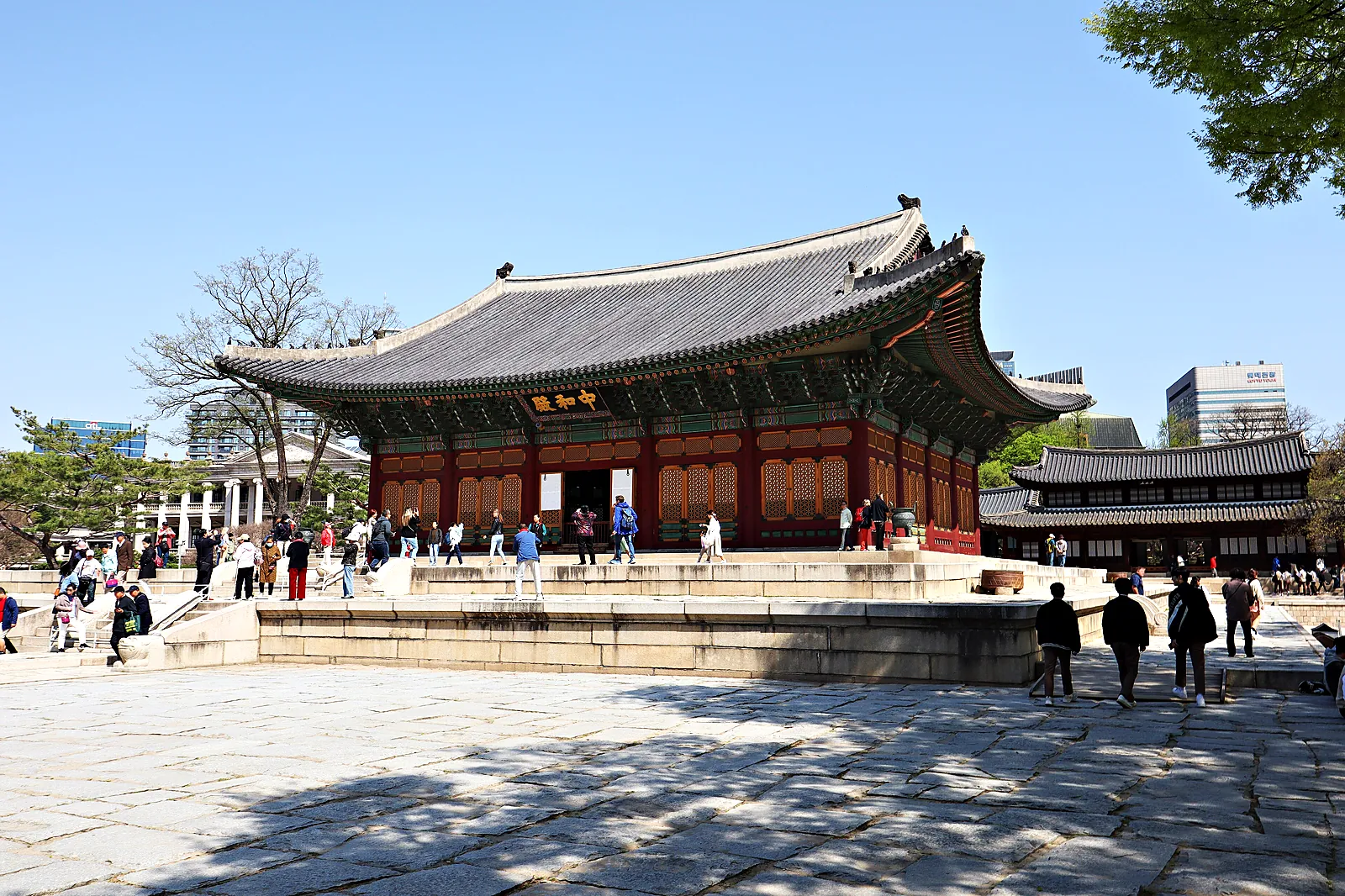
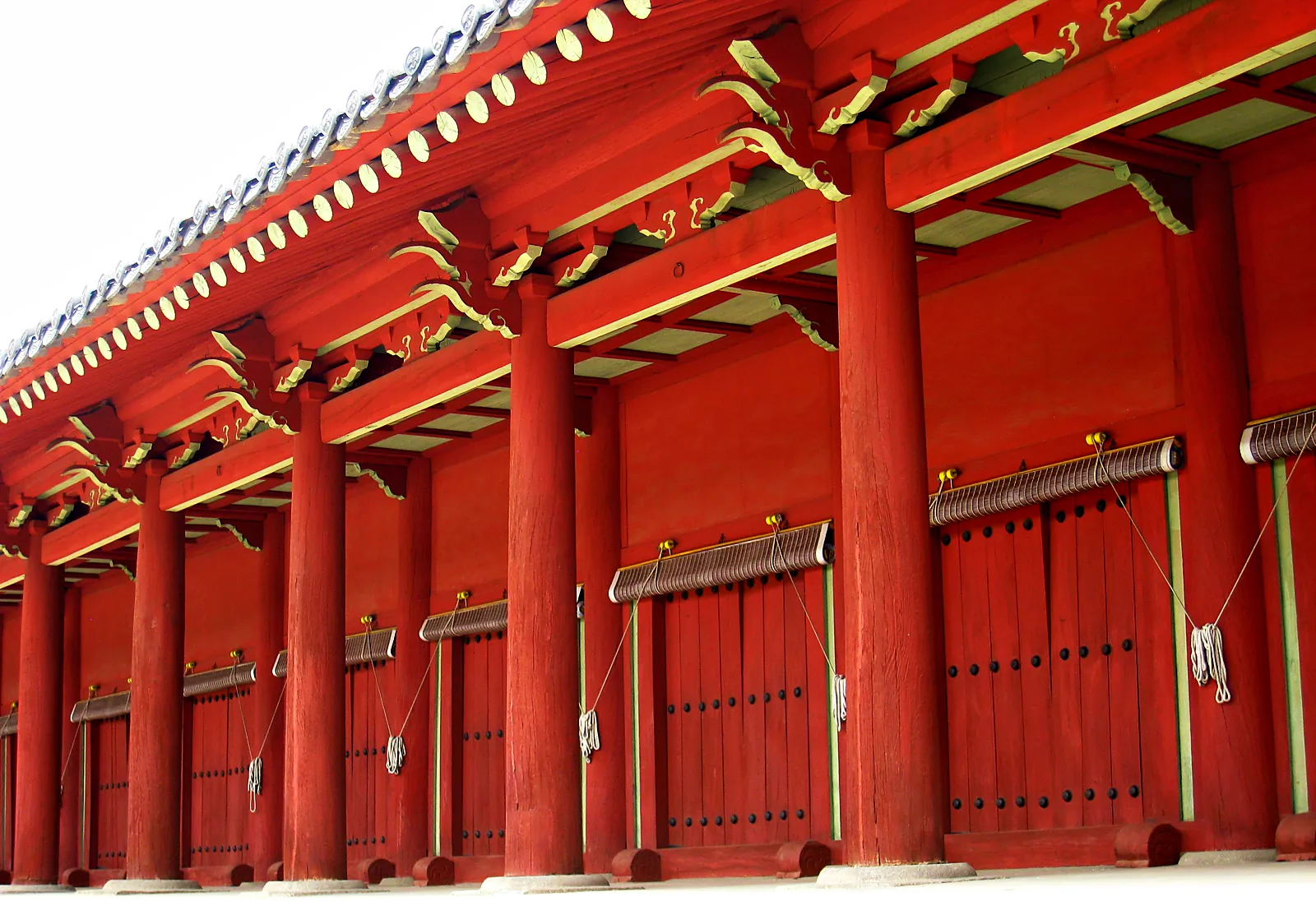
No voucher, no form — just walk up to the gate dressed in a hanbok.
How renting works
Dozens of rental shops cluster around Gyeongbokgung Station and Anguk Station.
- Book or walk in. Walk-ins are fine on weekdays; book a day or two ahead for weekends and peak blossom/foliage season
- Choose your outfit. Shops have racks of hanbok in every colour, from classic to modern "fusion" styles. Staff help you choose sizes and combinations
- Get dressed. Staff help you put it on — there are a few layers and ties
- Add-ons. Hair styling, hairpins, bags and traditional accessories usually cost extra
- Leave your stuff. Most shops store your clothes and bags while you're out
- Return on time. Rentals are usually a few hours; late returns cost extra
Prices vary by shop, style and rental length. Basic rentals are affordable; premium outfits with hair styling cost more. Compare a few shops on the street before choosing.
Don't miss: the changing of the guard
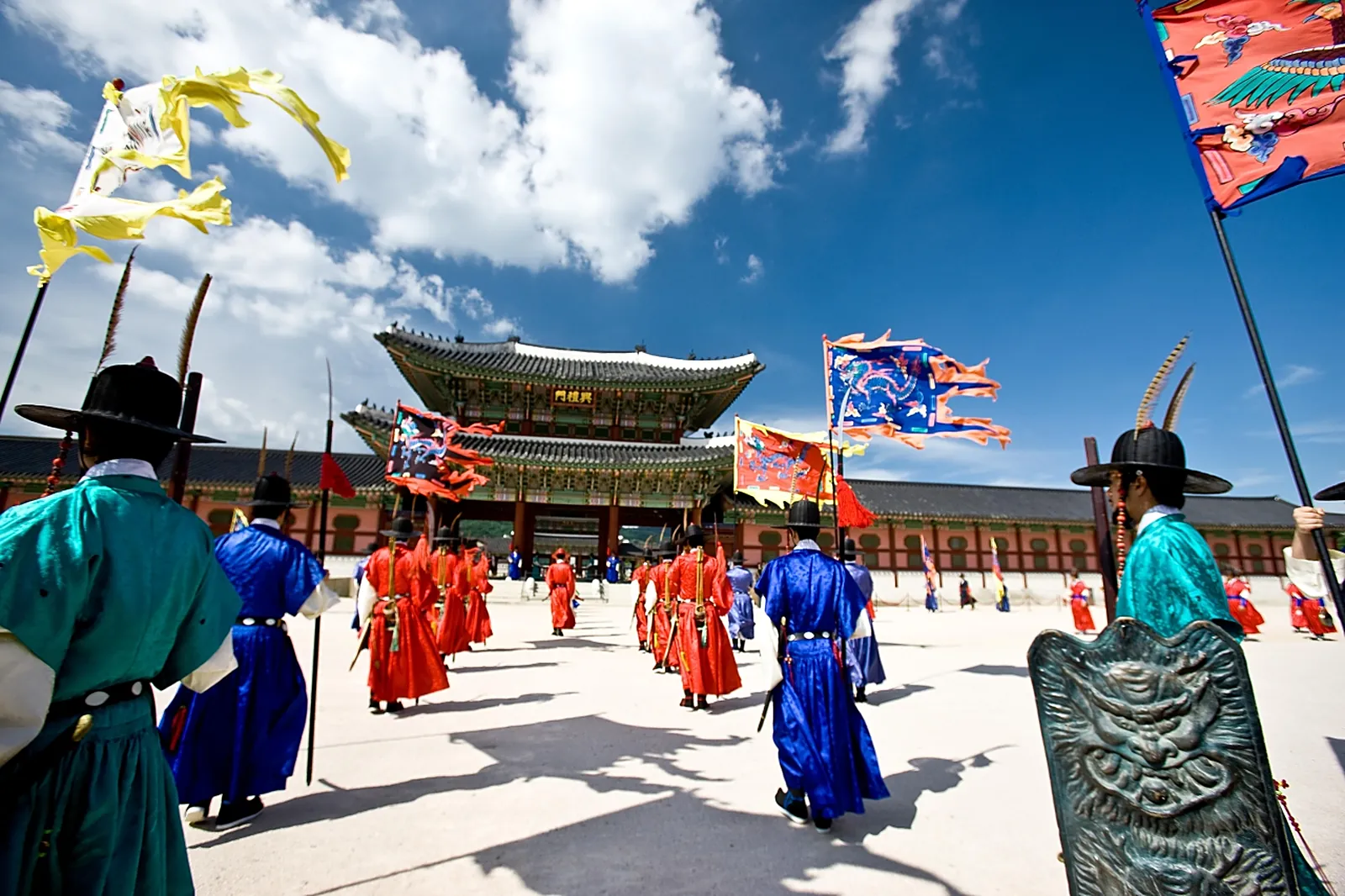
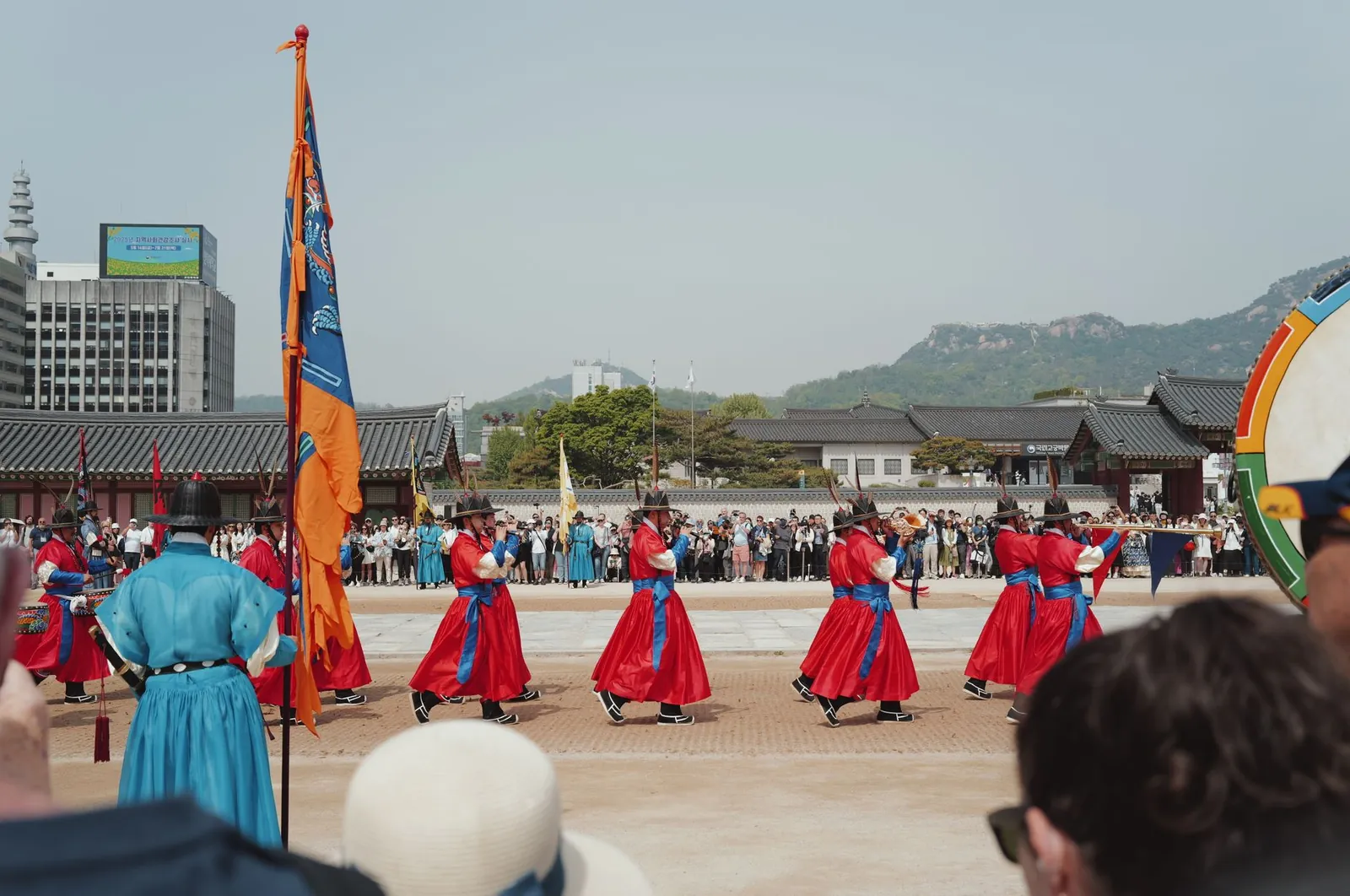
The Royal Guard Changing Ceremony at Gwanghwamun, Gyeongbokgung's main gate, recreates the Joseon-era guard change in bright traditional uniforms, with drums and flags. It usually runs twice a day, mid-morning and early afternoon (not on Tuesdays, when the palace is closed). Check the times on the day and get there a few minutes early for a good view.
The best photo spots inside Gyeongbokgung
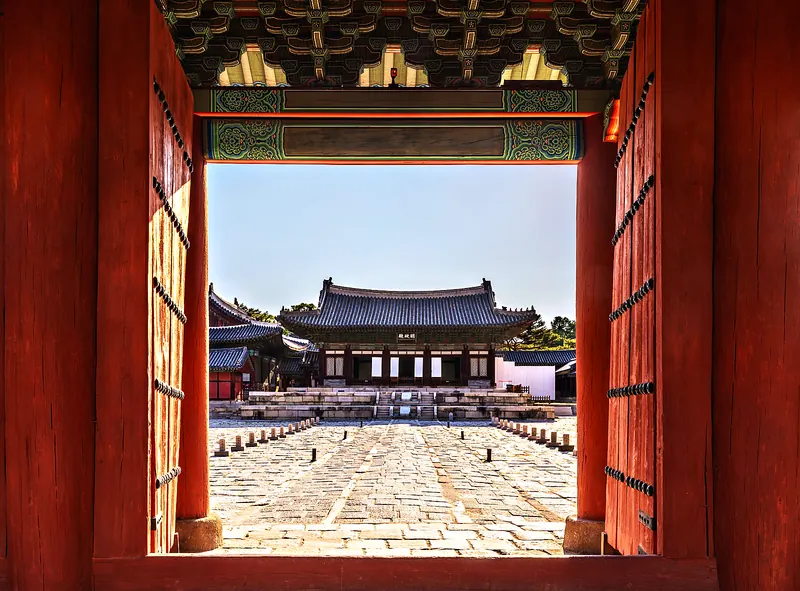
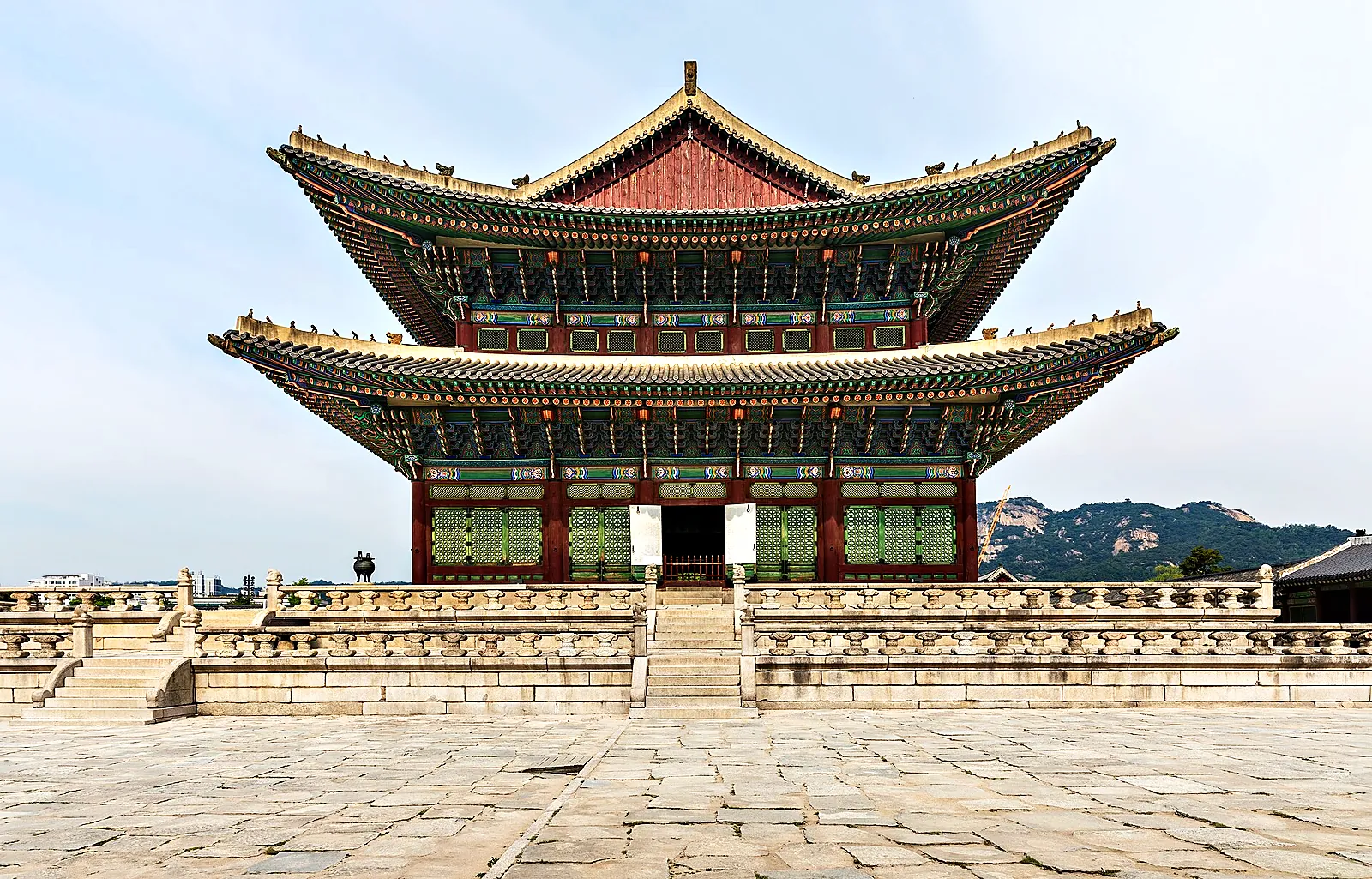
- Geunjeongjeon — the grand throne hall, with its stone courtyard and rank markers
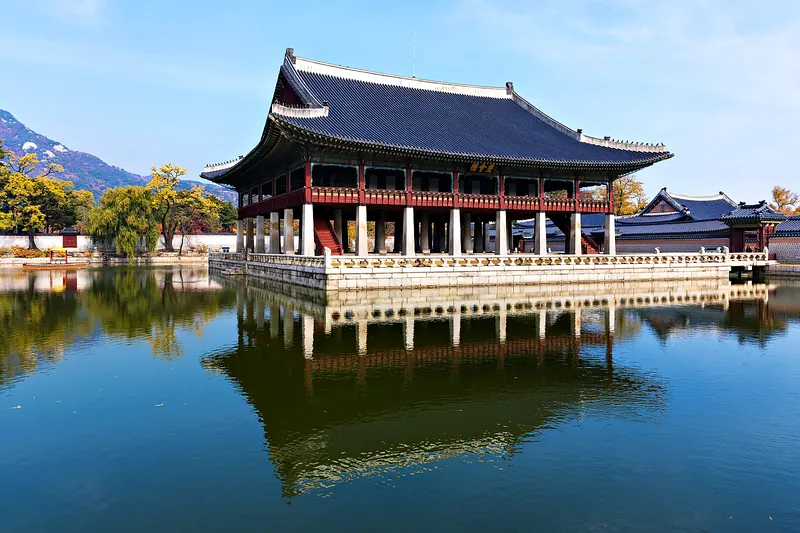
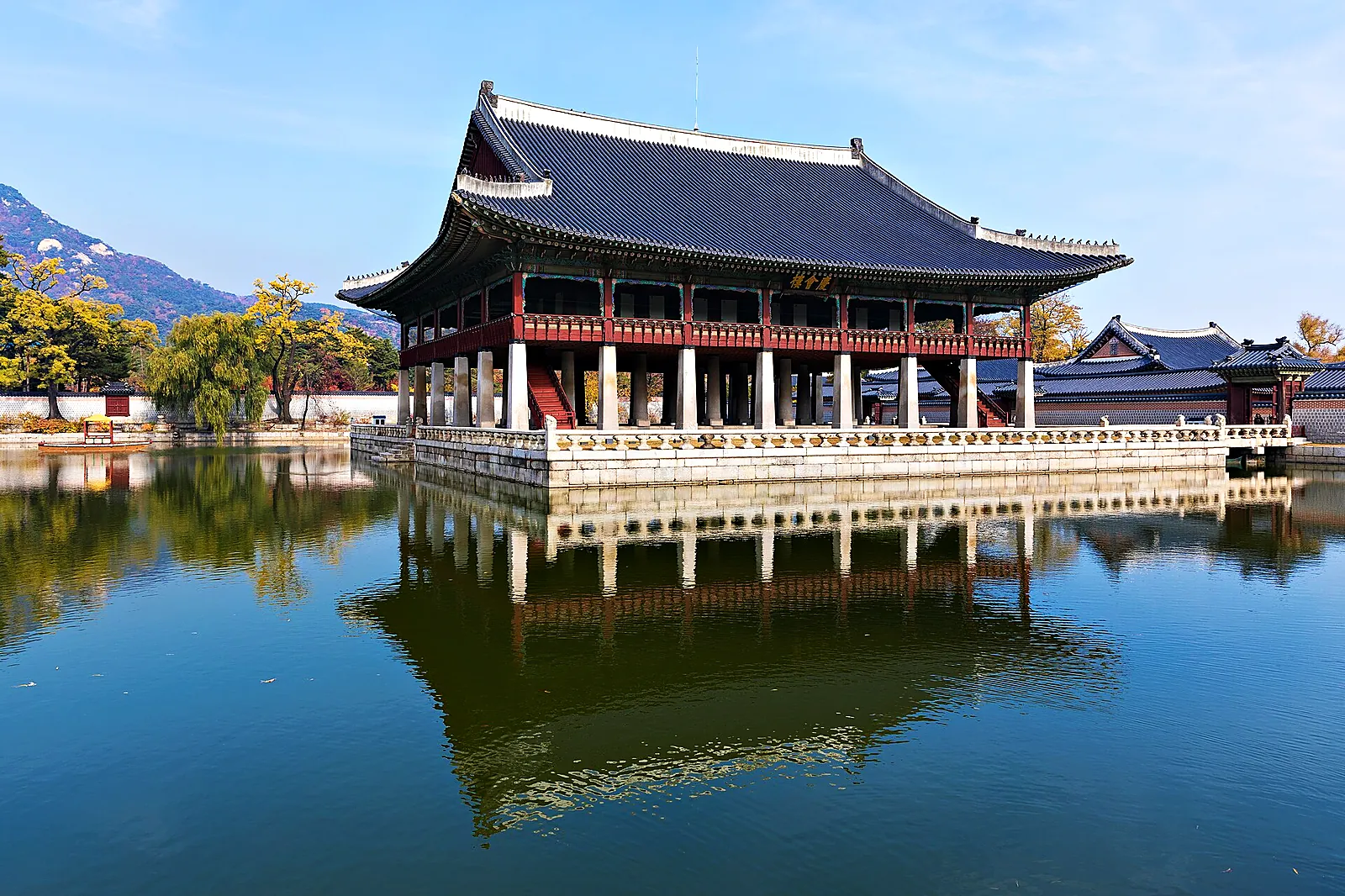
- Gyeonghoeru Pavilion — a huge pavilion floating on a pond. The most beautiful spot in the palace, especially in late afternoon light
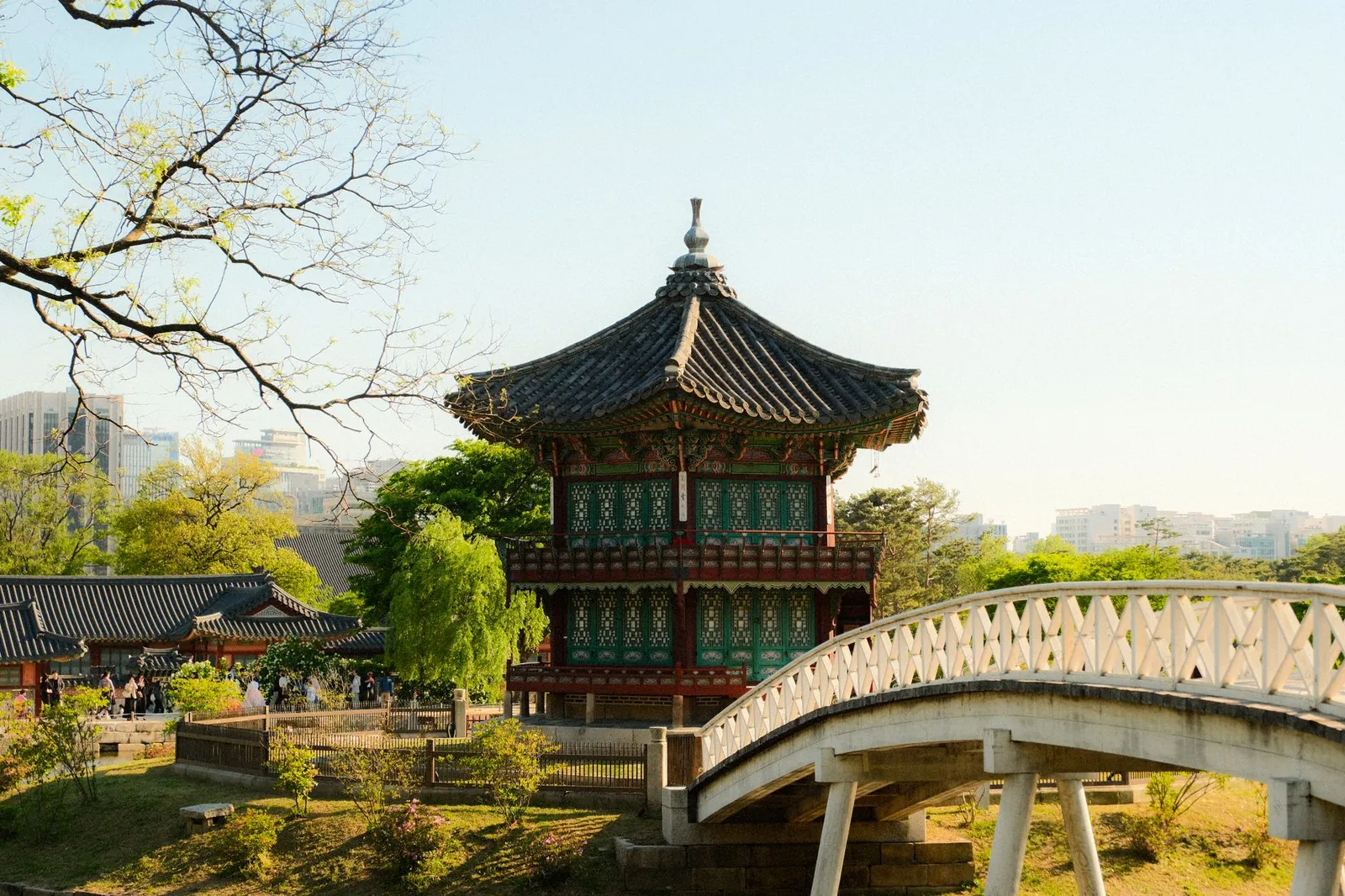
- Hyangwonjeong — a small, perfect pavilion on an island toward the back
- The rear gardens and walls — quieter, with fewer people in your shots
The National Folk Museum of Korea is also inside the grounds and free.
Practical tips for wearing one
- Shoes: wear comfortable flat shoes. Traditional shoes, if offered, aren't made for long walks on stone
- Walking: hanbok skirts are long. Staff will show you how to gather the skirt to walk up steps
- Weather: some shops lend warmer layers in winter; in summer, lighter fabrics are better
- Rain: most shops don't refund for weather, but many let you reschedule with notice
A quick guide to the hanbok
A traditional women's hanbok has two main parts: the jeogori (a short jacket tied with a long ribbon, the goreum) and the chima (a full, high-waisted skirt). Men's hanbok pairs a jeogori with loose baji trousers, often with a vest or a long durumagi coat.
Rental shops offer two styles:
- Traditional — closer to historical cuts and colours, with simpler fabrics
- Modern or fusion — shorter skirts, lace, sparkle and bolder colours; popular for photos
Choosing a rental shop
- Look for clear prices with what's included (hair styling, accessories, storage)
- Check the return time before you leave and plan your palace visit around it
- Ask about sizes if you're tall or want a looser fit — bigger shops have more range
- Read recent reviews for cleanliness and how staff handle busy times
- Bring your own flat shoes or check whether comfortable shoes are included
Booking online or walking in. Klook lists rental packages from shops right by the palace, usually with the rental time, hair styling and storage spelled out, and often a little cheaper than the walk-in price. Booking ahead is worth it for weekends and cherry-blossom or autumn-leaf season, when the best shops run out of sizes by late morning. On a quiet weekday, walking in and comparing two or three shops is just as good.
If you're not wearing a hanbok
Palace admission is inexpensive, and a combined ticket covering several palaces and Jongmyo Shrine is sold at the ticket offices — worth it if you plan to visit more than two. Check current prices and closing days before you go.
Photography etiquette
- No drones anywhere in the palace grounds
- Tripods and big lighting can be restricted — small phone tripods are usually fine
- Share the best spots. Take your shots at Gyeonghoeru and move on
- Guards and ceremonies: photos are welcome, but don't step into the ceremony area or touch the guards
Where to go after your rental
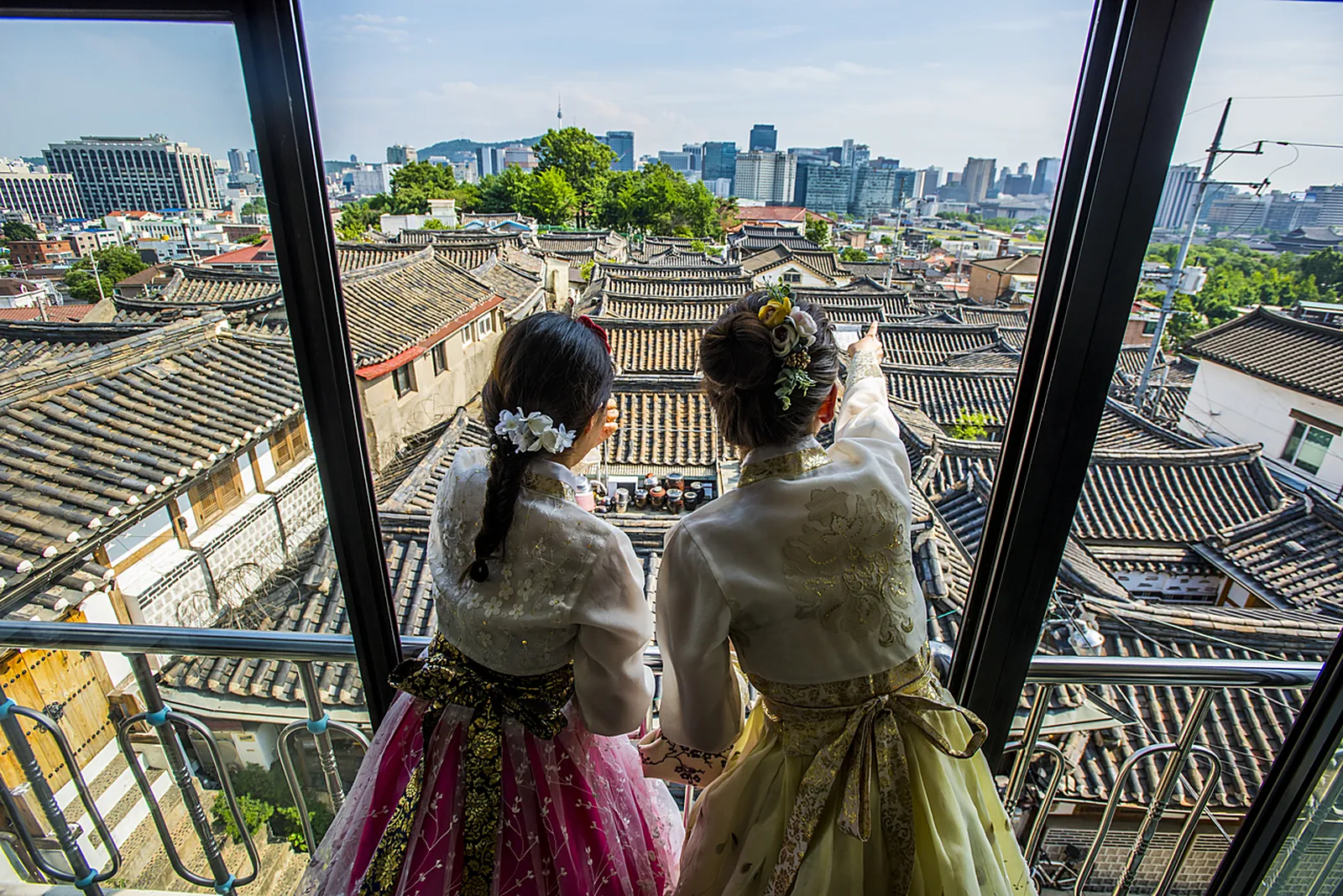
With a few hours in hanbok, add Bukchon Hanok Village (within the 10:00–17:00 visiting hours), then Samcheong-dong's cafés for a break. Hanbok photos in a traditional tea house are a nice way to finish.
Our honest take
Renting a hanbok can sound like a tourist gimmick, but it's genuinely fun, it's encouraged, and it makes palace photos far more beautiful. Plenty of Korean visitors do it too.
Do it if:
- You're visiting the palaces anyway — free entry is a nice bonus
- You want great photos from your trip
- You're travelling with friends, a partner or family
Skip it if:
- It's very hot or very cold — layers and heat make it less comfortable
- You'd rather move fast and see a lot in one day
- You don't enjoy being photographed
Our tip: book a morning slot, go to Gyeongbokgung first while it's calmer, and plan your return time around lunch. Pack flat shoes and a small bag, and resist the urge to cram in too much — two or three places in hanbok is plenty.
Frequently asked questions
Can men rent hanbok?
Yes — every shop has men's hanbok, and the free-entry perk applies to everyone.
Are "fusion" or modern-style hanbok accepted for free entry?
Rental shops know what qualifies — tell them you want to use it for free palace entry.
Can I wear it inside the palace buildings?
You can walk the grounds freely; many interiors are viewed from outside anyway.
How long should I rent for?
Three to four hours covers one palace plus Bukchon comfortably.