
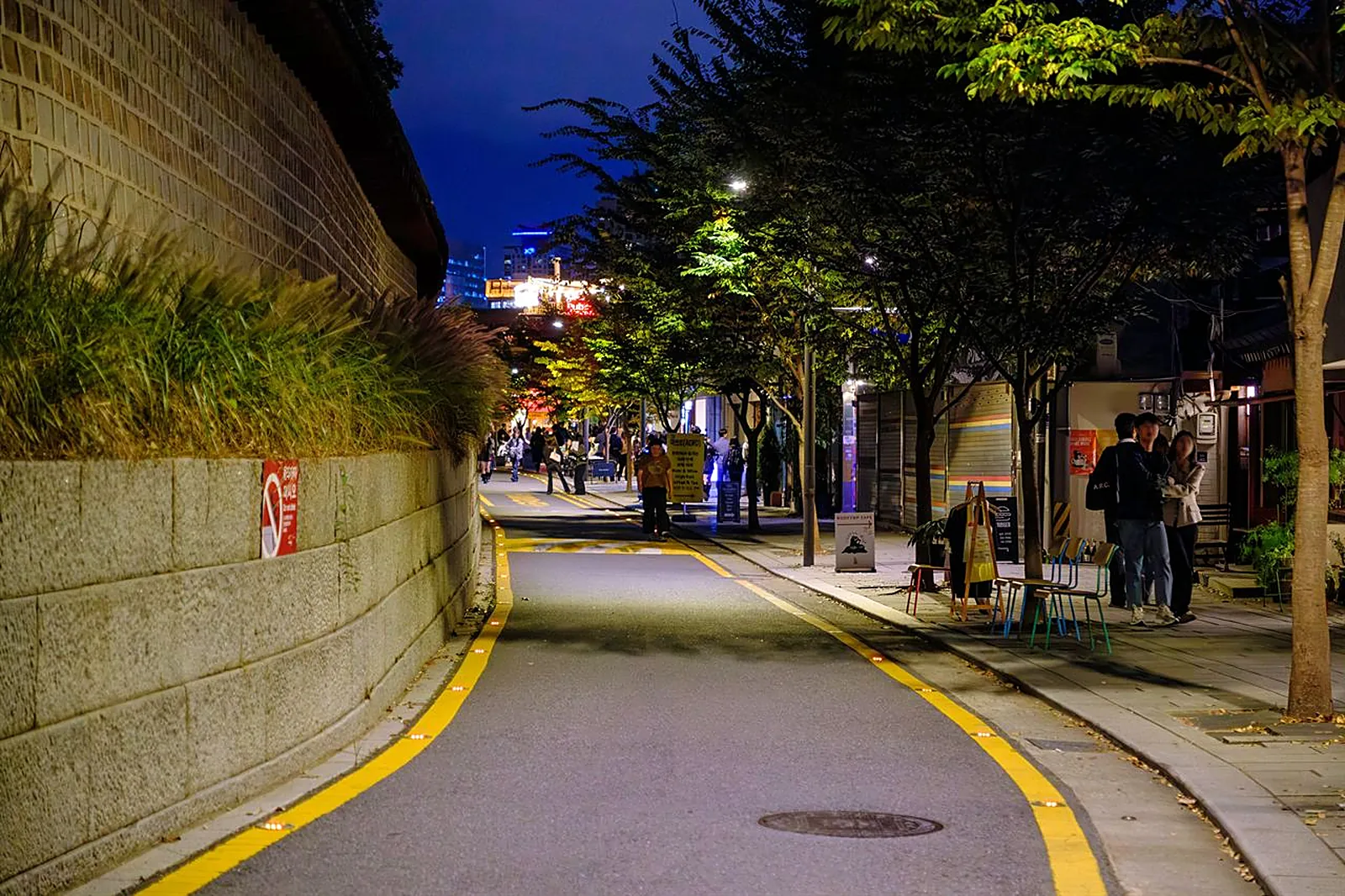
 Seosulla-gil, the stone-walled lane beside Jongmyo ShrinePhoto: 한건우 / Korea Tourism Organization (KOGL Type 1)
Living
Money, exchange rates, tipping (don't), and the Korean phrases that make people smile — the everyday stuff nobody tells you before you land.
 Living
Money
WOWPASS, Explained
How the kiosks work, where the card works, the transit catch, and when it beats your own credit card.
Budget
Seoul on a Budget: How to Do More for Less
Language
30 Korean Phrases That Actually Get Used
Exchange Rates
Where to Change Money in Seoul (and Where Not to)
Etiquette
Why You Shouldn't Tip in Korea
Money
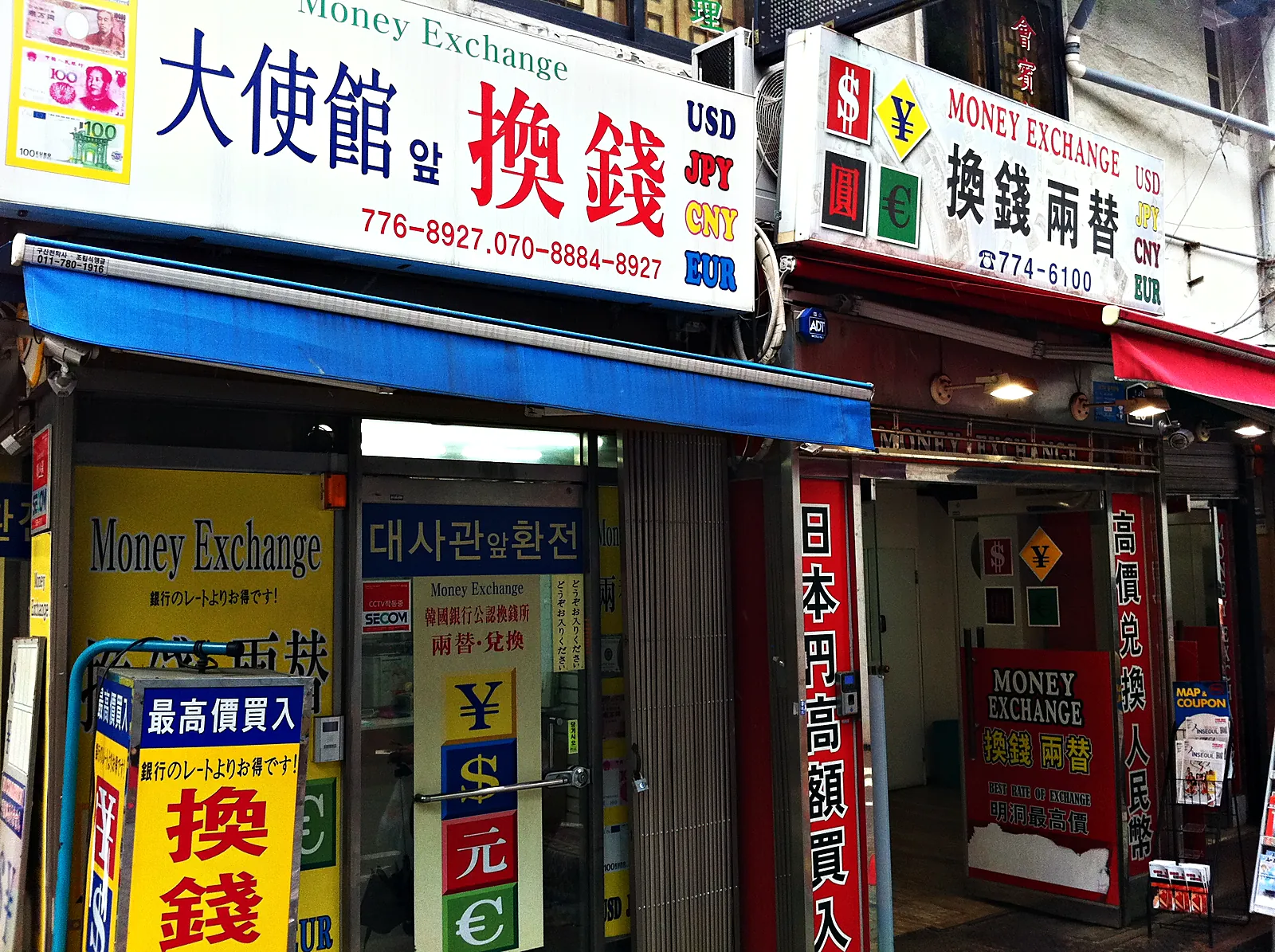
Foreign credit and debit cards work almost everywhere in Seoul, including taxis, convenience stores and most restaurants. You still need some cash for market stalls and street food, and for topping up a T-money card, which is still mostly done with cash. Change only a little at the airport, where rates are usually worst; the licensed money changers in Myeongdong and WOWPASS kiosks tend to do better than banks. ATMs that take foreign cards are easy to find in convenience stores and bank branches. When a card machine offers to charge you in your home currency, say no and pay in won. More in where to change money and WOWPASS, explained.
Tipping and service
Korea has no tipping culture. The price on the menu is what you pay in restaurants, cafés, bars and taxis, and leaving cash on the table usually means someone runs after you with it. Upscale hotels may add a service charge to the bill. A sincere "gamsahamnida" (thank you) does the job. Why you shouldn't tip in Korea.
A little Korean goes a long way
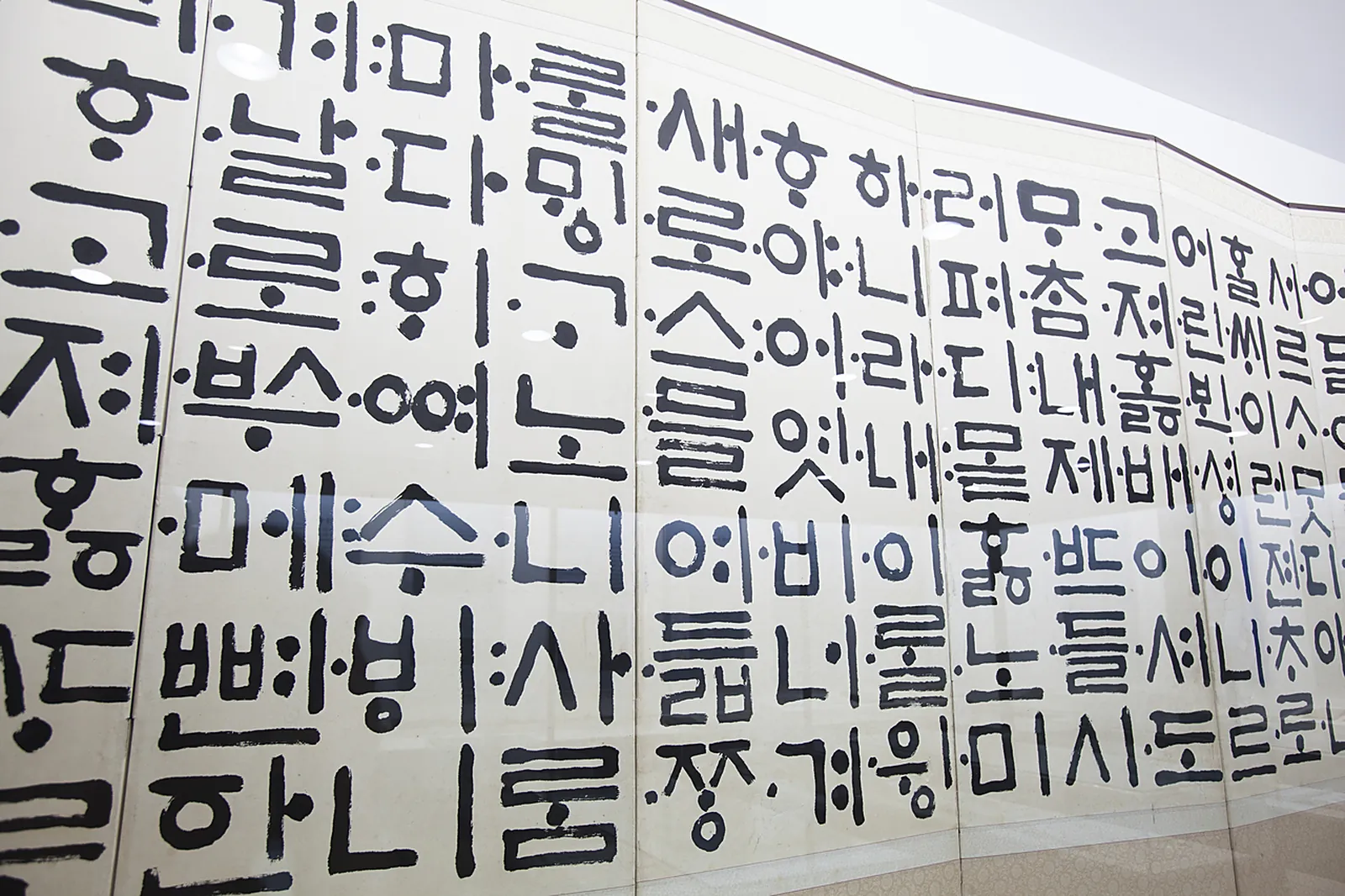
You can get around in English, and the subway is signed in English too. But five or six phrases change how people respond to you: hello, thank you, this one please, how much is it, and excuse me, which is also how you call staff in a restaurant. 30 Korean phrases that actually get used has them with pronunciation, plus how to ask for food that isn't spicy.
Everyday etiquette
A few habits make life easier for everyone. Keep your voice down on the subway and leave the priority seats, and the pink seats for pregnant women, empty. Queue for buses and trains. Take your shoes off where you see a step up or a shoe rack, which includes some restaurants with floor seating. In bathhouses, wash thoroughly before you get in the water. Ask before photographing people, especially in residential areas such as Bukchon and Ihwa-dong.
Safety and help
Seoul is generally very safe, including at night, but normal care applies: watch your phone and bag in crowds, and in taxis use the meter or a taxi app rather than agreeing a price. Save these numbers: 112 for the police, 119 for fire and ambulance, and 1330, the Korea Travel Hotline, which answers in English and several other languages around the clock.
Spending less
Transport, street food and many of the best sights are cheap or free: the changing of the guard, Bukchon, the Han River parks, Namsan's trails and the National Museum of Korea. Lunch sets cost far less than dinner, and guesthouses near a subway line keep accommodation costs down. Seoul on a budget has a sample day that costs very little.