Insadong and Ikseon-dong sit side by side in the old heart of Seoul, between Gyeongbokgung and Jongno. They're both "traditional", but in completely different ways: Insadong is a long, lively street of crafts and tea, while Ikseon-dong is a maze of tiny hanok alleys that has become one of the most photogenic food and café areas in the city.
Put them together and you have one of the best half-days in Seoul.
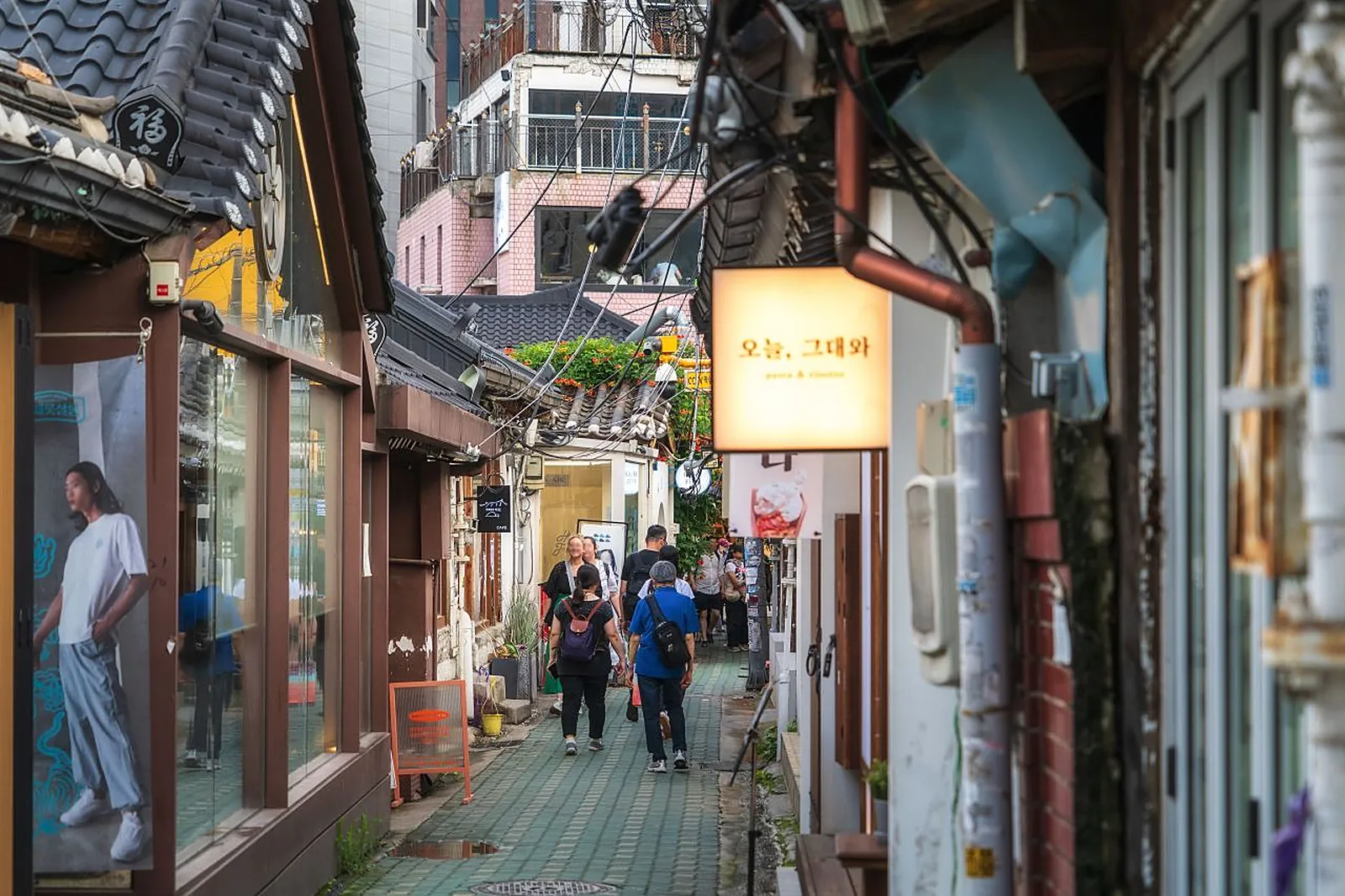
Insadong: what it is
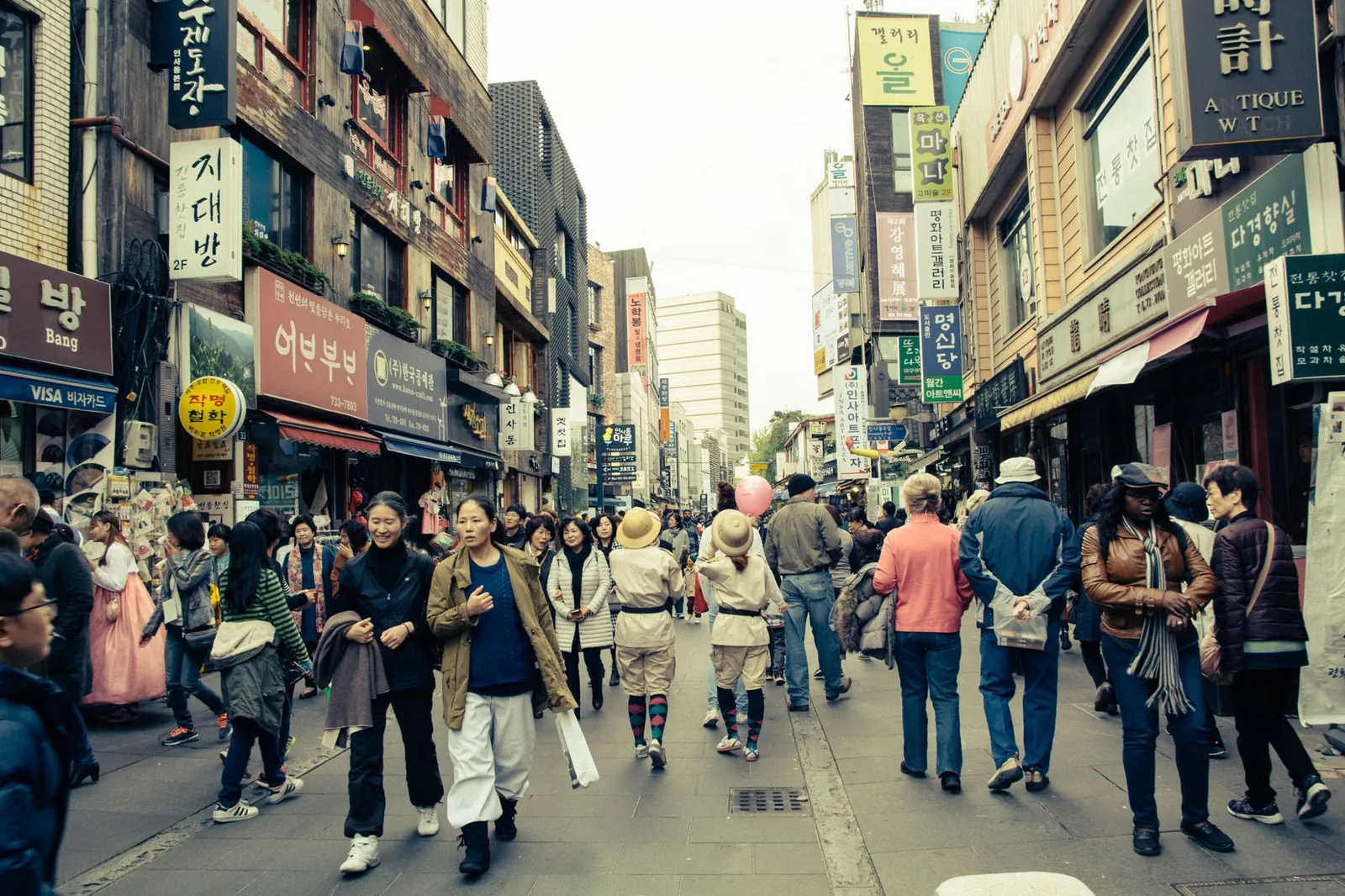
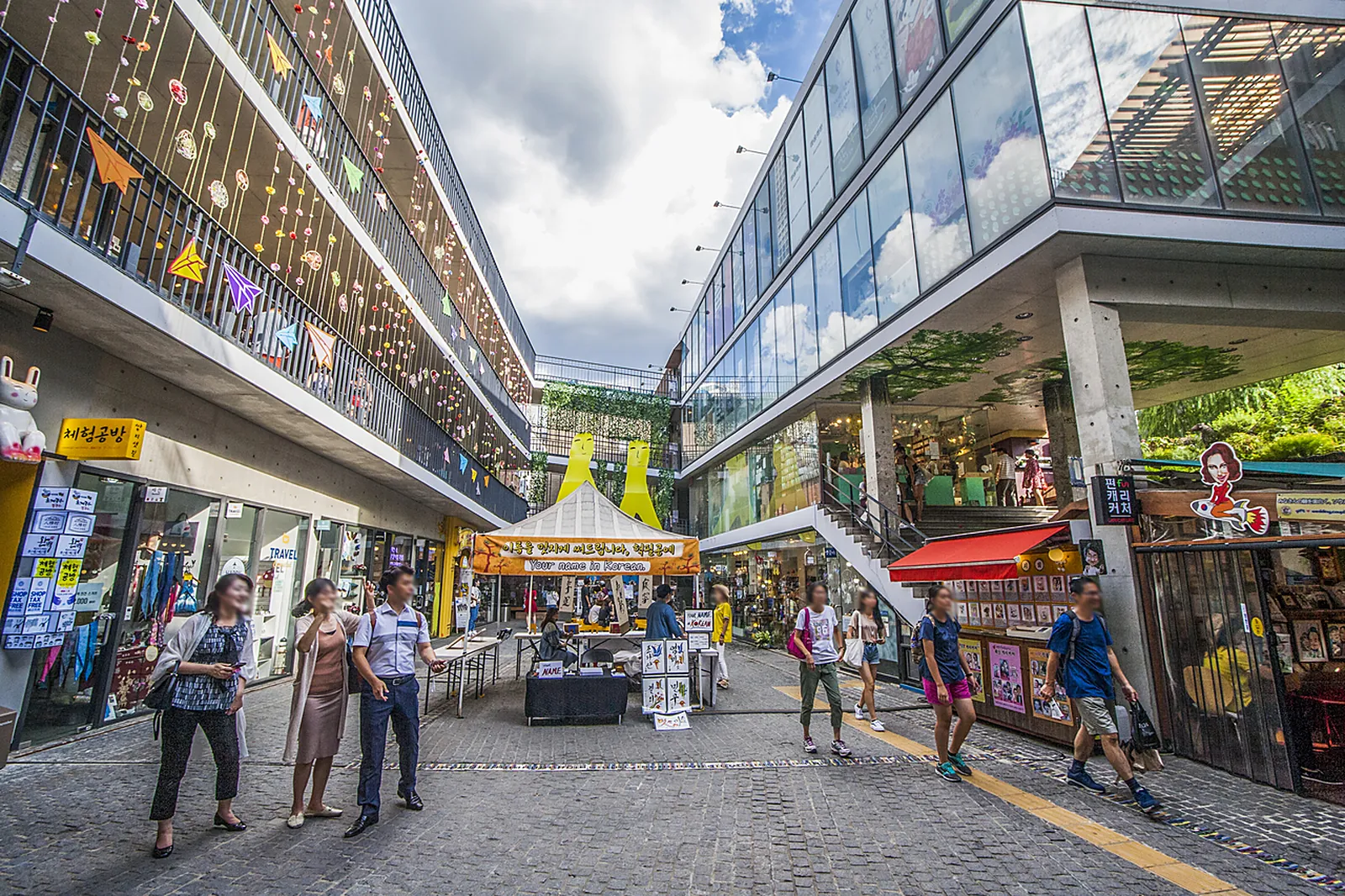
Insadong has been a centre for antiques, art and traditional goods for more than a century. Today the main street, Insadong-gil, is lined with shops selling:
- Traditional crafts — ceramics, lacquerware with mother-of-pearl inlay, wooden masks
- Hanji — Korean mulberry paper, made into lamps, notebooks and cards
- Calligraphy supplies — brushes, ink stones and seals, where you can sometimes have your name carved
- Galleries — dozens of small galleries, many free to enter
- Tea houses — some of Seoul's most atmospheric places to sit down, often in hanok with courtyards
Look out for shop signs written in Hangul — even international brands on Insadong-gil use Korean lettering, which has become a small attraction of its own.
Don't miss in Insadong
- Ssamziegil — a spiral, open-air shopping arcade where you walk slowly up a ramp past small craft and design shops. Great for handmade souvenirs
- A traditional tea house — order a seasonal tea like jujube, citron (yuja) or omija, often served with rice cakes or yakgwa (honey cookies)
- Street snacks — look for kkultarae ("dragon's beard"), fine threads of honey candy pulled by hand in front of you
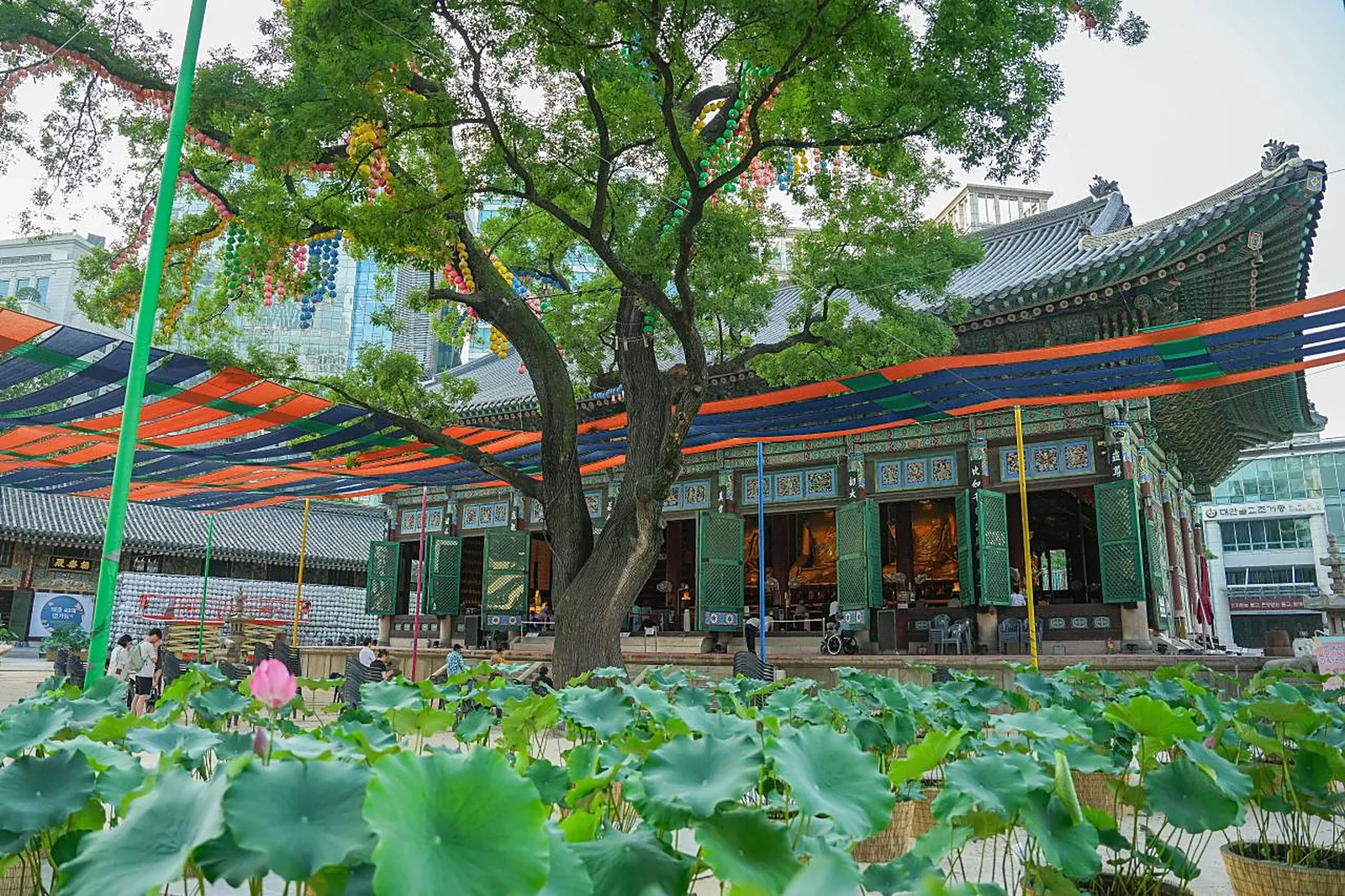
- Jogyesa Temple — the main temple of Korea's largest Buddhist order, a few minutes' walk away. Spectacular with lanterns in May
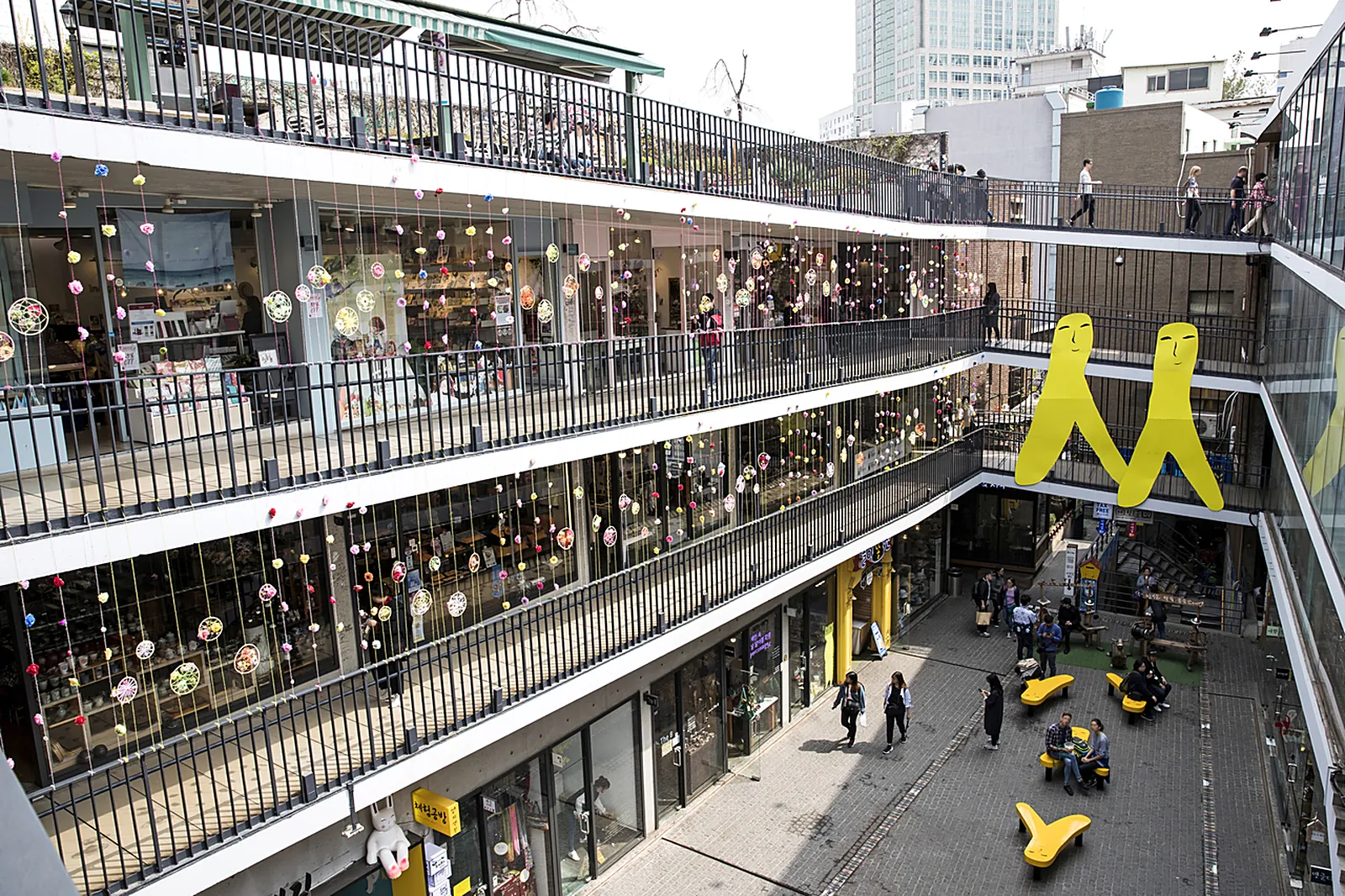
Ikseon-dong: what it is
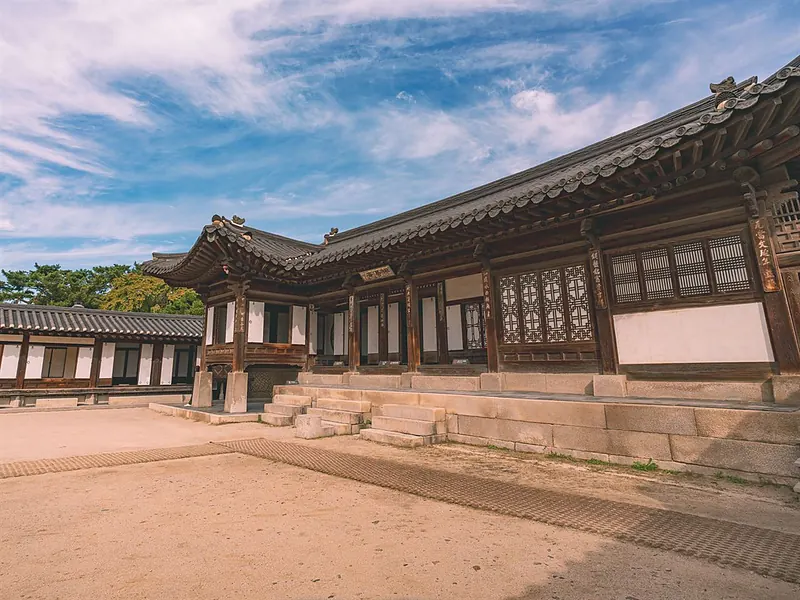
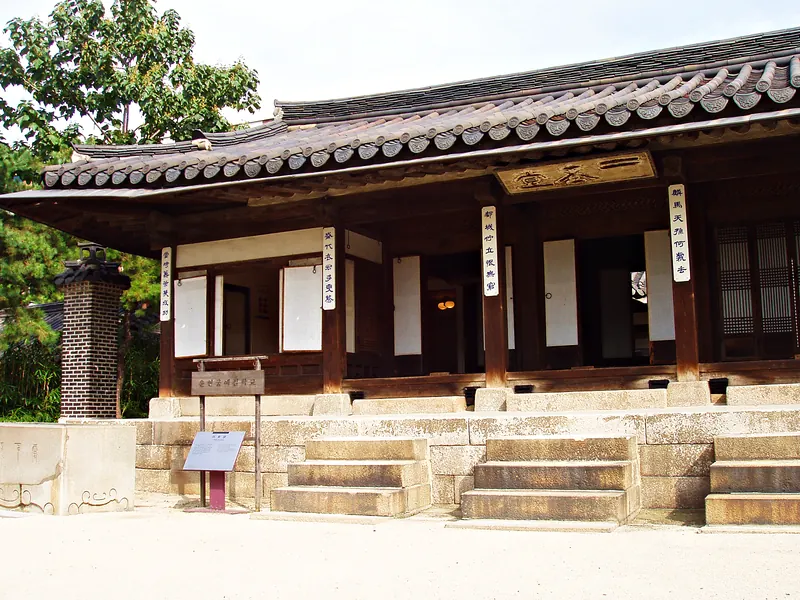
Ikseon-dong is a small cluster of hanok built in the 1920s as one of Seoul's early planned housing developments for ordinary city residents. For decades it was a quiet, slightly run-down neighbourhood. In the 2010s young owners turned the houses into cafés, bakeries, bars and restaurants — keeping the tiled roofs, wooden beams and tiny courtyards.
The alleys are narrow (often one person wide), so it feels like a secret village a few steps from a busy main road.
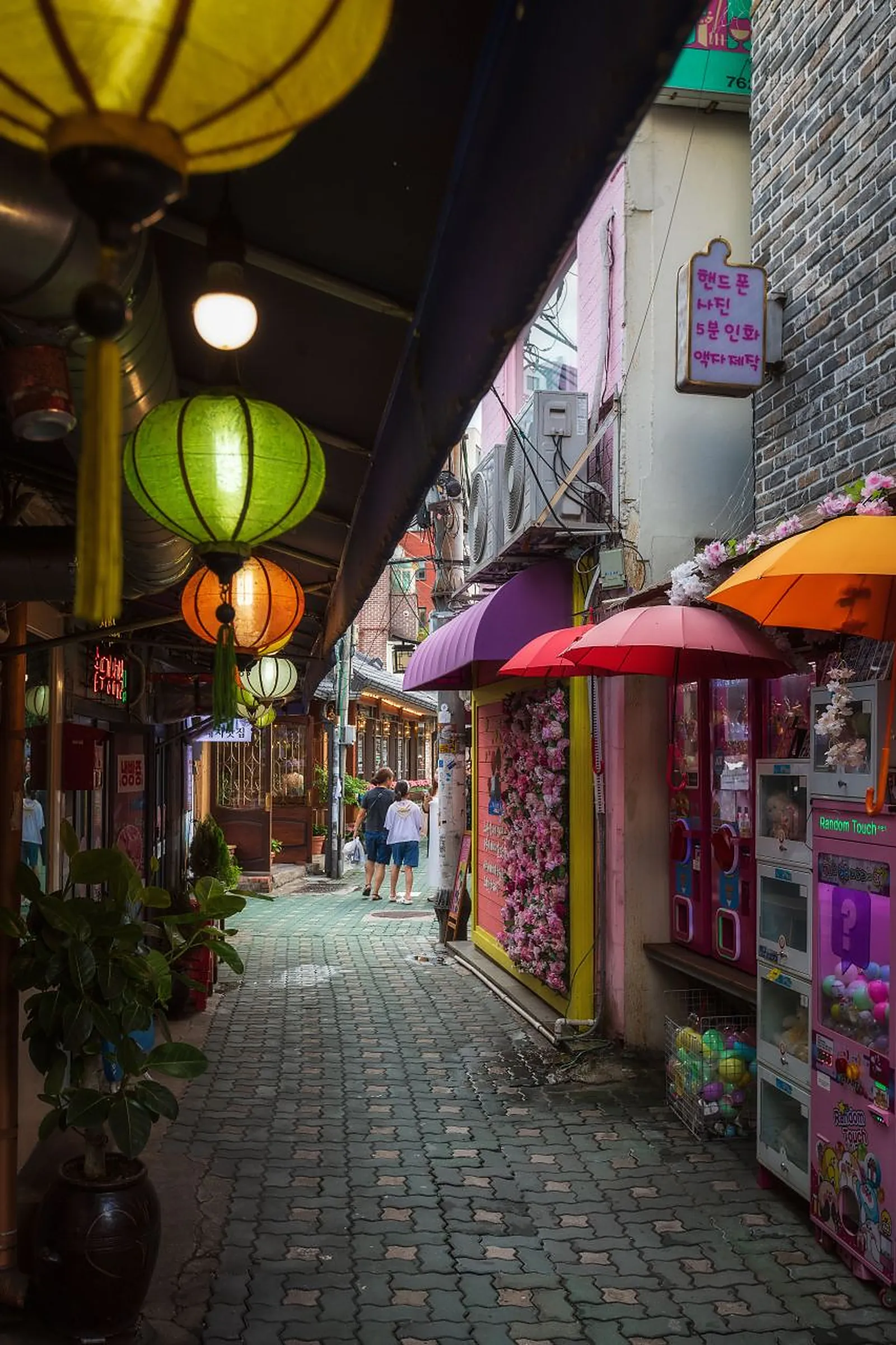
What to do in Ikseon-dong
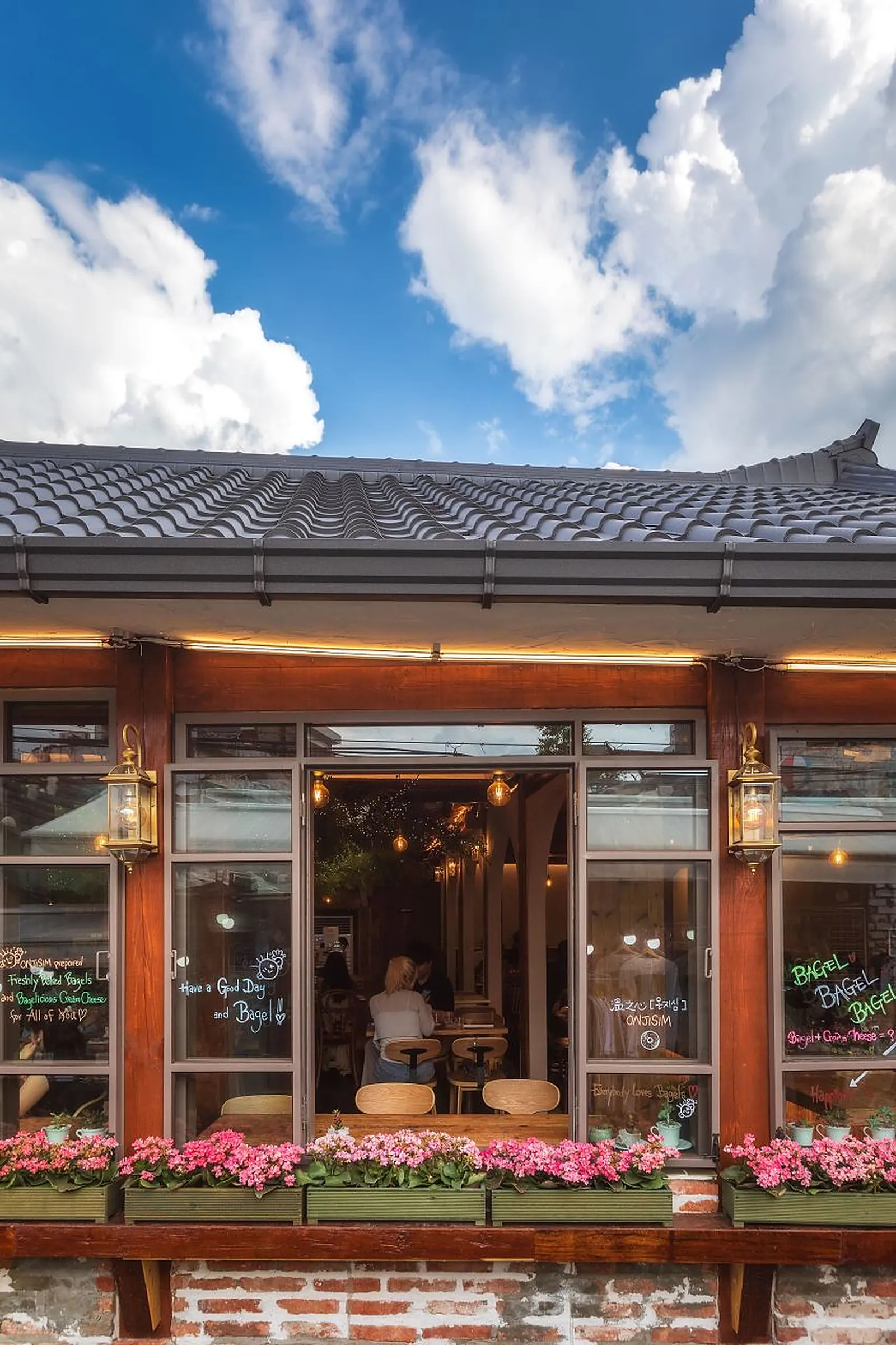
- Café-hop — many cafés are in converted hanok with courtyard seating and glass roofs
- Try a hanok bakery — some of the city's most photographed pastries are sold here
- Eat dinner — small restaurants serve everything from Korean home cooking to Western food
- Wander — the best part is simply getting a little lost in the alleys
Unlike Bukchon, Ikseon-dong is a commercial area, so it's lively in the evening too.
A half-day route
- 10:30 — Anguk Station, exit 6, walk down Insadong-gil
- 11:30 — Ssamziegil and the side-street galleries
- 12:30 — tea and a snack in a traditional tea house
- 13:30 — Jogyesa Temple
- 14:30 — walk east to Ikseon-dong for coffee in a hanok café
- Evening — dinner in Ikseon-dong, or continue to Gwangjang Market, about 15 minutes' walk east
It's part of our palaces and old Seoul day, after Gyeongbokgung and Bukchon — or build your own with the trip planner.
Shopping tips
- Check where it's made. Some souvenirs on busy streets are imported. For genuine Korean crafts, look for shops that name the artisan or region, or buy at Ssamziegil's design shops
- Hanji and ceramics travel well if they're wrapped properly — ask the shop to pack them
- Prices are usually fixed in shops; there's little bargaining
Nearby
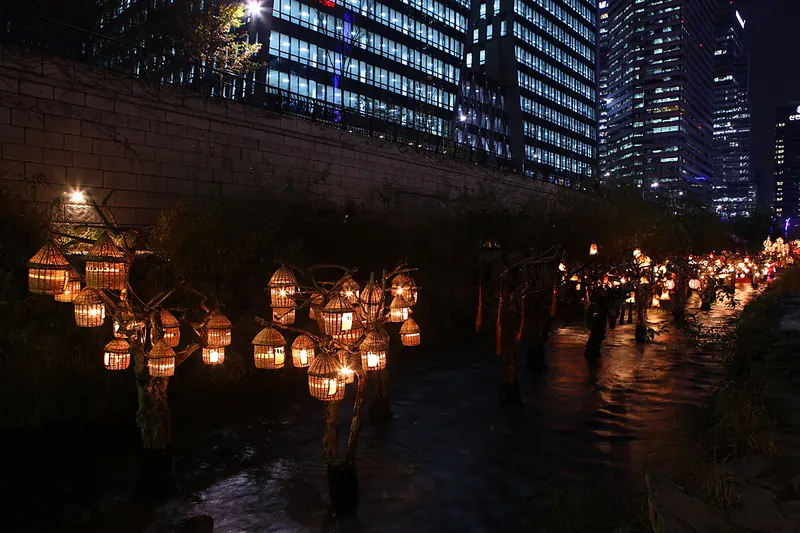
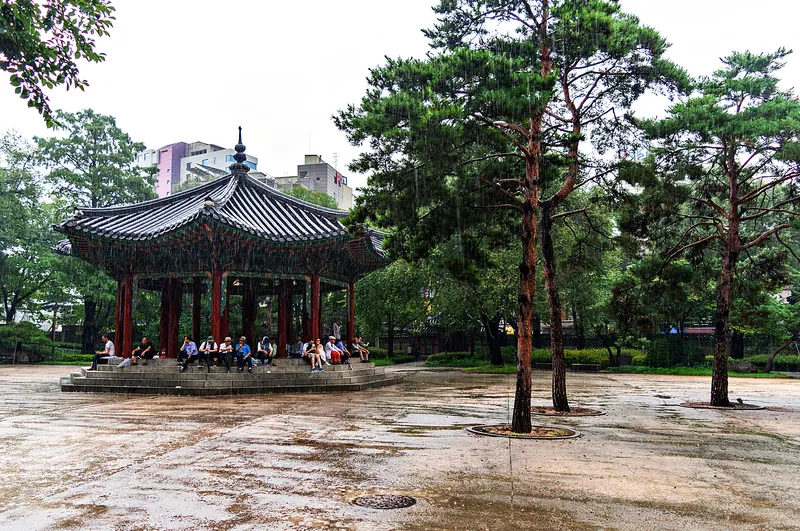
Insadong and Ikseon-dong at night
Insadong's shops wind down in the early evening, but Ikseon-dong comes alive after dark. The alleys glow with warm lights, restaurants fill up and small bars open in old hanok. If you only have one slot, choose golden hour — you'll catch the last of the shops in Insadong and the best of Ikseon-dong's atmosphere.
Getting there
- Anguk Station (Line 3), exit 6 — the top of Insadong-gil
- Jongno 3-ga Station (Lines 1, 3 & 5), exits 4 or 6 — closest to Ikseon-dong
- Jonggak Station (Line 1) — the southern end of Insadong
Our honest take
Insadong is touristy, and some of its souvenirs are generic — but its tea houses, galleries and craft shops are genuinely lovely, and it's one of the easiest places to buy a meaningful souvenir. Ikseon-dong is small but full of charm, and at its best around sunset.
Go if:
- You want traditional crafts, tea and souvenirs in one walk
- You love hanok cafés and atmospheric little alleys
- You're already near the palaces or Bukchon
Keep it short if:
- You're not into shopping — an hour in Insadong and a coffee in Ikseon-dong is plenty
- You hate queues — avoid weekend afternoons in Ikseon-dong
Our tip: do Insadong before lunch when it's calmer, sit down for a proper tea, then save Ikseon-dong for golden hour and dinner.
Frequently asked questions
Is Insadong worth visiting?
Yes, especially for tea houses, galleries and traditional souvenirs. Allow one to two hours.
What's the difference between Ikseon-dong and Bukchon?
Bukchon is a residential neighbourhood with visiting hours and quiet rules. Ikseon-dong is a commercial area full of cafés and restaurants, open into the evening.
When are the shops open?
Most open from around 10am into the evening. Some galleries close on Mondays.
Is it good for souvenirs?
It's one of the best areas in Seoul for traditional souvenirs like ceramics, hanji and calligraphy goods.