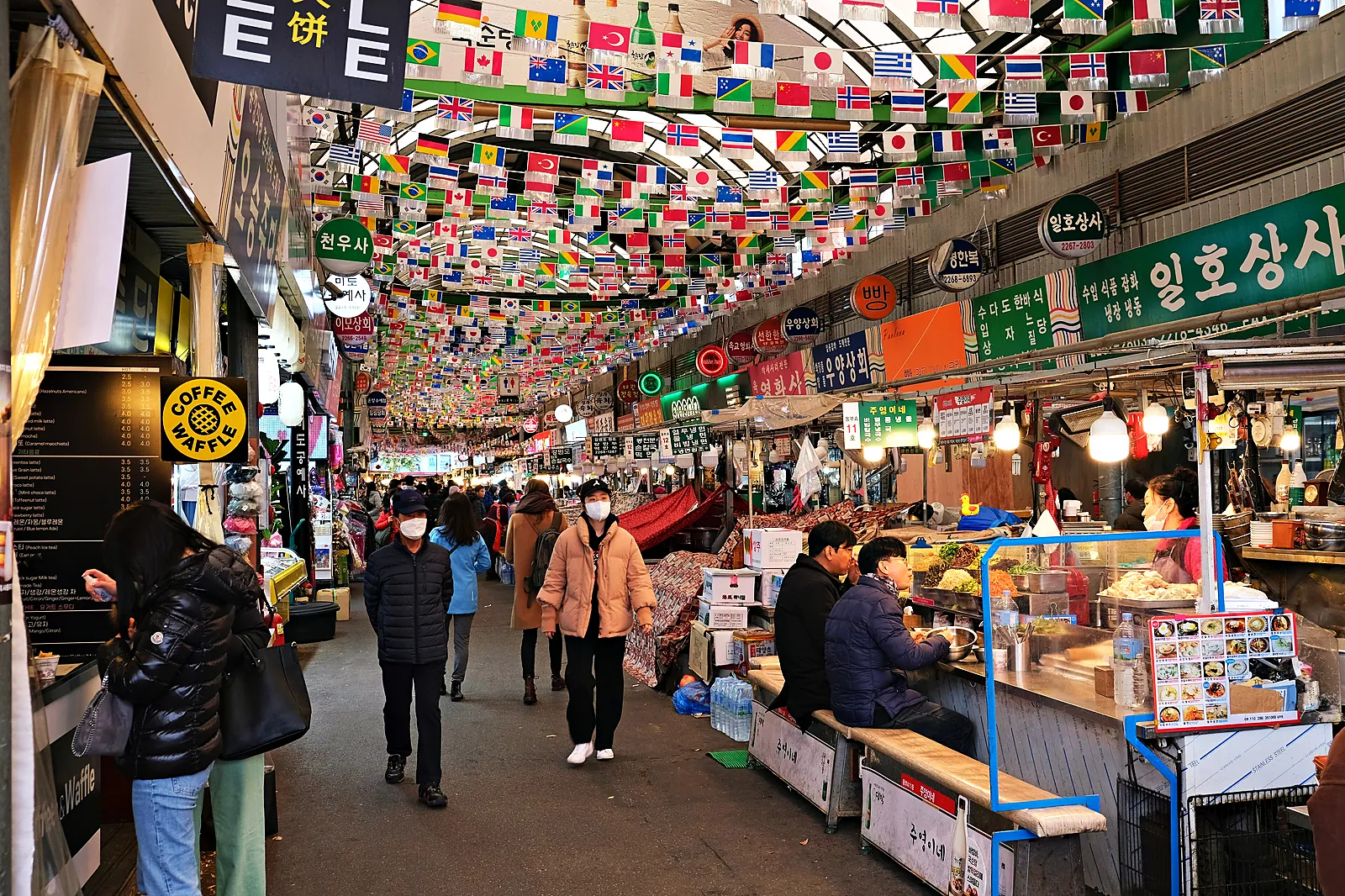
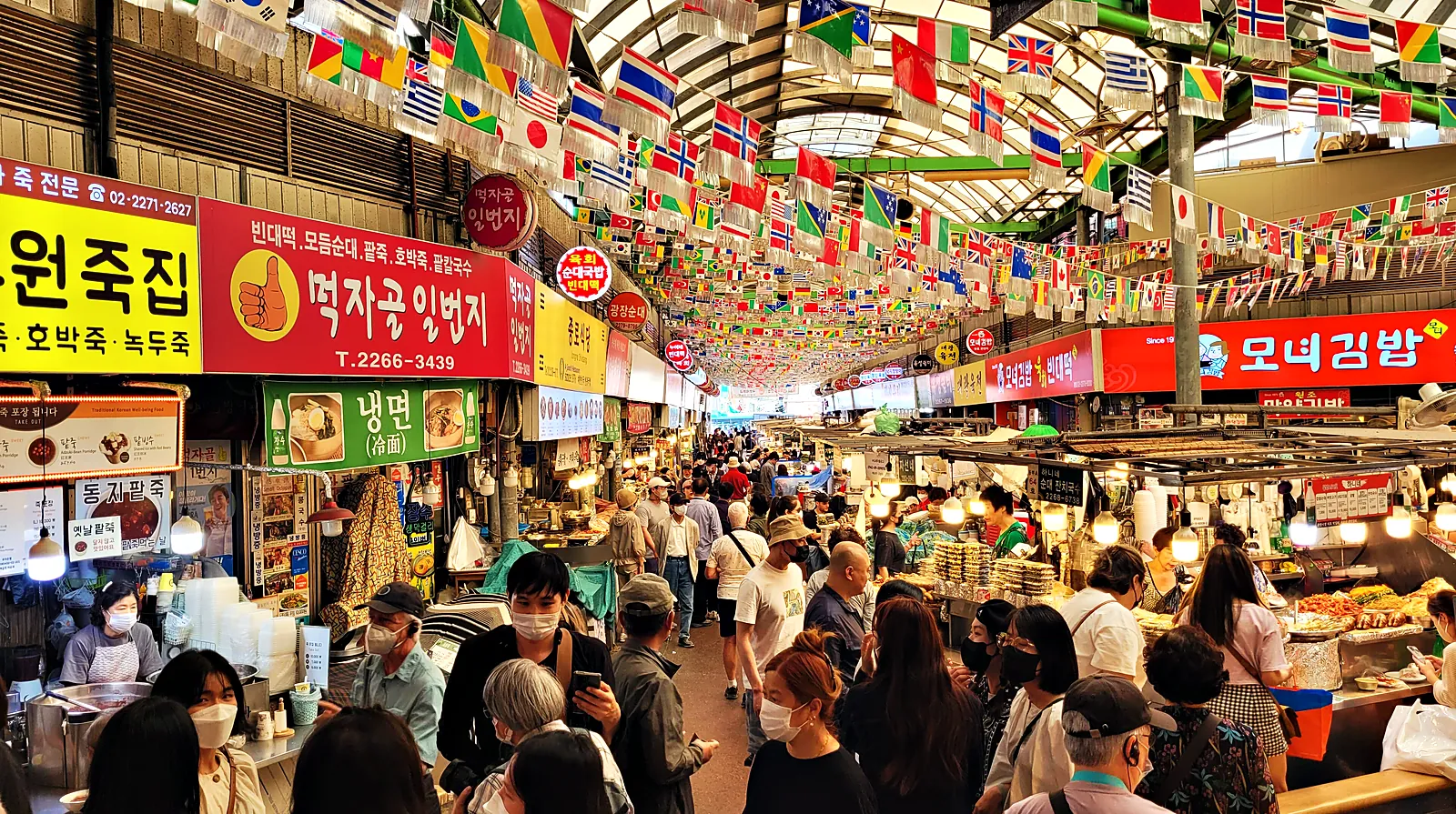
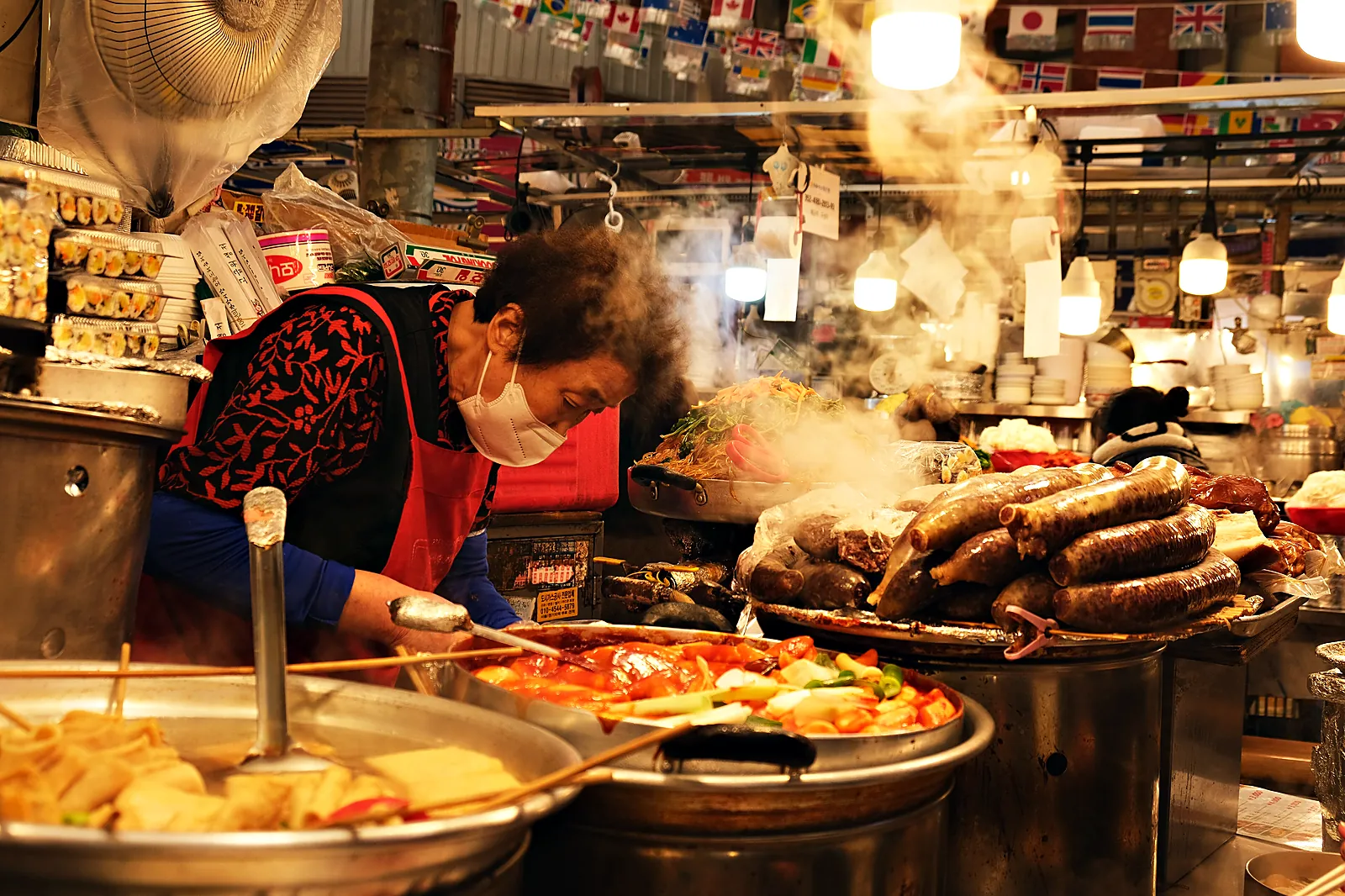
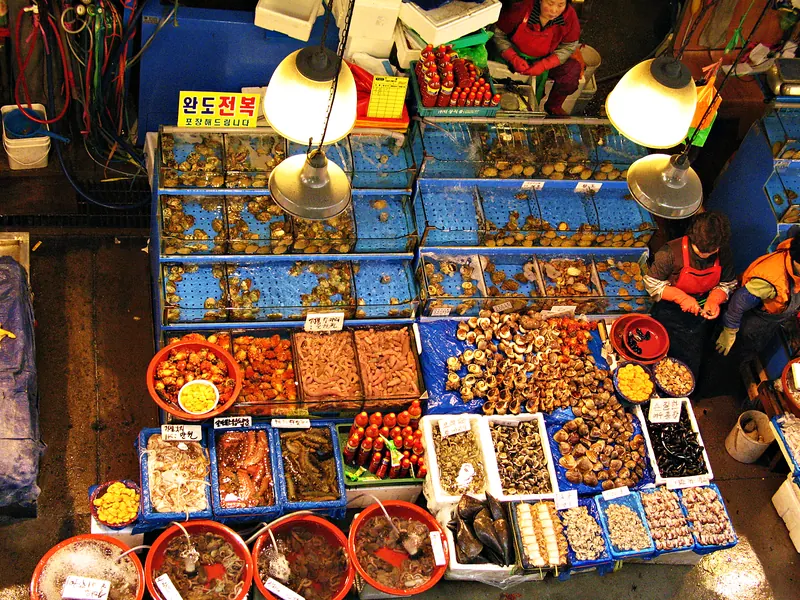
Gwangjang Market has been trading since the early 1900s, which makes it one of the oldest traditional markets in Korea. Most of the building sells fabric, silk and hanbok materials — but the reason you're going is the food alley at its centre, where rows of stalls with bench seating serve some of the most satisfying street food in Seoul.
It became world-famous after appearing in international food documentaries, and it's busy. Here's how to get the most out of it.
What to eat
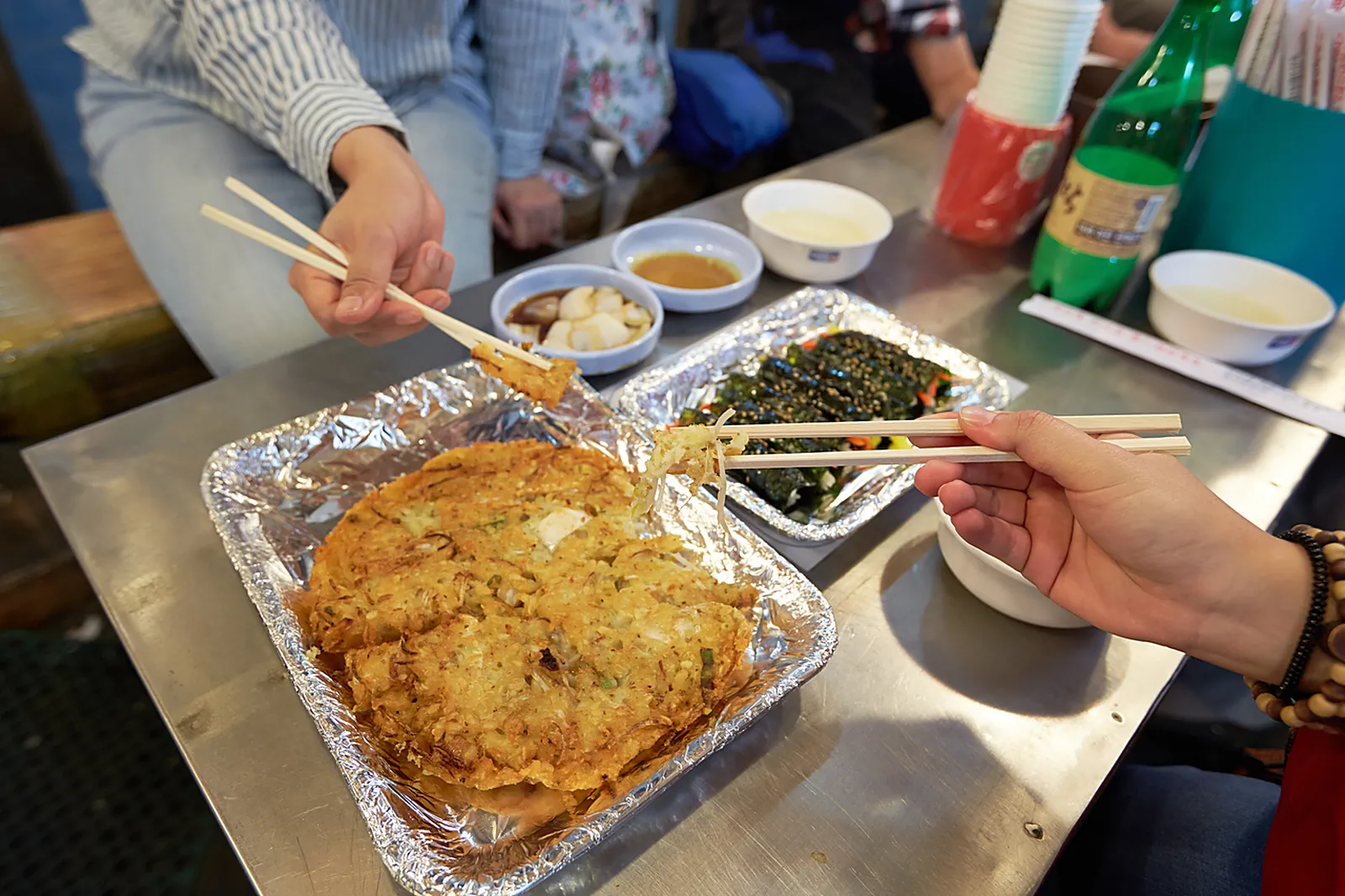
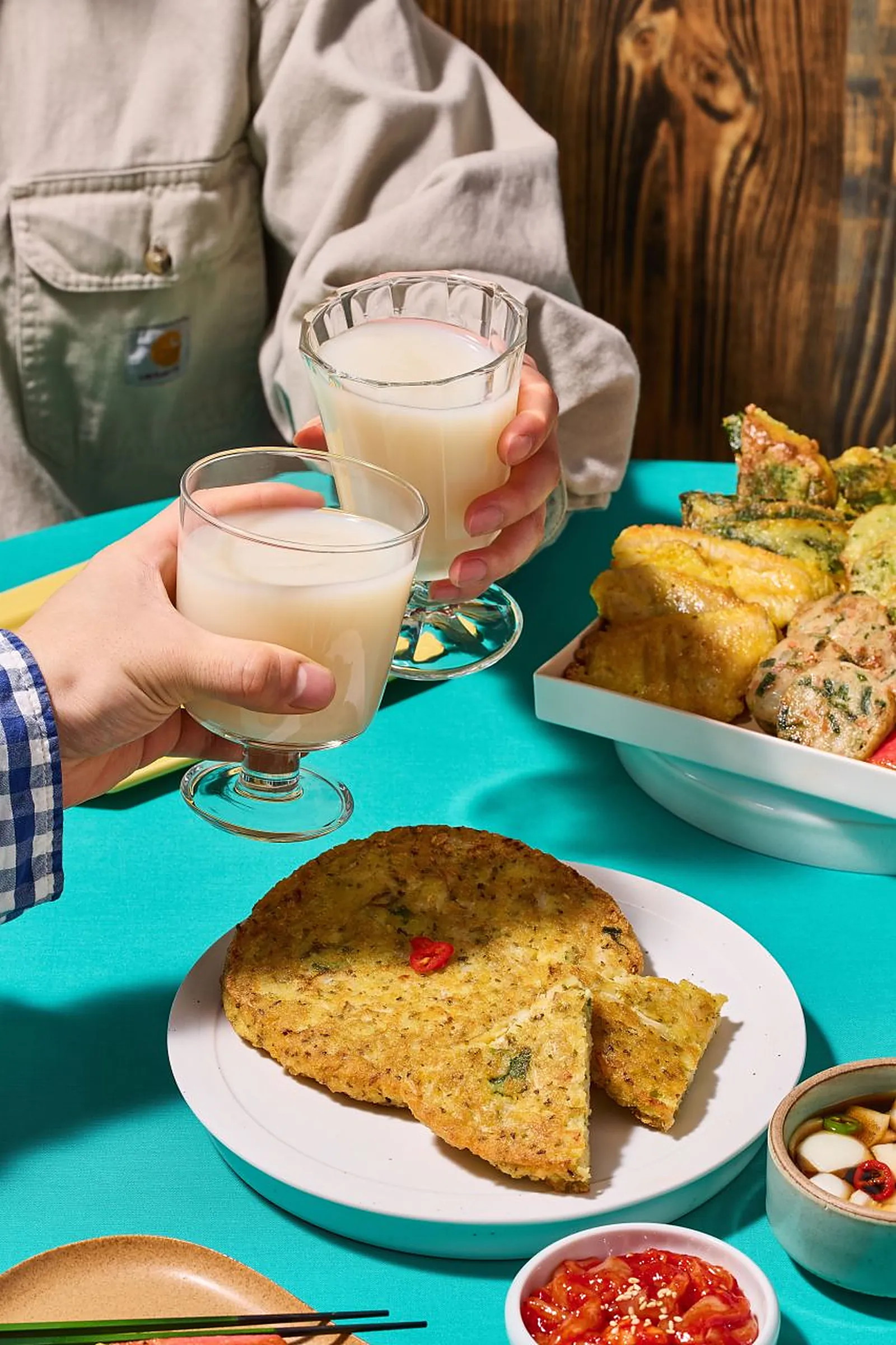
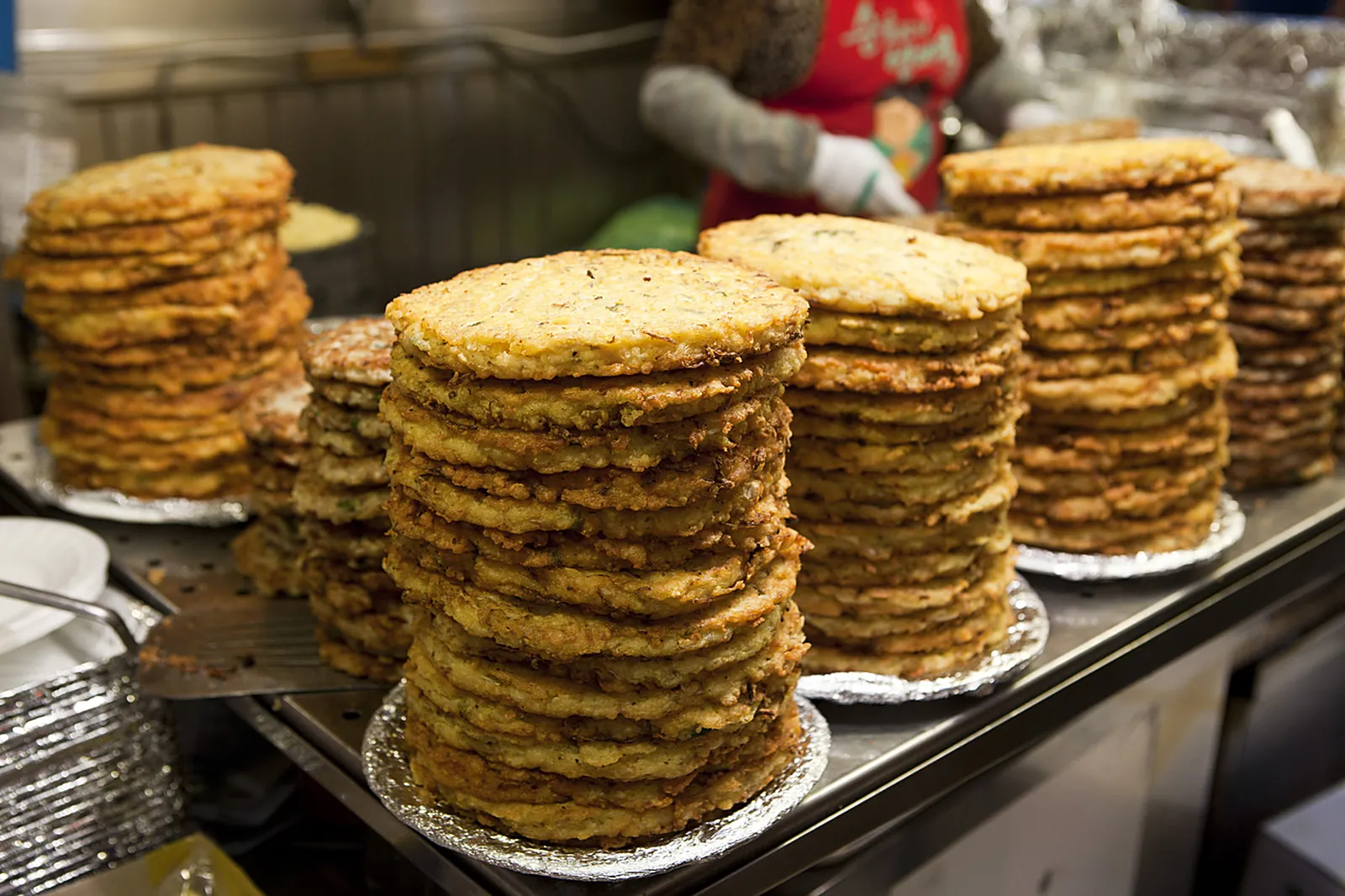
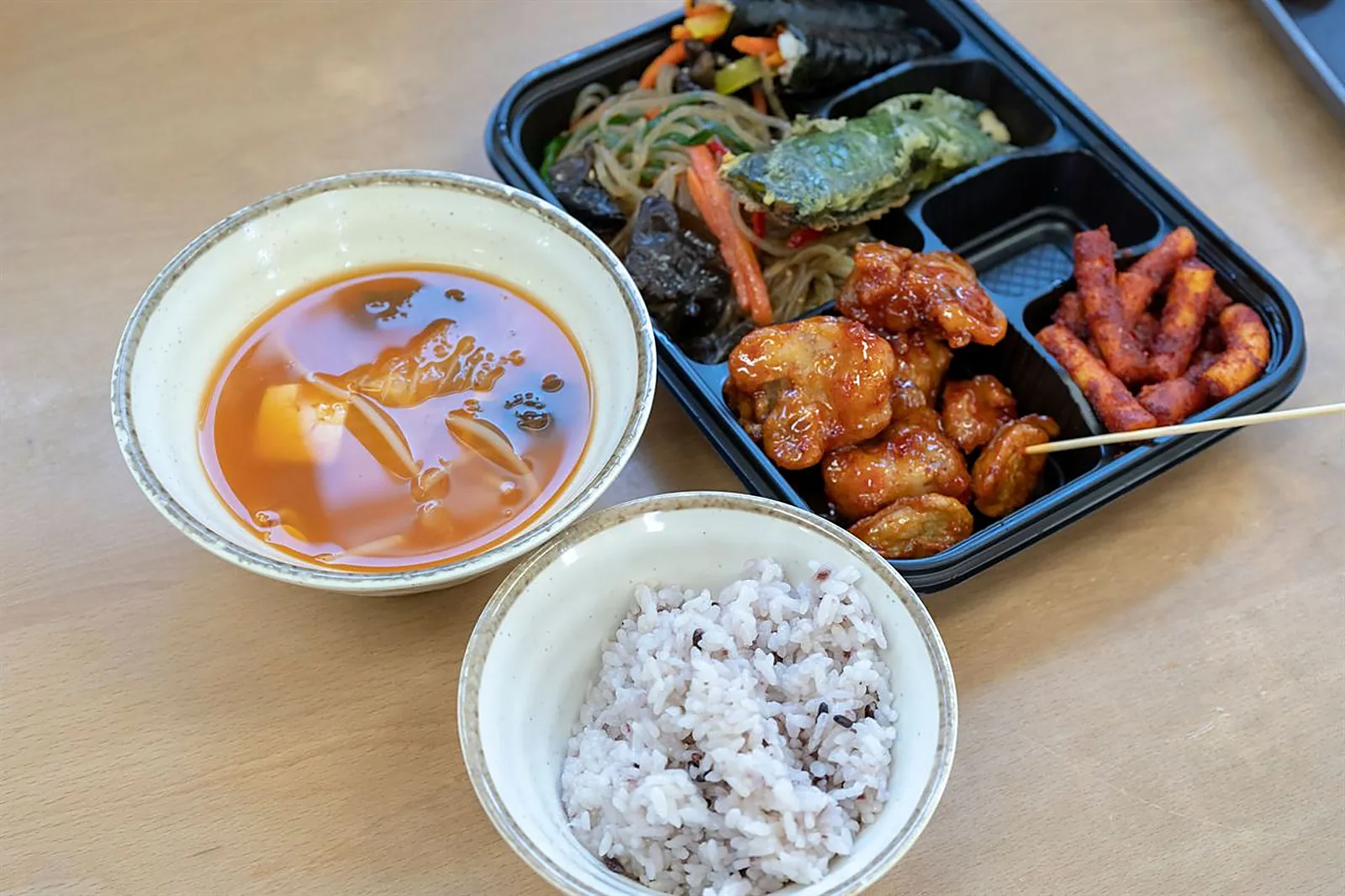
Bindaetteok (빈대떡) — the market's signature. Ground mung beans (often milled on the spot) are mixed with vegetables and sometimes pork, then shallow-fried until the outside is crackling-crisp. Dip it in the soy-onion sauce. Share one between two to leave room.
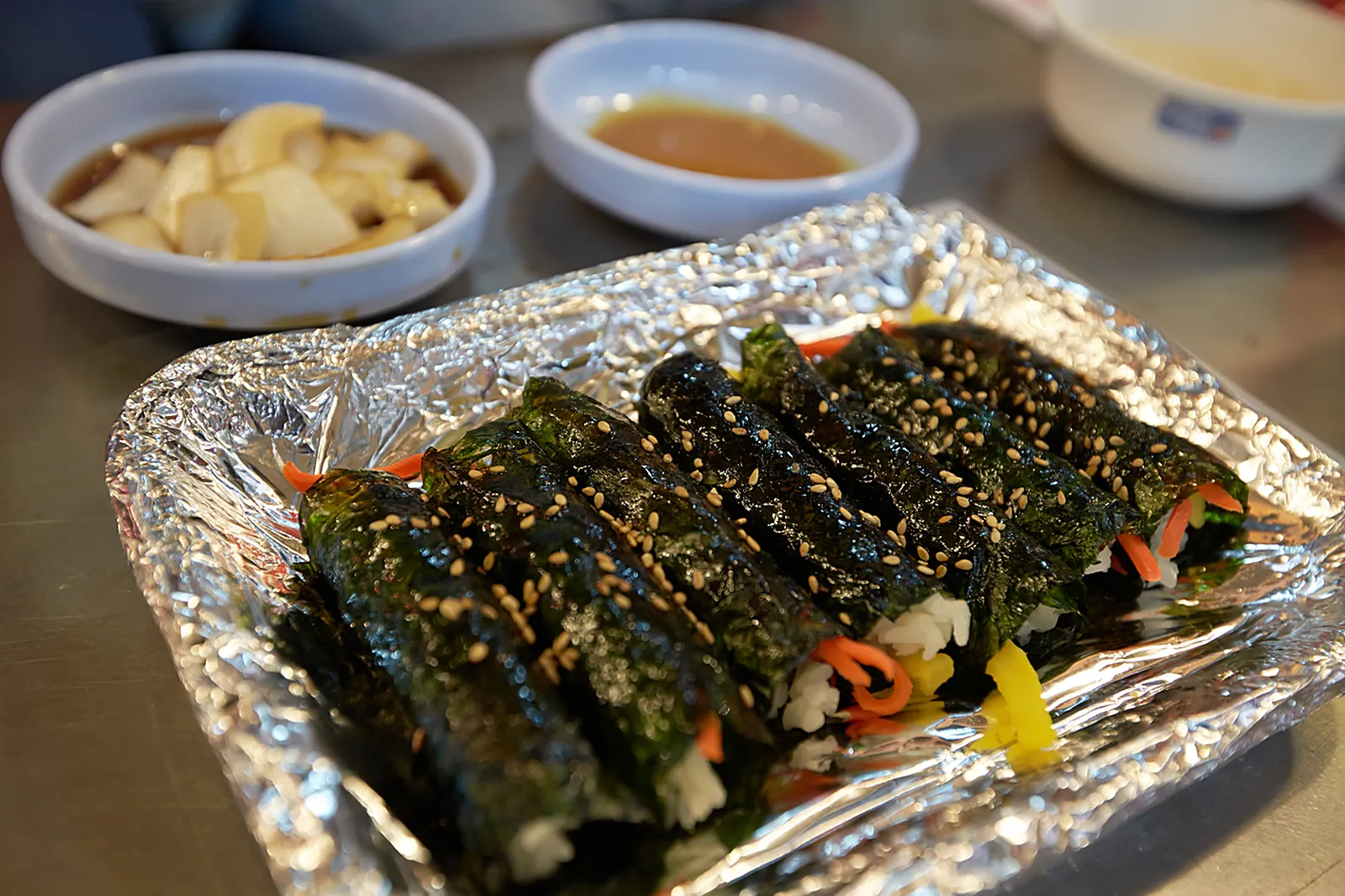
Mayak gimbap (마약김밥) — tiny, finger-sized rolls of rice and vegetables with a sweet-tangy mustard dipping sauce. The name means "drug kimbap", a joke about how addictive they are.
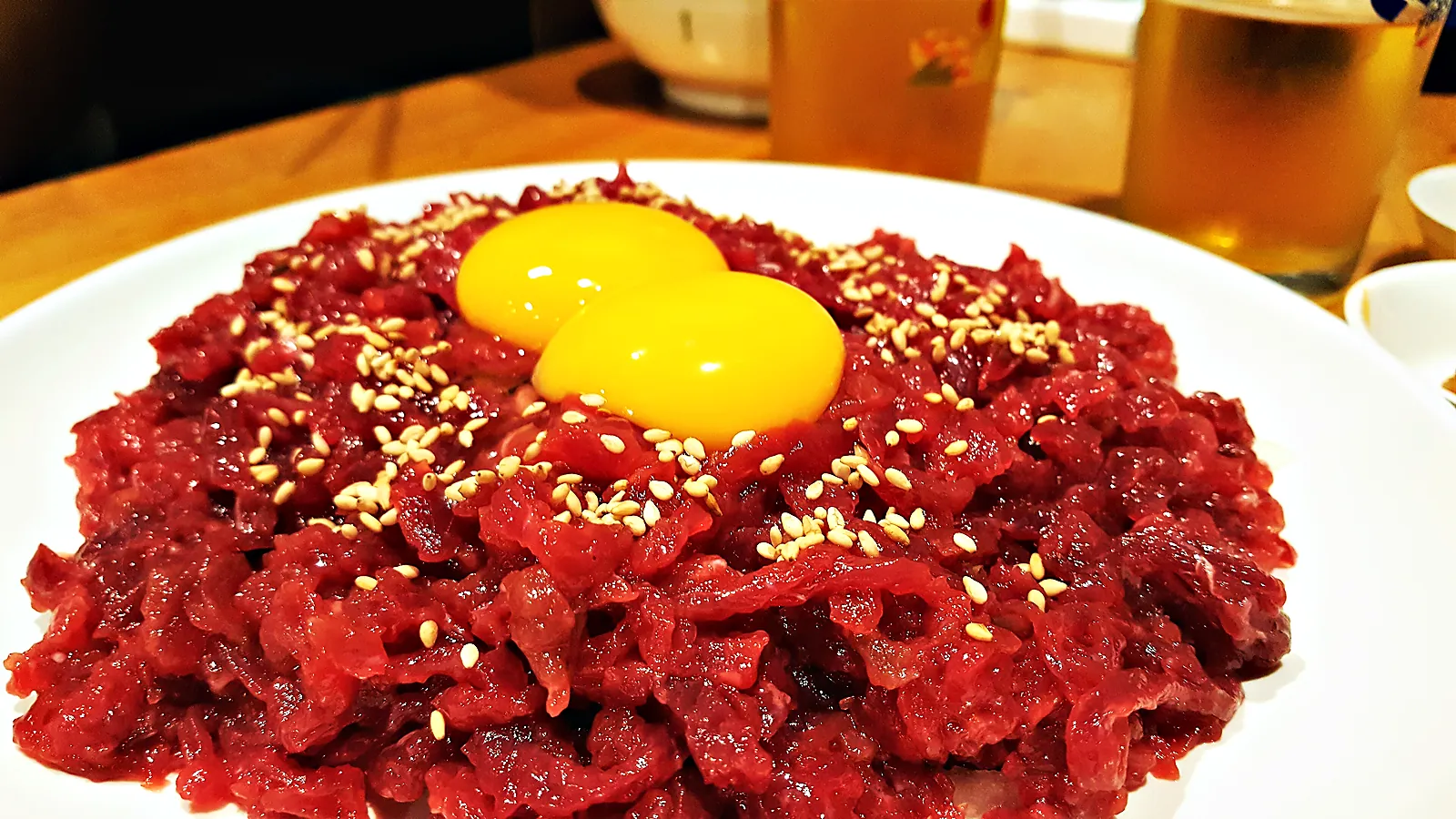
Yukhoe (육회) — Korean-style raw beef, seasoned with sesame oil and served with slivers of Asian pear and often a raw egg yolk. The market is famous for it. If you're comfortable with raw beef, it's a must.
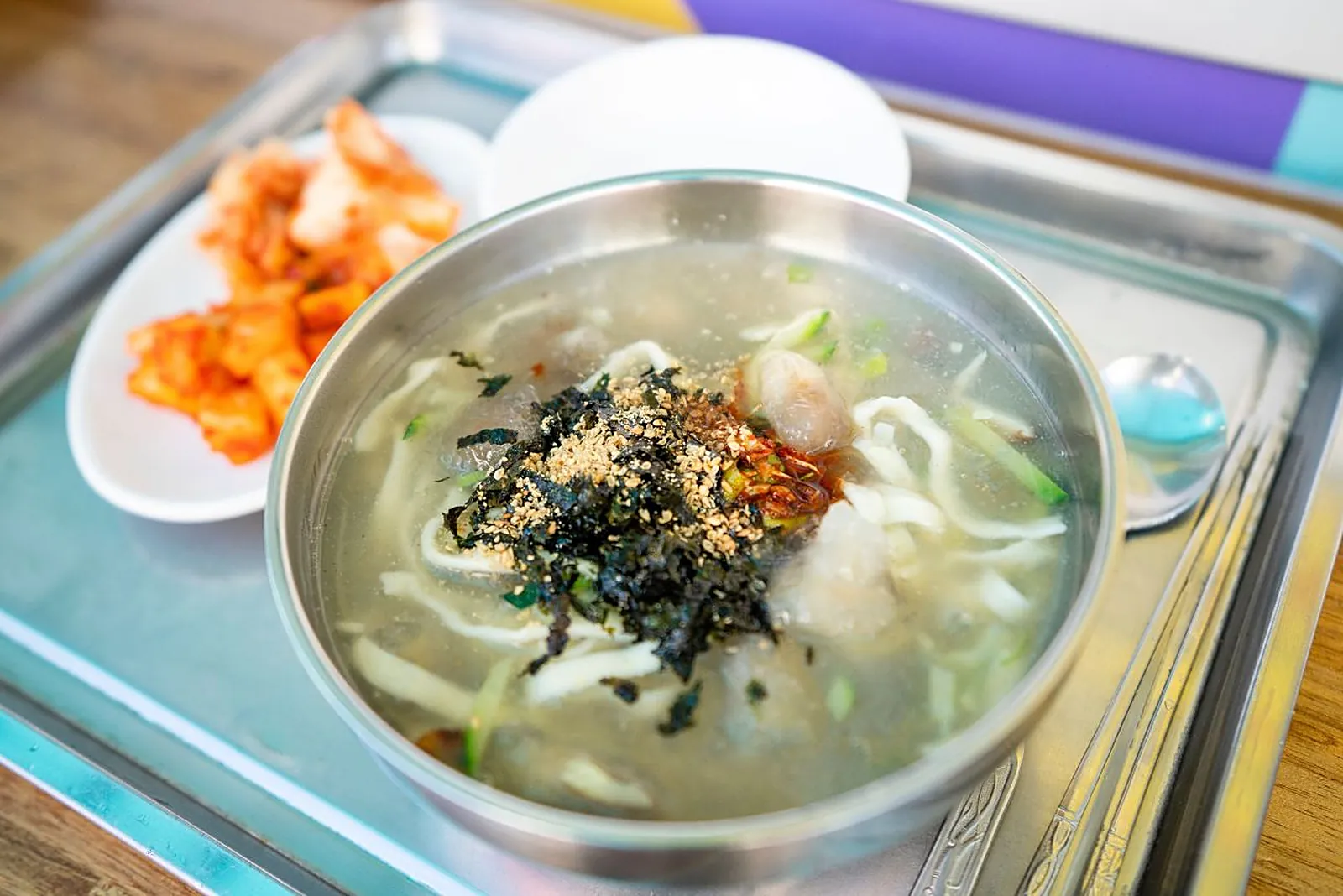
Kalguksu (칼국수) — hand-cut noodles in a warm broth, often with dumplings (mandu). Perfect on a cold day.
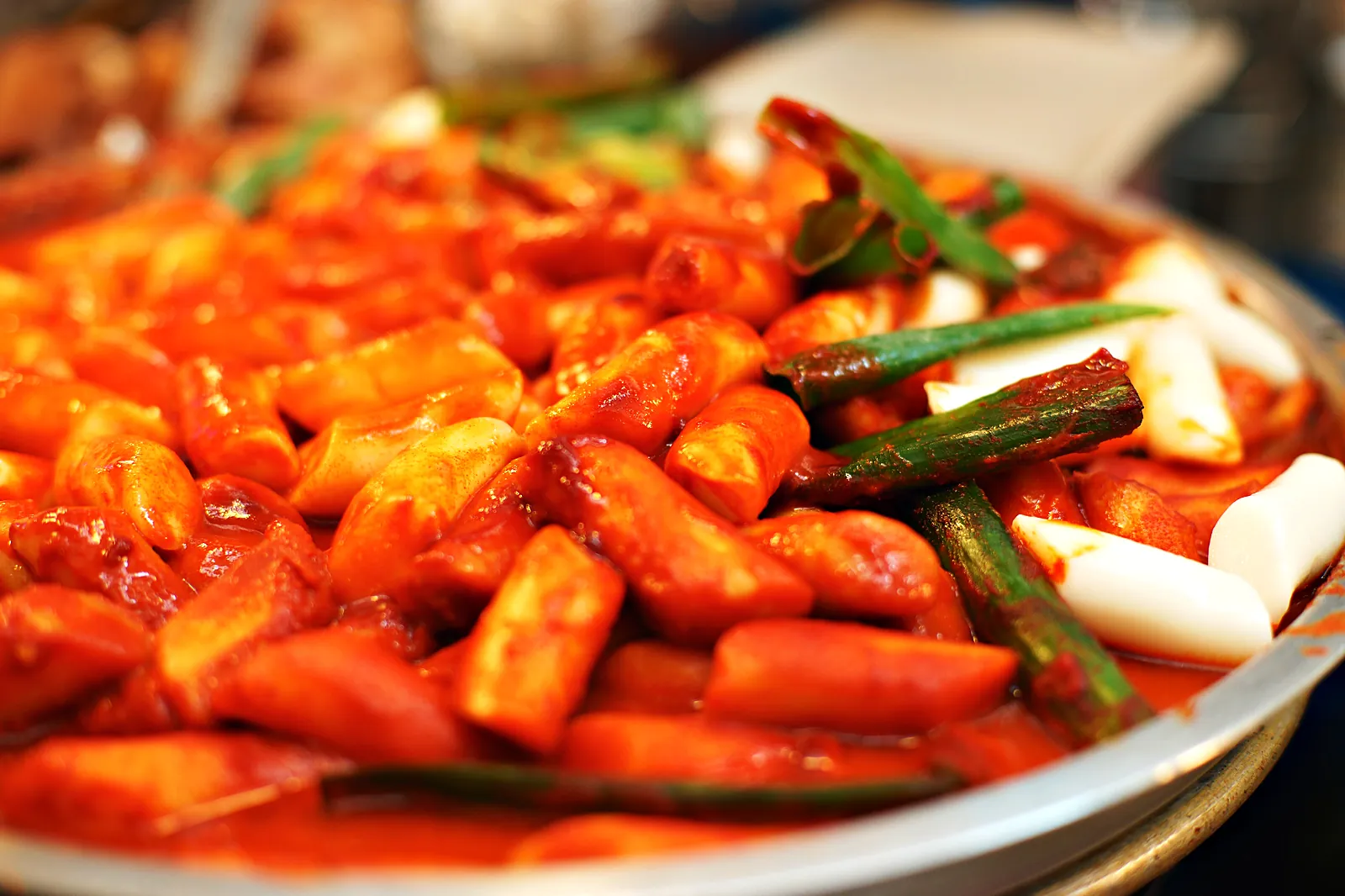
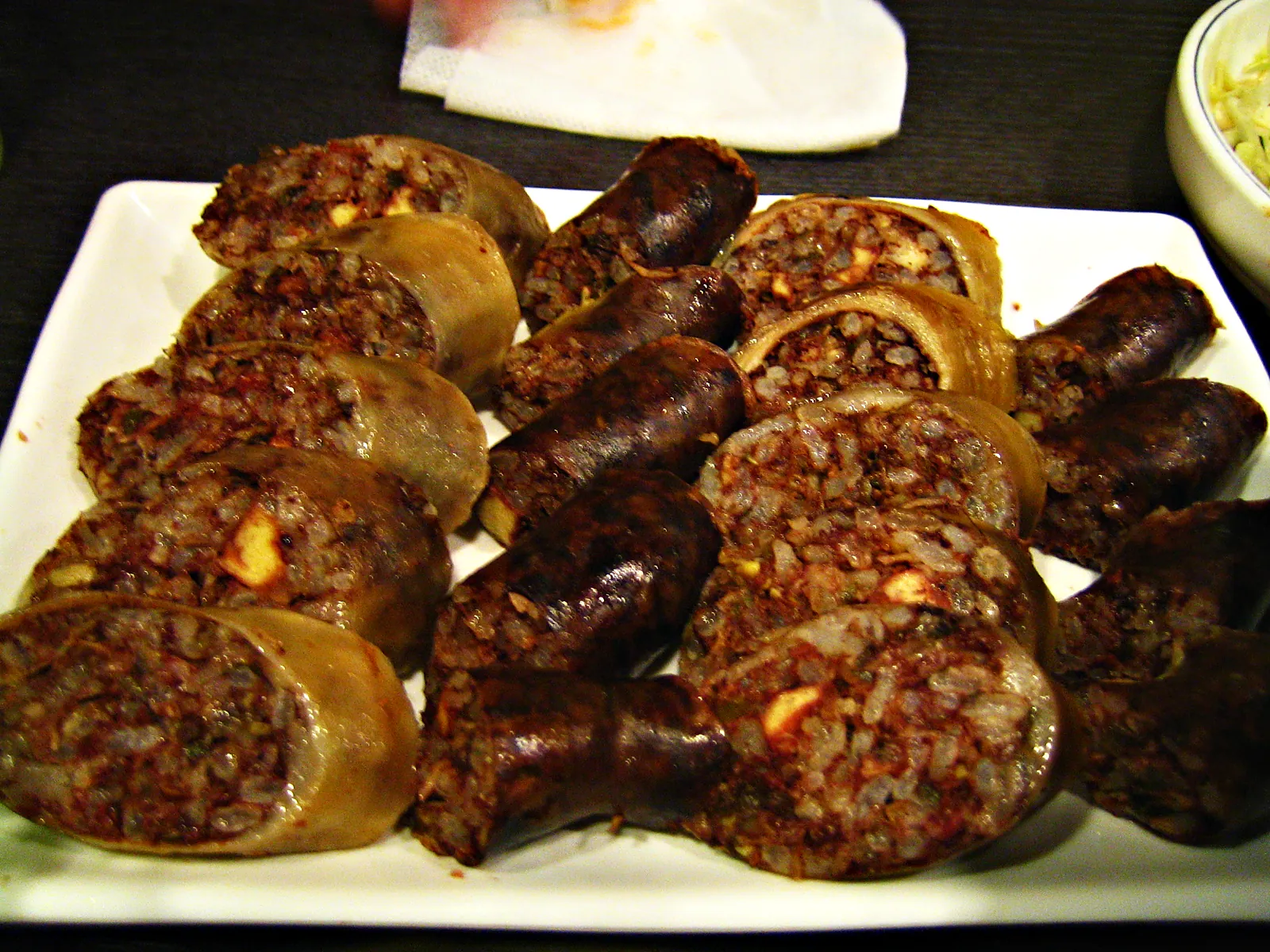
Also look for: tteokbokki (spicy rice cakes), sundae (Korean blood sausage), and makgeolli (milky rice wine) to wash it all down.
How to order
- Walk the alley once before committing — stalls specialise
- Pick a stall and sit on the bench in front of it
- Point at what you want or show the menu board
- Eat there — it's a sit-down, share-the-bench experience
- Pay the vendor when you're done
Check the price first
In recent years the market got negative press over a few stalls charging high prices for small portions. The market has worked to fix it, and most vendors display prices clearly. Just be a smart customer:
- Look for the posted price before you sit down
- Confirm the portion ("one plate, how much?") by pointing to the menu
- If something doesn't feel right, it's fine to move on to another stall
Cash or card?
Many stalls now take cards, but not all, and small purchases go smoother with cash. Carry some ₩10,000 and ₩1,000 notes. See where to change money.
When to go
- Weekday afternoons are calmest
- Lunch and early evening are busy but atmospheric
- Opening hours vary by stall, and some stalls close on certain days — the food alley is liveliest from late morning to evening
Beyond the food
Upstairs, Gwangjang has a well-known vintage clothing market — rows of tiny stalls selling secondhand jackets, knitwear and designer pieces. It's a favourite with young Seoulites.
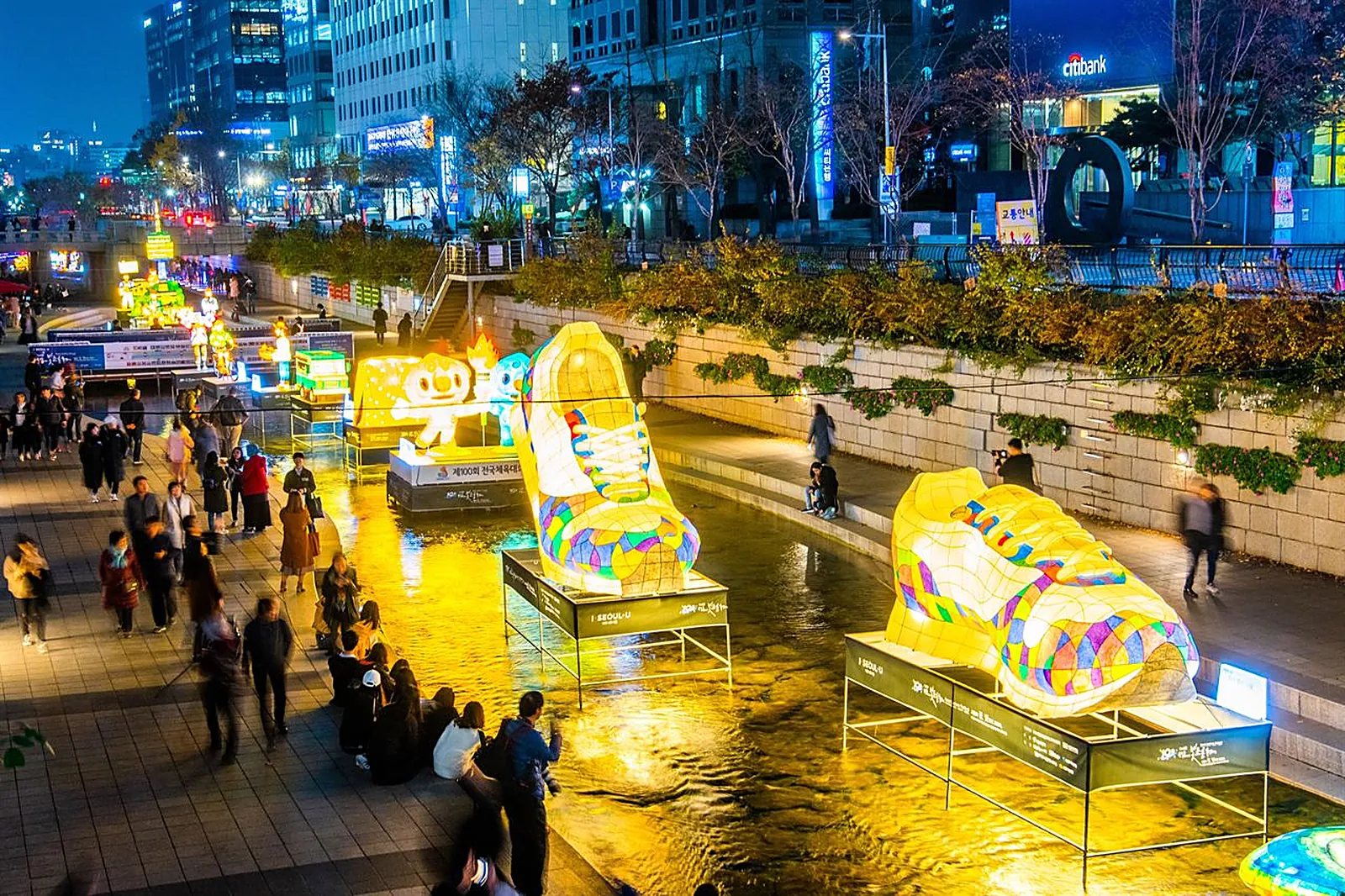
The market is also a short walk from Cheonggyecheon Stream, a restored urban stream with a walking path, and from Dongdaemun's shopping area. Easy to combine into half a day.
A market-food glossary
Signs are mostly in Korean, so these names help:
- Bindaetteok (빈대떡) — crispy mung-bean pancake
- Mayak gimbap (마약김밥) — mini seaweed rice rolls with mustard sauce
- Yukhoe (육회) — seasoned raw beef, often with pear and egg yolk
- Yukhoe bibimbap — rice bowl topped with yukhoe, a gentler way to try it
- Tteokbokki (떡볶이) — chewy rice cakes in a sweet-spicy sauce
- Sundae (순대) — Korean blood sausage with glass noodles, served with salt
- Eomuk (어묵) — fish cake skewers in hot broth
- Mandu (만두) — dumplings, steamed or in soup
- Makgeolli (막걸리) — milky, lightly fizzy rice wine
A tasting plan for two
You'll eat better if you pace it:
- Start with bindaetteok at a stall frying them fresh — share one
- Mayak gimbap next, at a counter a few steps away
- Yukhoe or yukhoe bibimbap if you're up for it
- Finish with kalguksu or dumplings to warm up
- Makgeolli alongside, or a coffee after, outside the market
That's a full meal for two for less than a sit-down restaurant dinner.
Other markets worth a visit
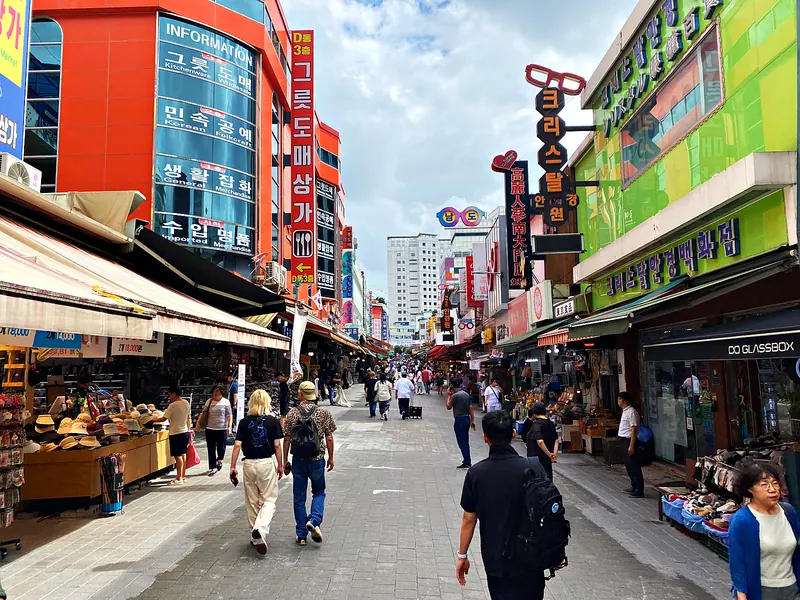
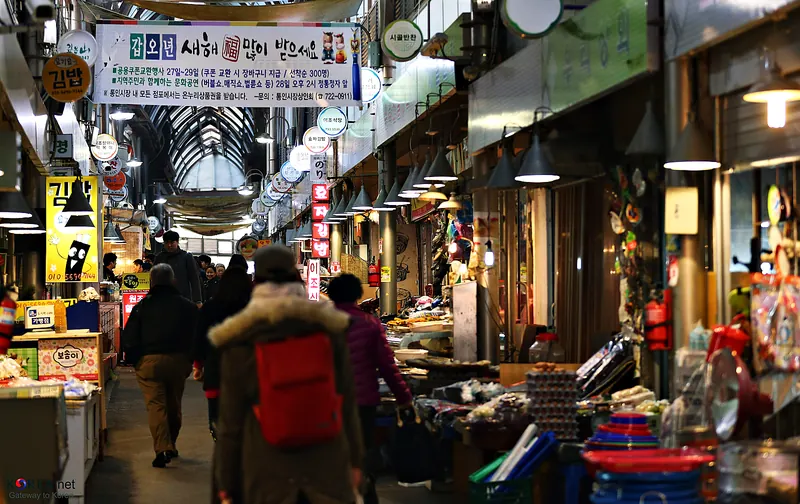
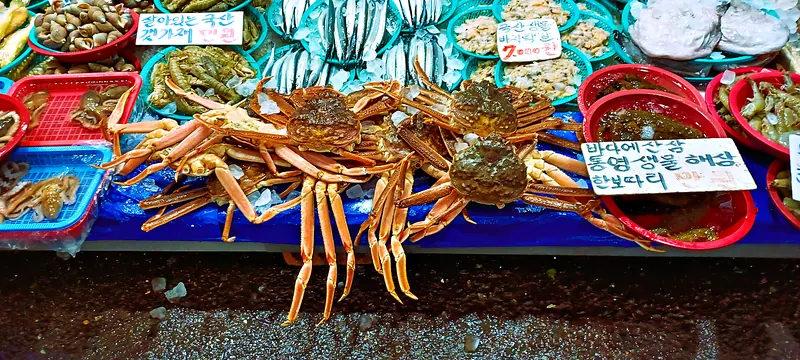
If Gwangjang gets you hooked:
Getting there
- Jongno 5-ga Station (Line 1) — the closest; follow signs for the market
- Euljiro 4-ga Station (Lines 2 & 5) — a short walk south
It's the dinner stop on our palaces and old Seoul day and the centrepiece of our one-day food itinerary.
Our honest take
Gwangjang Market is touristy — and still absolutely worth it. The food is good, the atmosphere is real, and eating shoulder to shoulder at a stall is one of the best experiences in Seoul.
Go if:
- You want to try several classic Korean street foods in one place
- You enjoy busy, noisy, atmospheric markets
- You're curious about yukhoe or bindaetteok made fresh
Manage expectations if:
- You hate crowds — go on a weekday afternoon
- You want a sit-down restaurant — stalls are small benches and quick meals
Our tip: go hungry, share everything, and pick stalls where locals are eating. Check prices before you sit, eat a bit at three or four stalls instead of a lot at one, and finish with a walk along Cheonggyecheon Stream.
Frequently asked questions
Is the yukhoe safe to eat?
It's a traditional dish served fresh daily at busy stalls. As with any raw meat, it's your call — if you're pregnant or have a weakened immune system, skip it.
How much should I budget?
A shared bindaetteok, a plate of gimbap and a bowl of noodles is an inexpensive, filling meal for two. Check posted prices as you go.
Is it suitable for vegetarians?
Partly. Some bindaetteok contains pork — ask for a vegetable one. Mayak gimbap is usually vegetarian, but check for fish cake or ham.
Is it too touristy?
It's popular with tourists, but locals eat there too. Go on a weekday afternoon and it feels far more local.