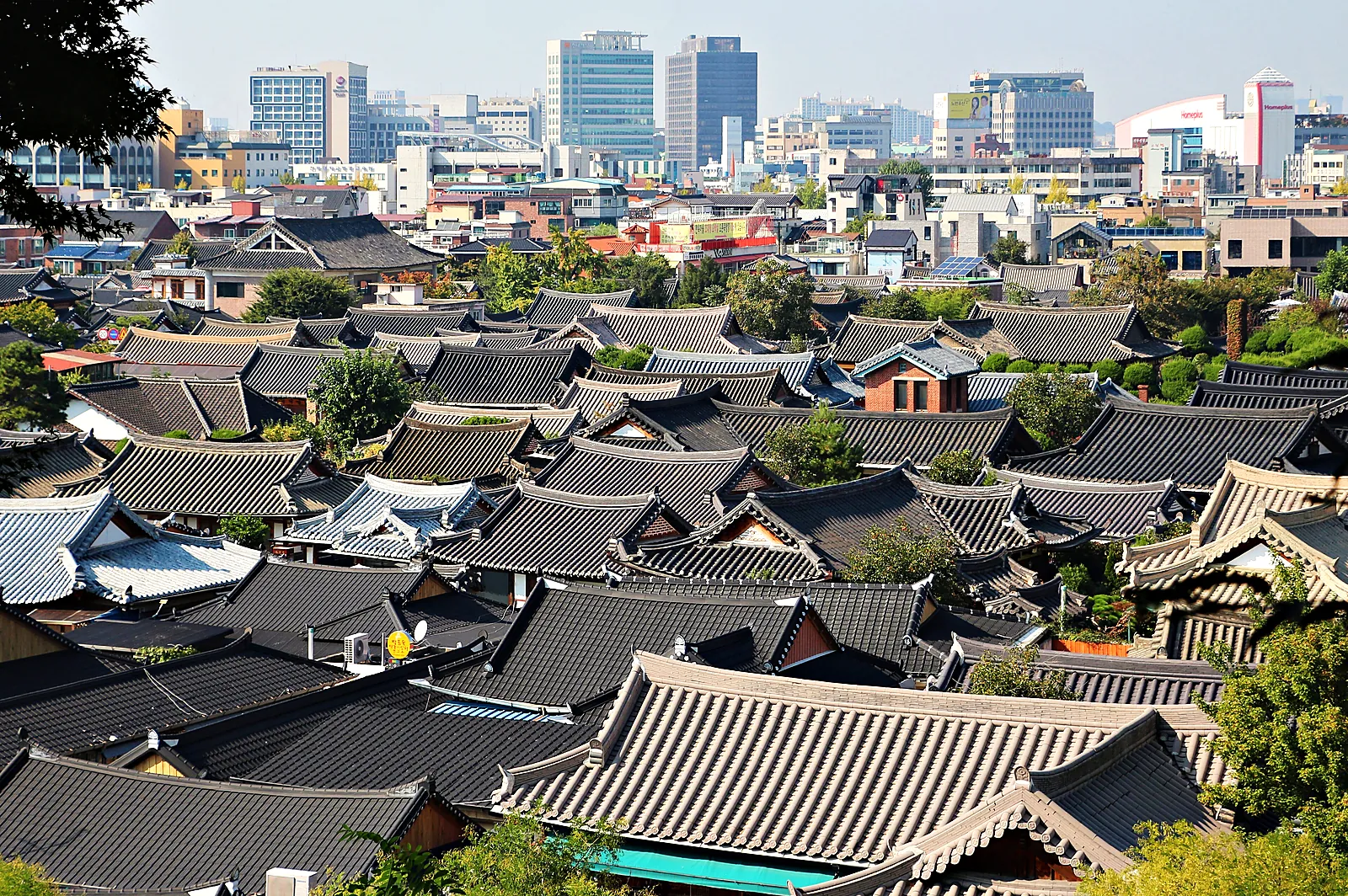
If you loved Bukchon but wished it was bigger, calmer at night and surrounded by great food, Jeonju is your place. The capital of North Jeolla Province is where the Joseon dynasty's founding family came from, and its hanok village — hundreds of tiled-roof houses packed into a few walkable blocks — is the largest in Korea.
Koreans also think of Jeonju as the country's food capital. This is the home of bibimbap, of hangover soup made with bean sprouts, and of makgeolli bars that bring out a small feast with every kettle. Here's how to do it well.
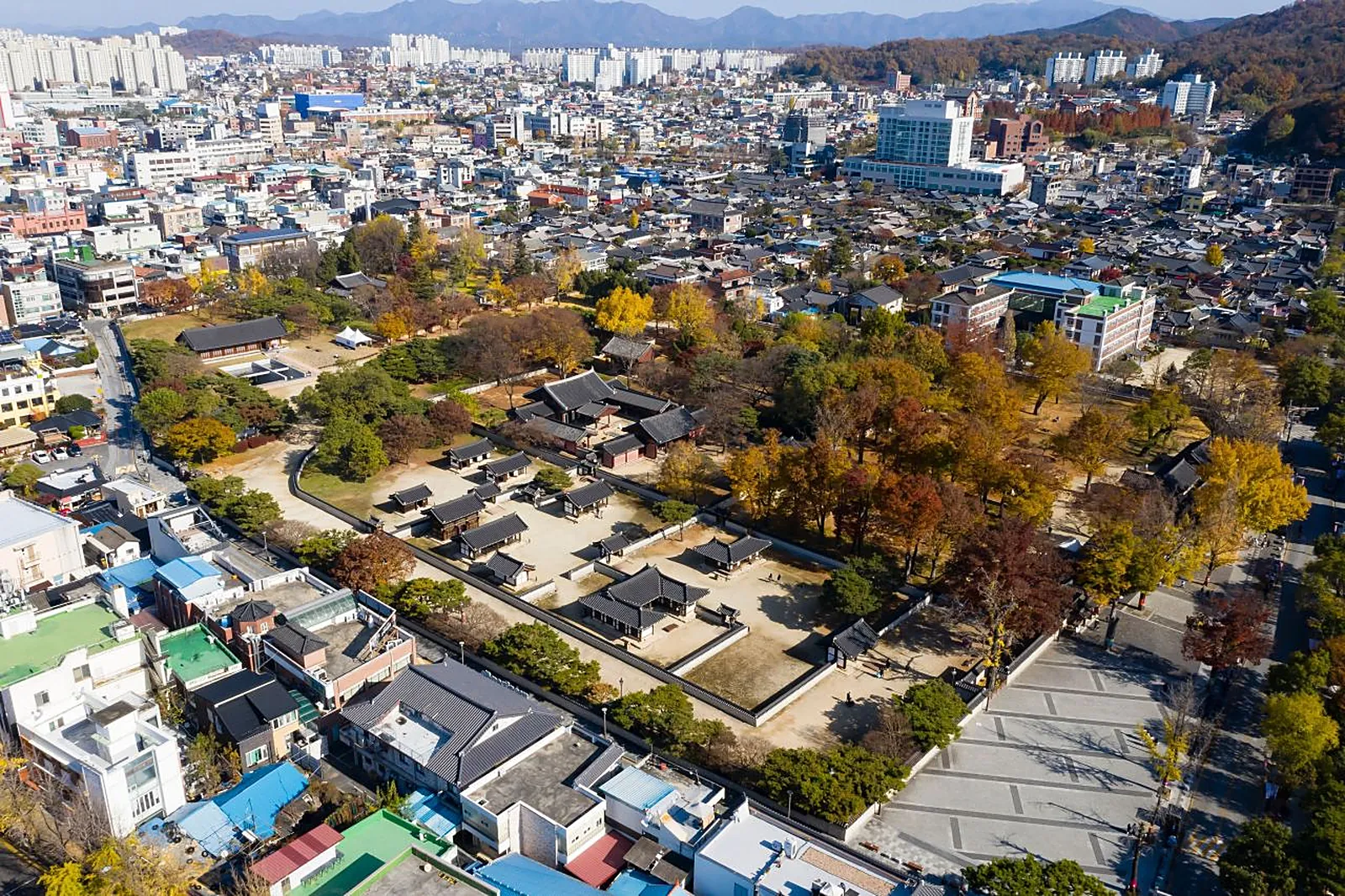
Jeonju Hanok Village
The hanok village is a neighbourhood, not a museum. People live, run guesthouses and sell snacks here, and its main streets are busy with visitors — many wearing rented hanbok. Walk the main street, Taejo-ro, then slip into the side lanes, where it's quieter and the houses are prettier.
The best things to see are all within about 15 minutes' walk of each other.
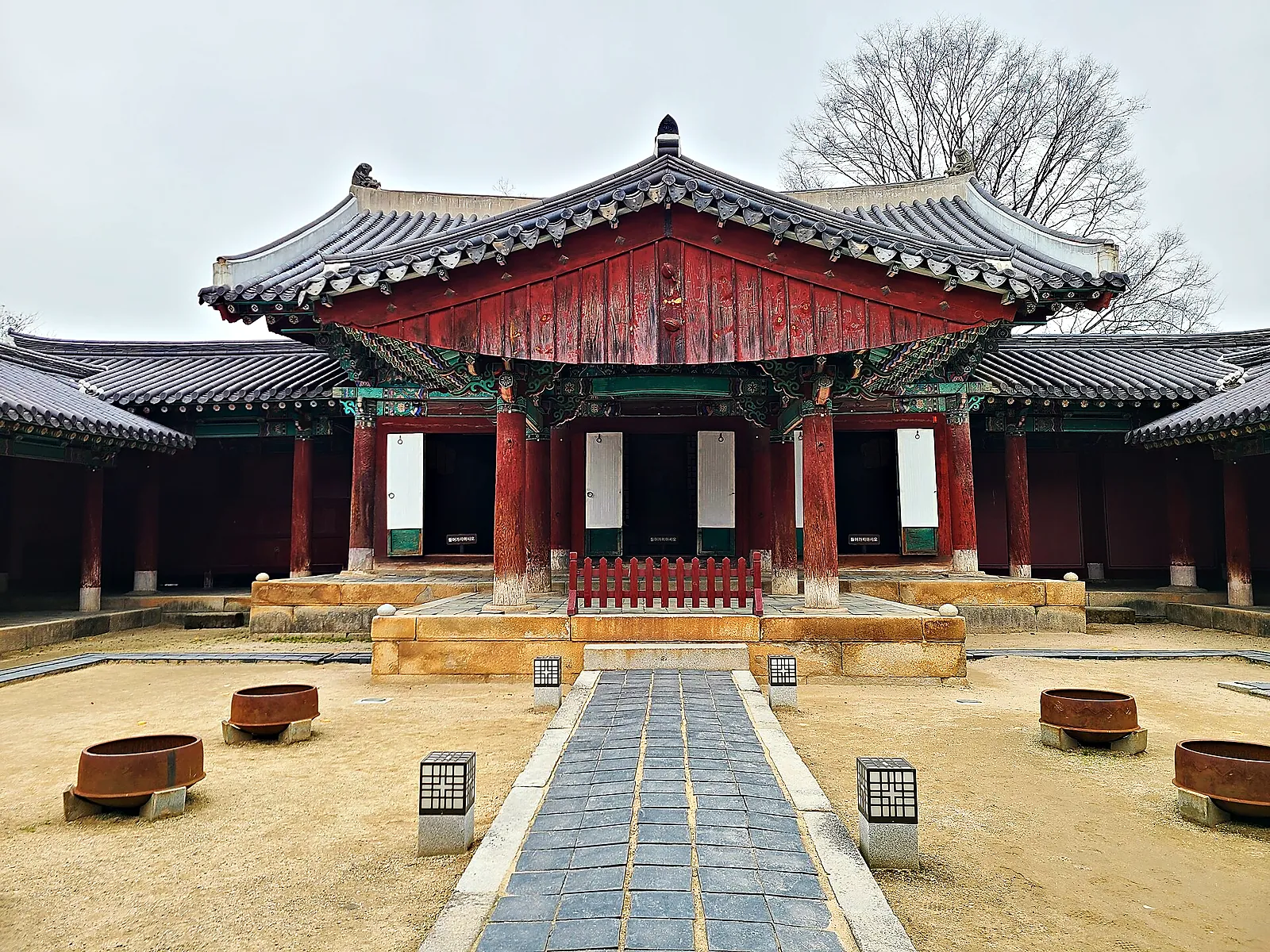
Gyeonggijeon Shrine
At the centre of the village is Gyeonggijeon, a shrine built in 1410 to hold the portrait of King Taejo, founder of the Joseon dynasty. The grounds are calm and green, with a lovely bamboo grove and old trees, and a small museum of royal portraits. It's one of the nicest places in the village to slow down.
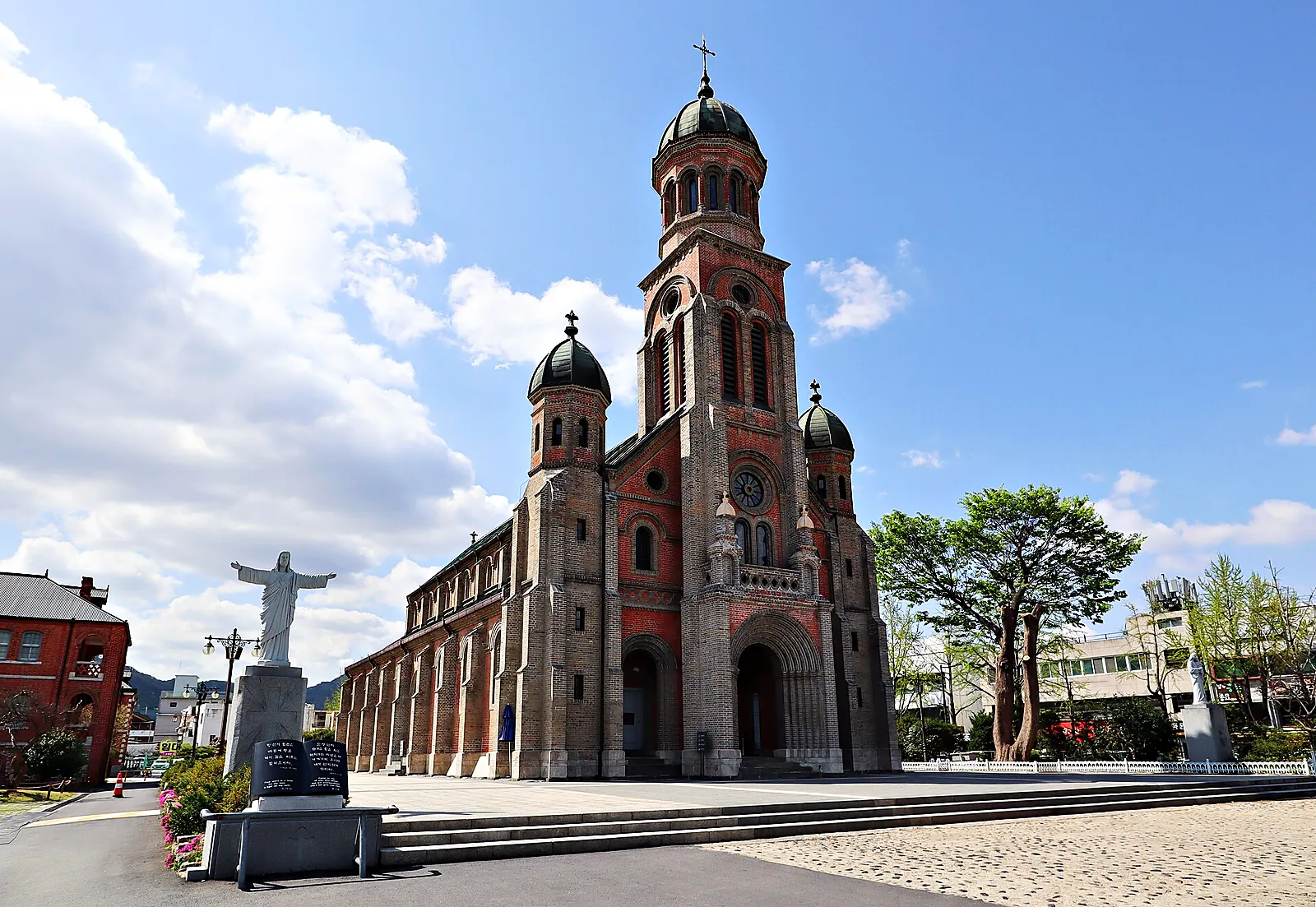
Jeondong Cathedral
Right opposite the shrine's main gate is Jeondong Catholic Cathedral, a red-brick and grey-stone church completed in 1914 on a site linked to Korea's early Catholic martyrs. The contrast between the cathedral and the hanok roofs around it is one of Jeonju's classic views.
Omokdae and the village views
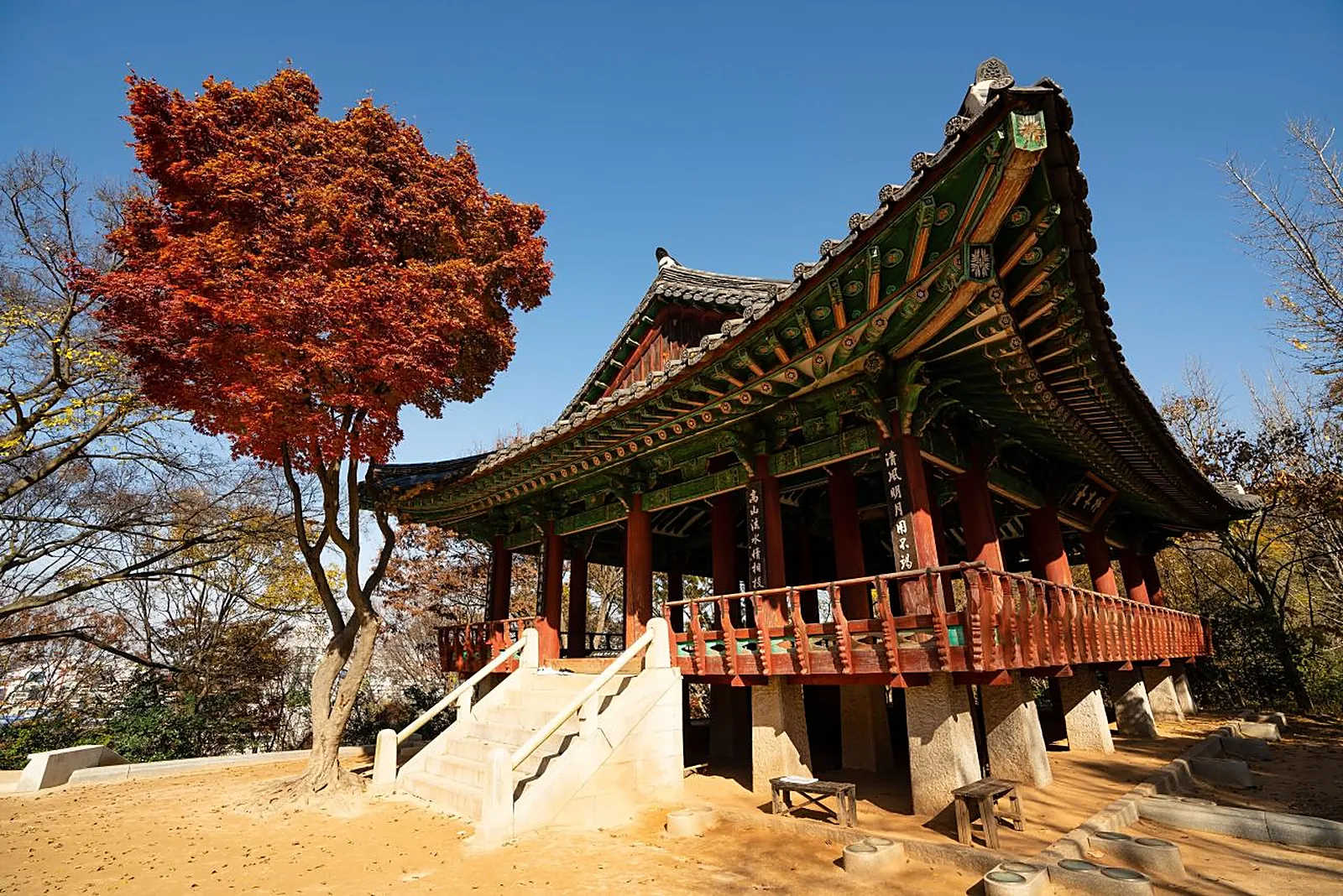
Climb the short hill to Omokdae, a pavilion at the edge of the village, for the best view over the rooftops — especially at sunset. From there a footbridge leads to Jaman Mural Village, a small hillside neighbourhood covered in murals, with a few cafés.
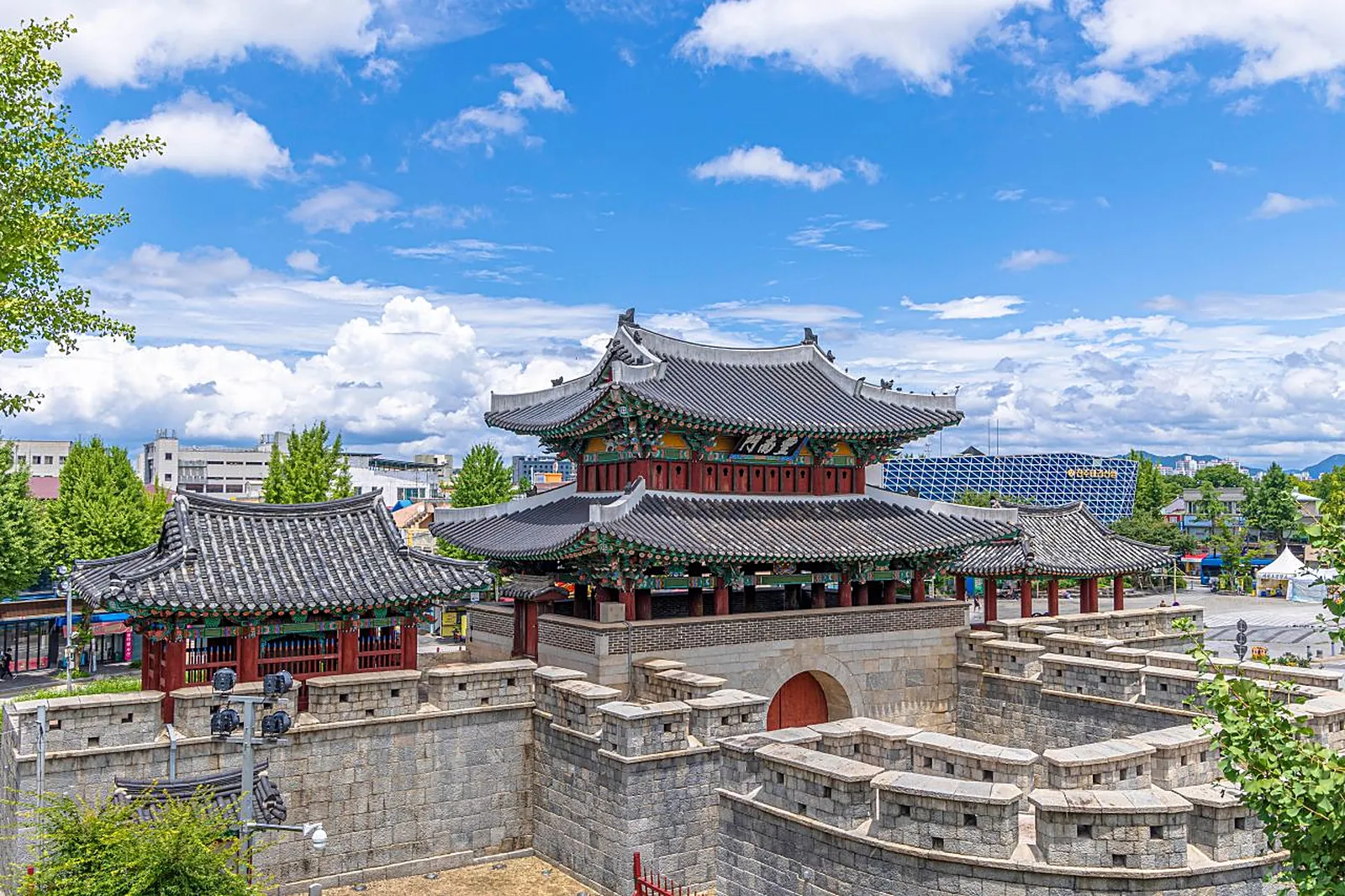
Also worth a look: Jeonju Hyanggyo, an old Confucian school with huge ginkgo trees that turn brilliant yellow in autumn, and Pungnammun, the old city's south gate.
What to eat
This is why many Koreans visit Jeonju.
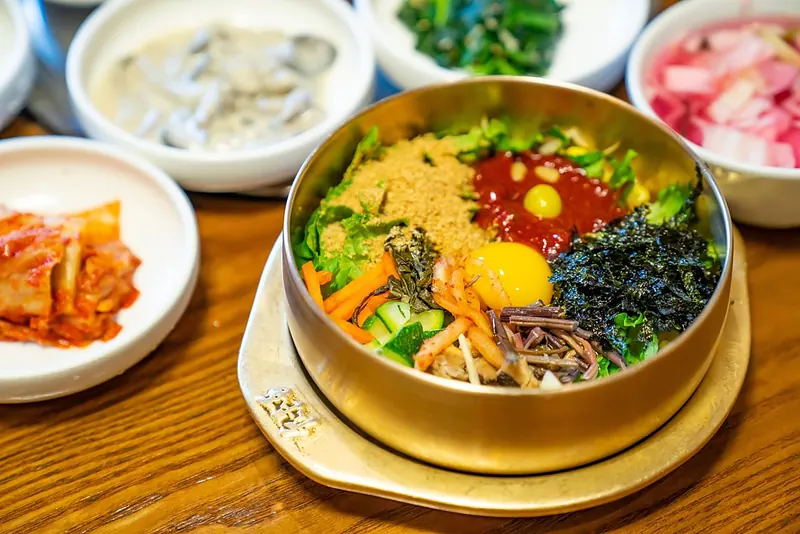
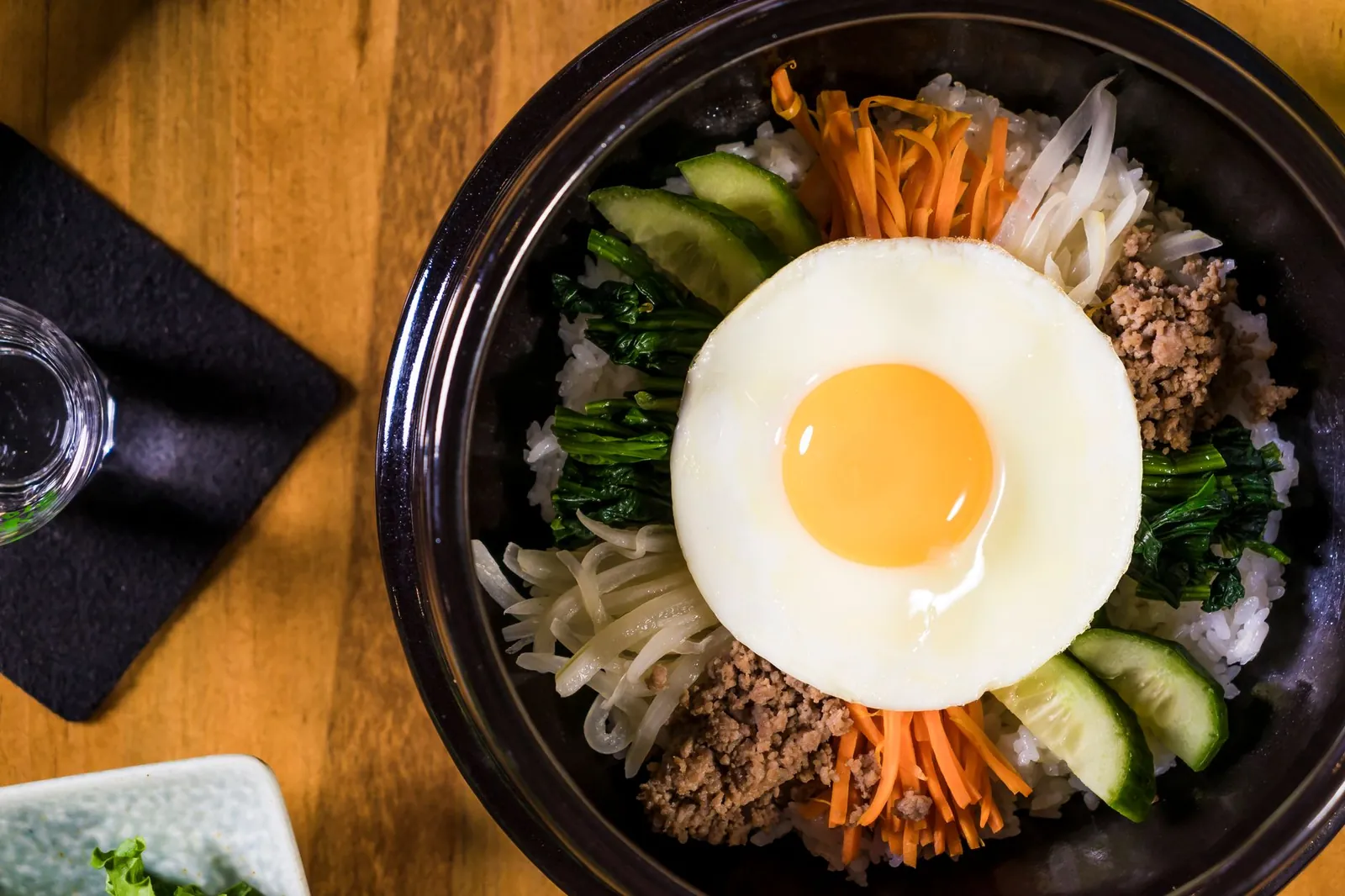
- Jeonju bibimbap: rice topped with many vegetables, beef, a raw or fried egg and chilli paste, often served in a brass bowl. The local version is richer and more elaborate than you'll find elsewhere
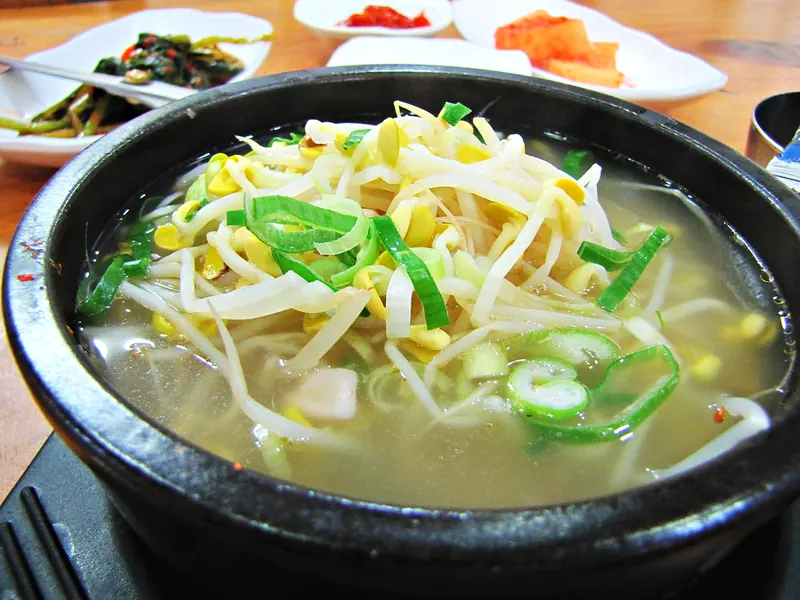
- Kongnamul gukbap: bean-sprout soup with rice, a famous hangover cure and a perfect breakfast
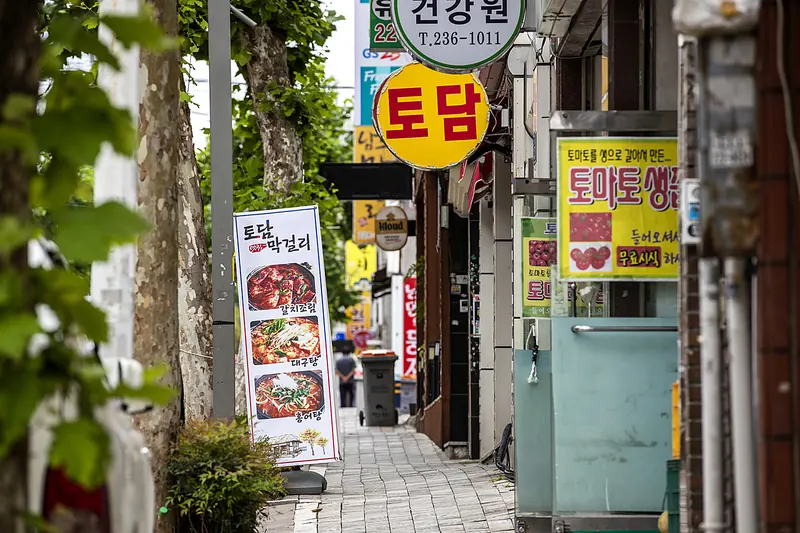
- Makgeolli alleys: in some Jeonju makgeolli bars, you order a kettle of rice wine and a spread of side dishes arrives with it — each extra kettle brings more. The Samcheon-dong area is the best known
- Street food: the village's main street is lined with snacks — grilled skewers, dumplings, sweet treats
- Choco pies: Jeonju's bakeries are known for handmade chocolate pies, a popular souvenir
On Friday and Saturday evenings, Nambu Market near the south gate runs a night market with food stalls, and its upstairs "youth mall" has small cafés and shops run by young owners.
Staying in a hanok
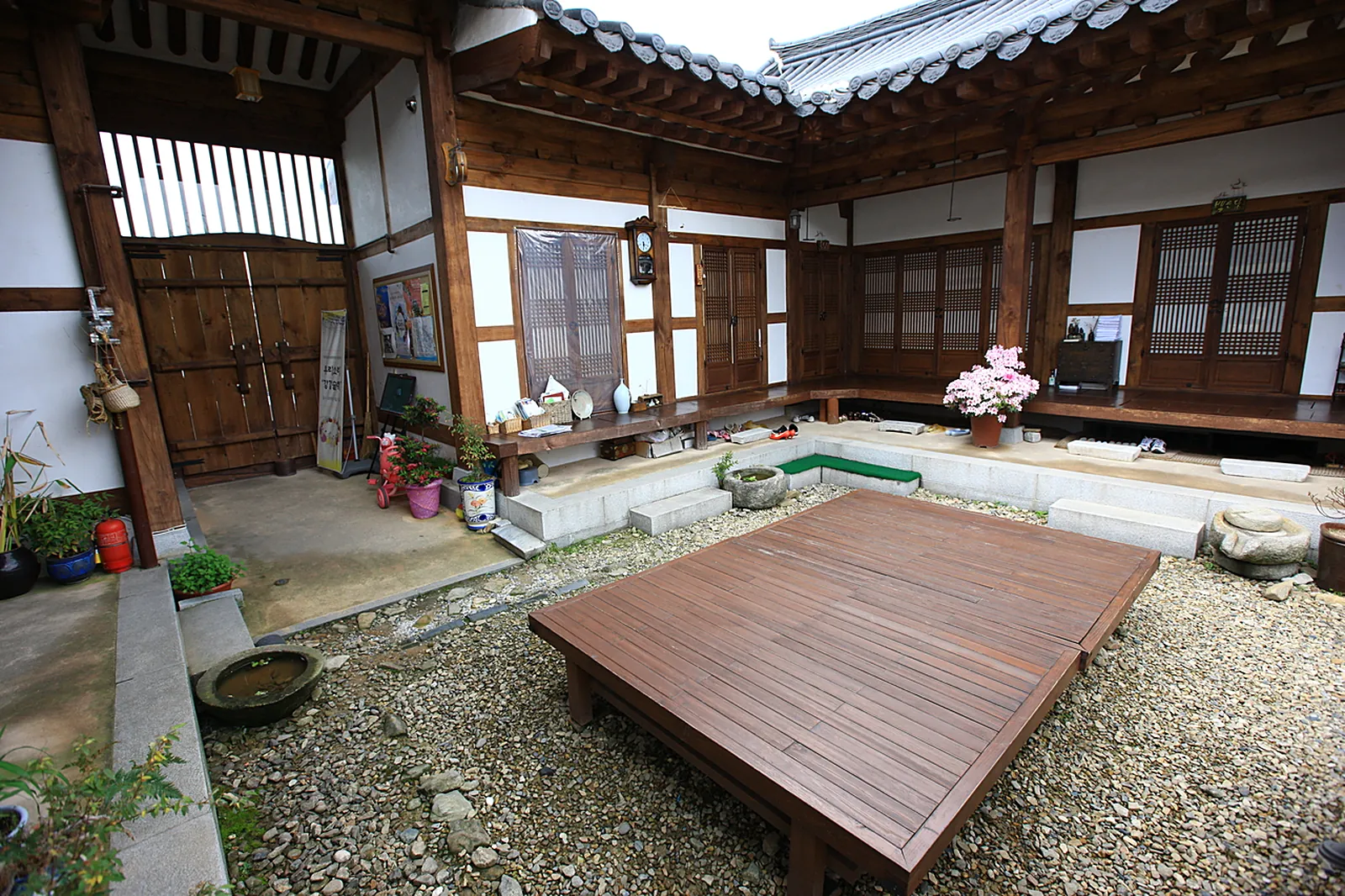
Jeonju is the best place in Korea to spend a night in a hanok stay. Many houses in the village take guests: you sleep on a thick mattress on a heated floor (ondol), often around a small courtyard, and some include a simple Korean breakfast. Rooms are usually small and bathrooms sometimes shared, so read the listing. The village is magical in the early morning and evening, after the day visitors have gone.
Hanbok in Jeonju
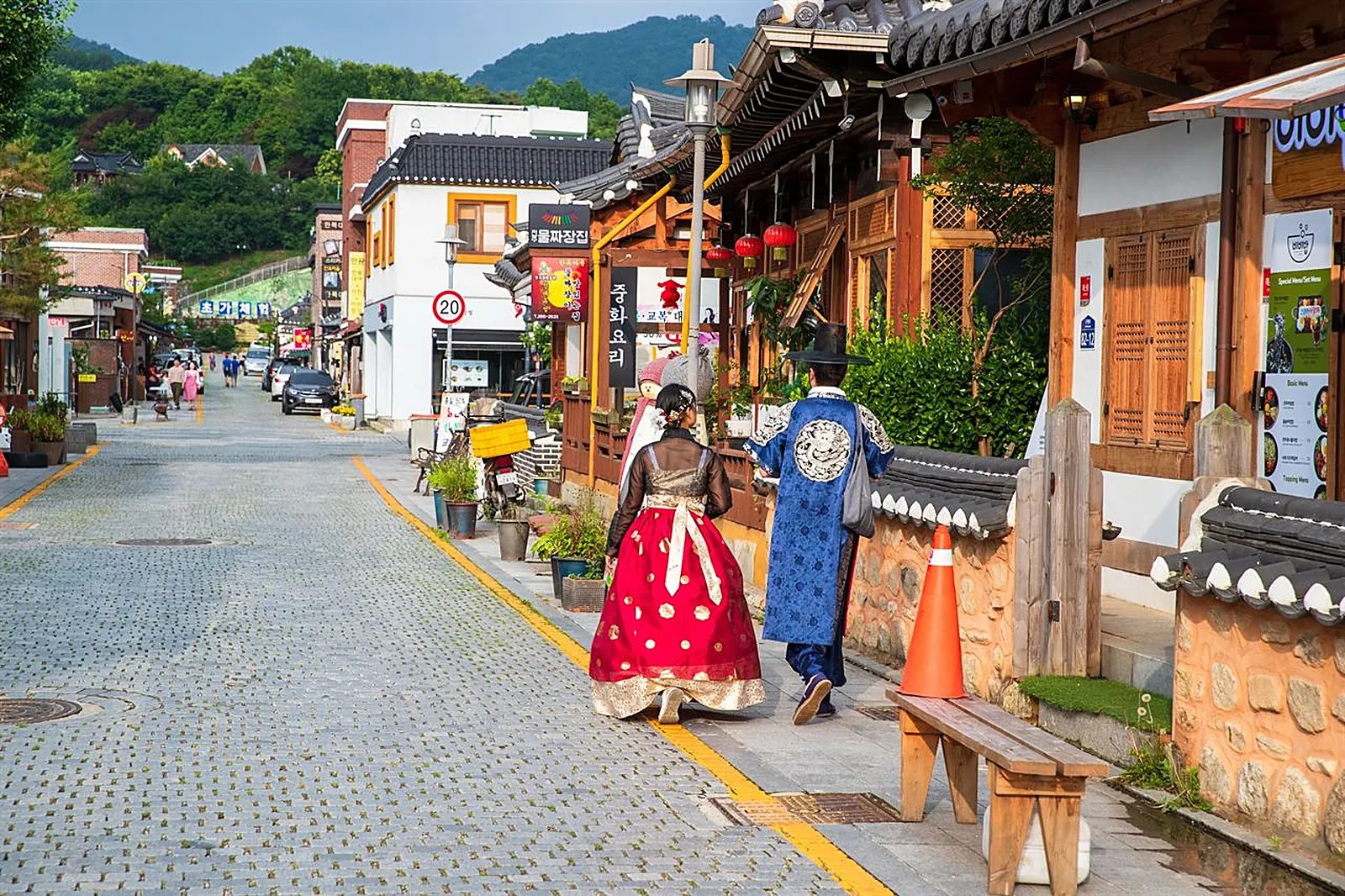
Hanbok rental shops line the streets around the village, and walking around in one is part of the experience here — much like at Seoul's palaces. Rent for a few hours in the morning, when the light is soft and the streets are quieter. See our hanbok guide for how rentals work.
When to go
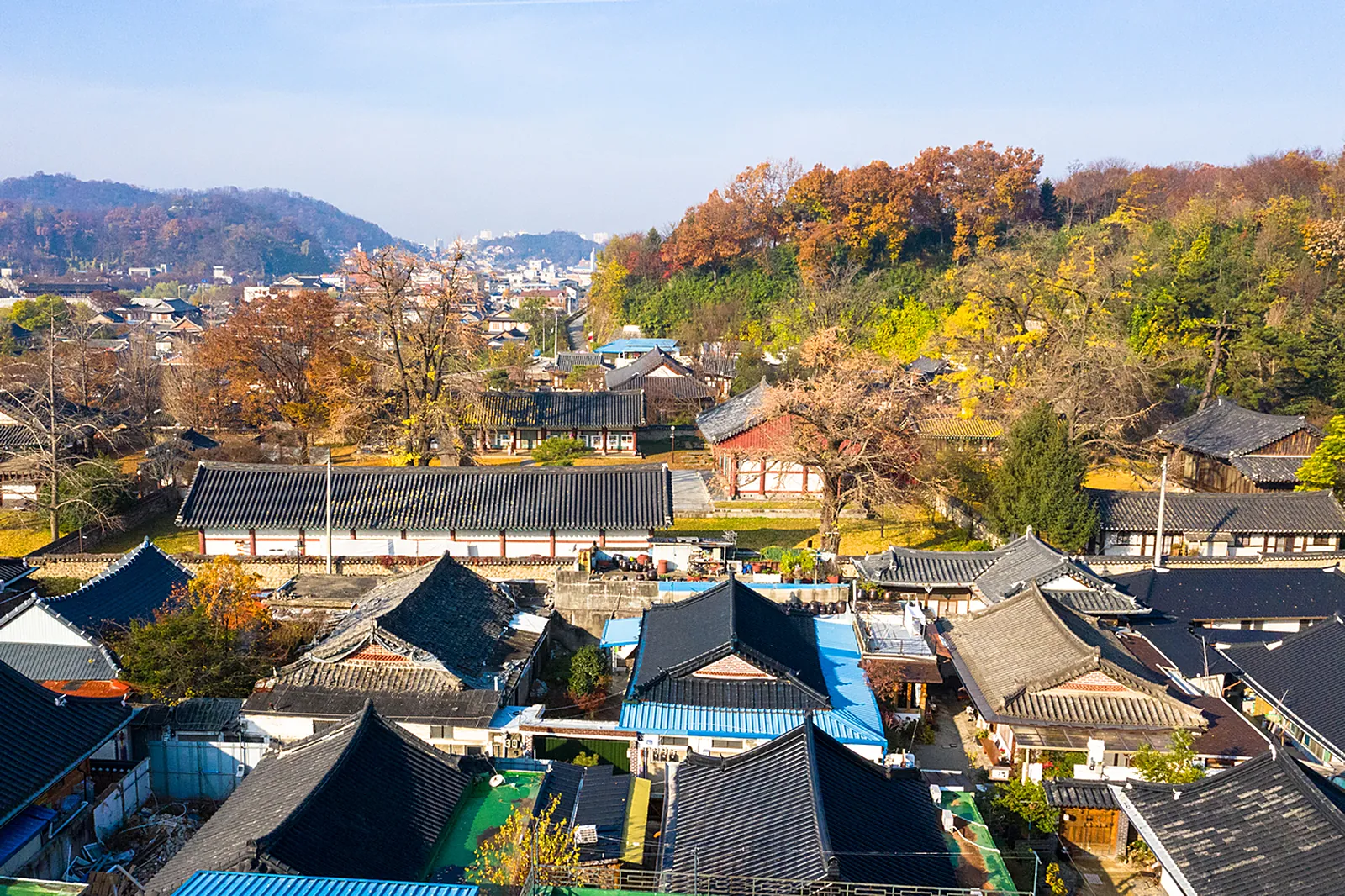
Spring and autumn are ideal — especially late October and November, when the ginkgo trees at the Hyanggyo turn gold. The Jeonju International Film Festival takes over the city in spring. Weekends and Korean holidays are very busy; weekdays are much calmer.
Getting there
- KTX: trains from Yongsan Station (and some from Seoul area stations) reach Jeonju Station in about 1.5–2 hours. Book on the Korail app
- Express bus: from Seoul Express Bus Terminal (Central City) to Jeonju in around 2.5–3 hours, with frequent departures and no booking needed on weekdays
- From Jeonju Station: the hanok village is about 15–20 minutes by taxi or city bus. The express bus terminals are a little closer
Our honest take
Jeonju is the most "Korean" small-city trip you can do from Seoul — beautiful, walkable, and all about eating well.
Go if:
- You love food and want to eat your way through a town
- You want a night in a hanok without a Seoul price tag
- You have a free weekday and want a slower pace than Seoul
Skip if:
- You only have a day and hate long train rides
- You've already done a hanok stay and don't care about food
Our tip: arrive in the afternoon, stay one night in a hanok, and walk the village at 8am the next morning before the crowds — then bibimbap for lunch and home.
Frequently asked questions
How far is Jeonju from Seoul?
About 1.5–2 hours by KTX from Yongsan Station, or around 2.5–3 hours by express bus.
Can I visit Jeonju as a day trip?
Yes, but it's a long day. An overnight stay in a hanok is far more rewarding.
What is Jeonju famous for?
Its hanok village, bibimbap, bean-sprout soup, makgeolli bars and its links to the founding of the Joseon dynasty.
Do I need to wear hanbok in Jeonju?
Not at all — but many visitors rent one for a few hours, and the village is a beautiful backdrop for photos.