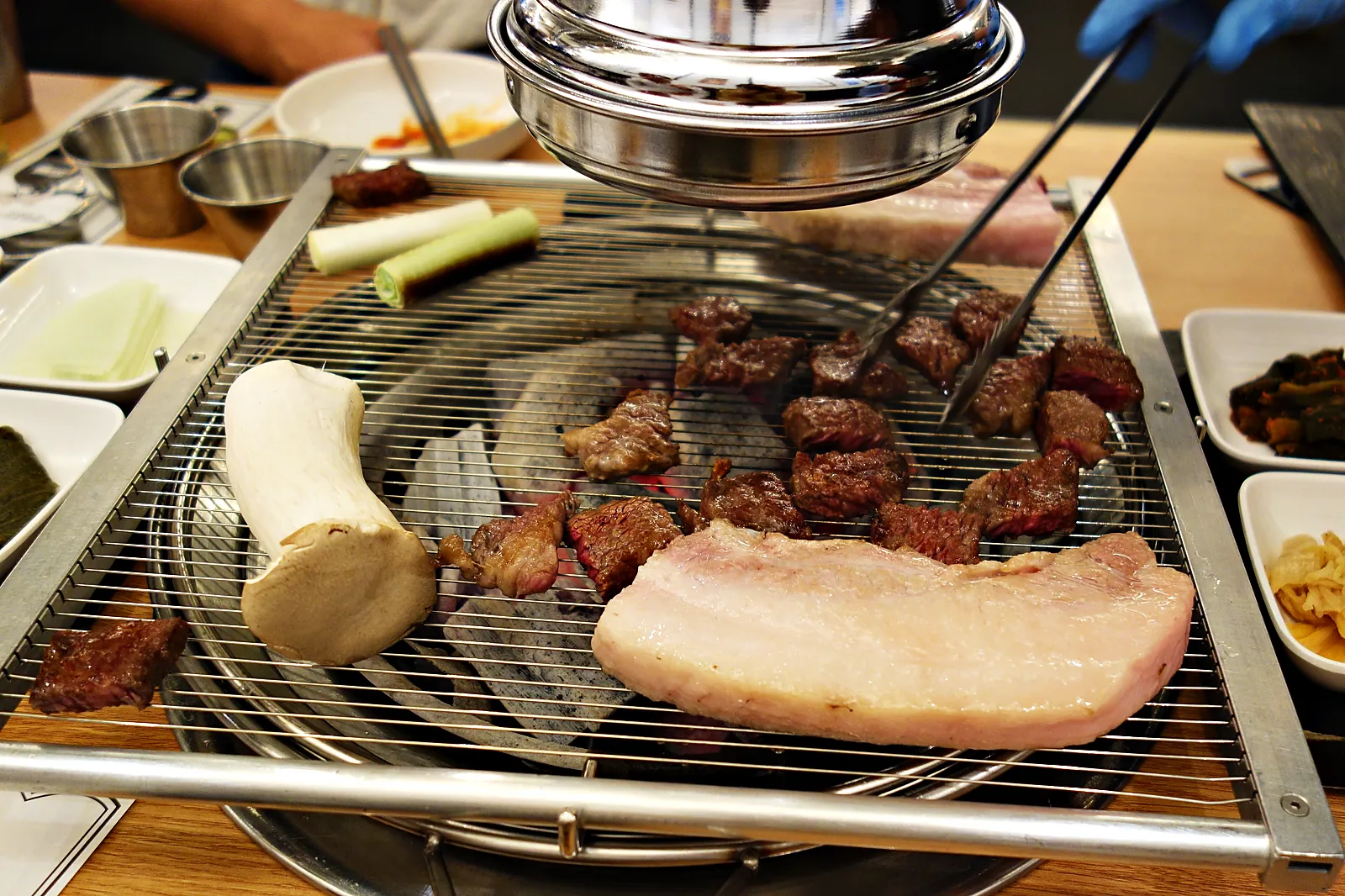
Korean BBQ is the meal most visitors come to Korea for, and for good reason: a charcoal or gas grill in the middle of the table, a dozen little side dishes, and a group of people cooking, wrapping and pouring for each other for two hours.
It can also feel a bit intimidating the first time — there's a rhythm to it that locals follow without thinking. Here's that rhythm, step by step.
Step 1: Know what you're ordering
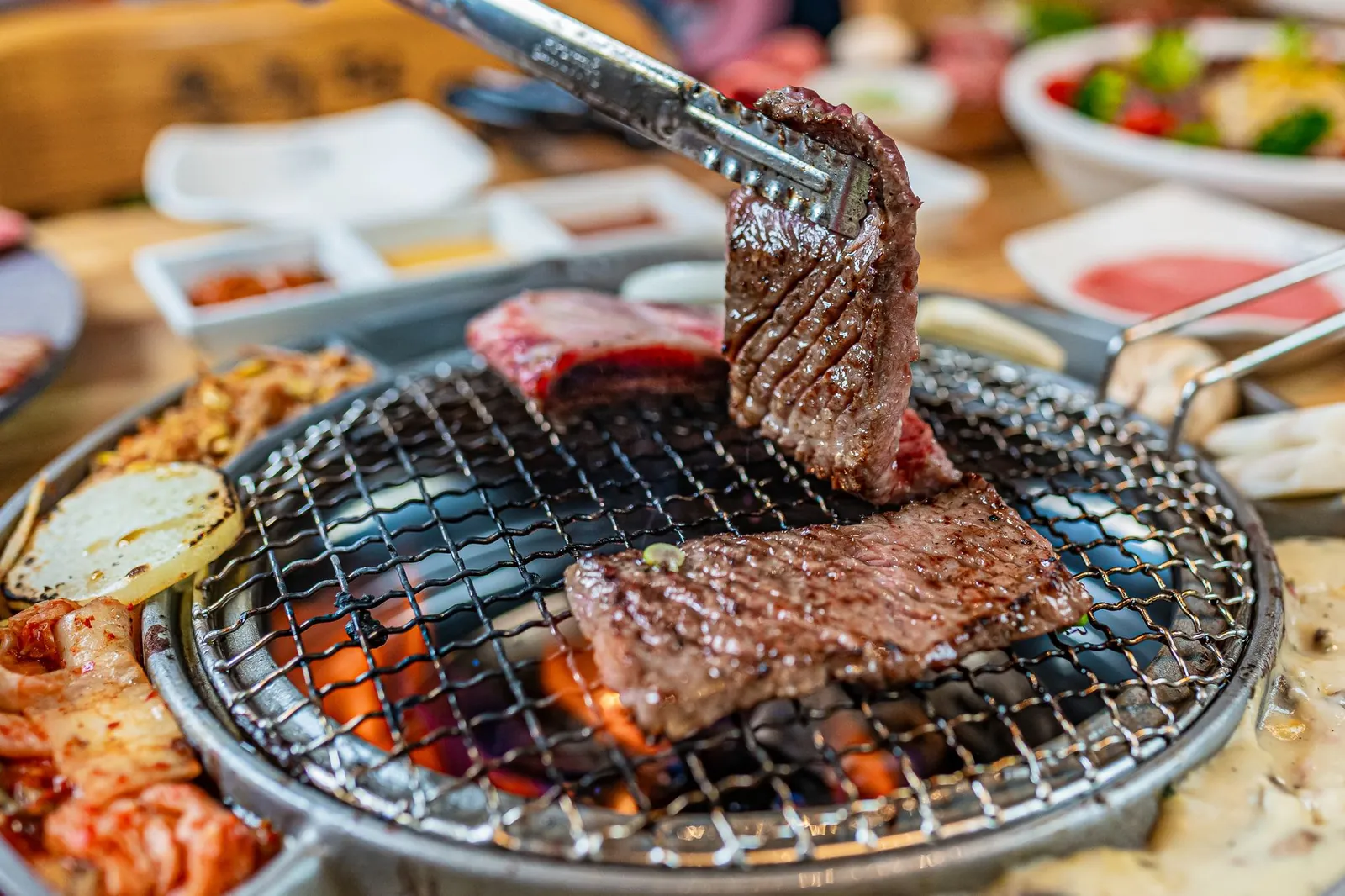
Most BBQ places specialise in either pork or beef. The classics:
| Korean | What it is | Notes |
|---|---|---|
| Samgyeopsal (삼겹살) | Pork belly | The default. Thick slices, crispy edges |
| Moksal (목살) | Pork neck/shoulder | Leaner, meatier |
| Dwaeji galbi (돼지갈비) | Marinated pork ribs | Sweet soy marinade, burns easily |
| So galbi (소갈비) | Beef short rib | The splurge |
| Chadolbaegi (차돌박이) | Thin beef brisket | Cooks in seconds |
Menus are usually priced per portion (1인분), often around 150–200g. Most places ask for a minimum of two portions to start, even for one person — see the solo-diner note below.
Step 2: Let the staff start the grill
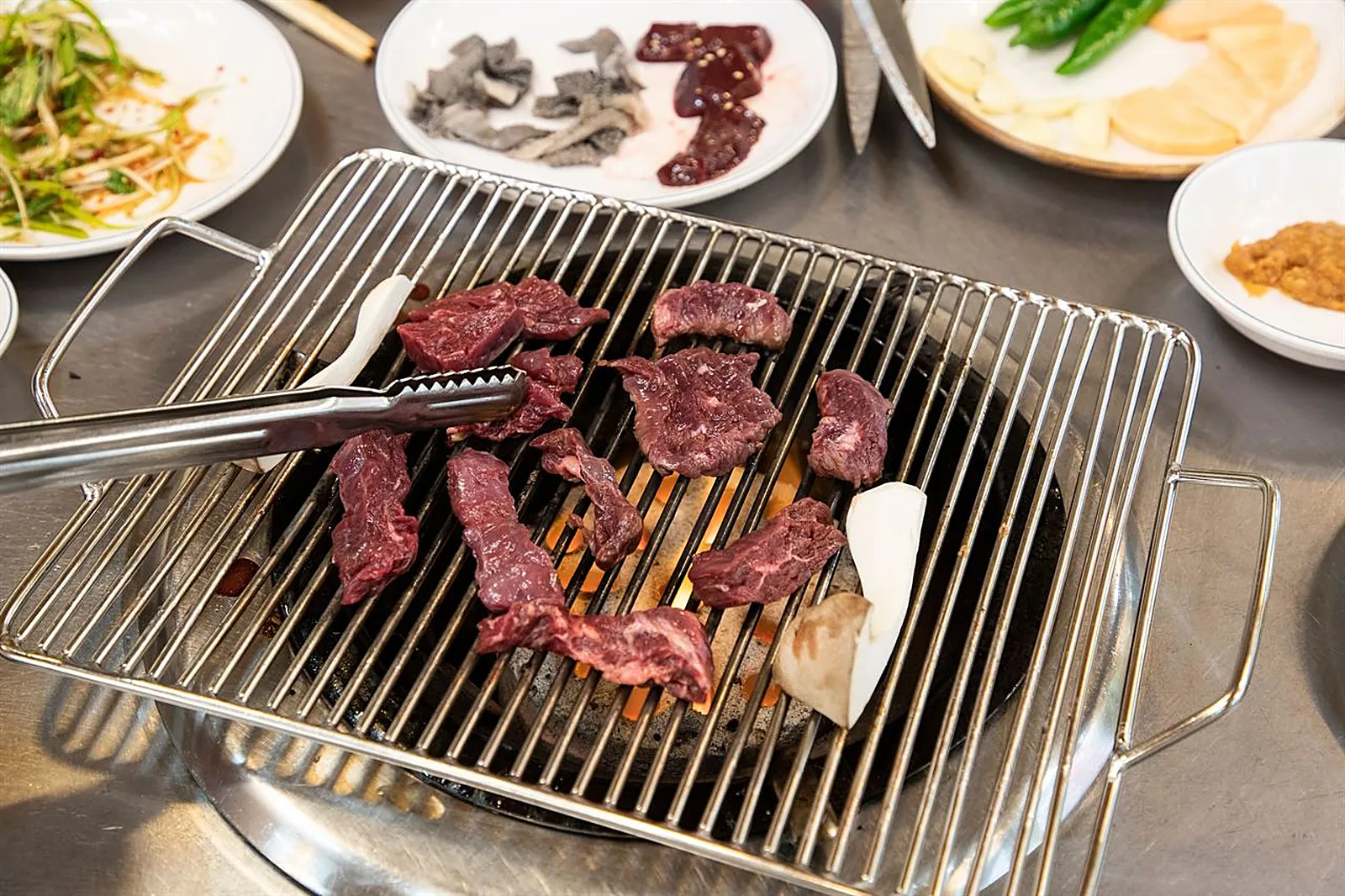
In many restaurants a server will put the first batch of meat on, flip it at the right moment, and cut it for you — especially for thicker cuts and marinated galbi, which burn easily. That's normal service, not an intrusion. Once the first round is done, it's fine to take over the tongs yourself.
Step 3: Use the scissors
There will be a pair of kitchen scissors on the table. They're for cutting cooked meat into bite-sized pieces right on the grill. This is standard at every level of restaurant — long strips are meant to be scissor-cut.
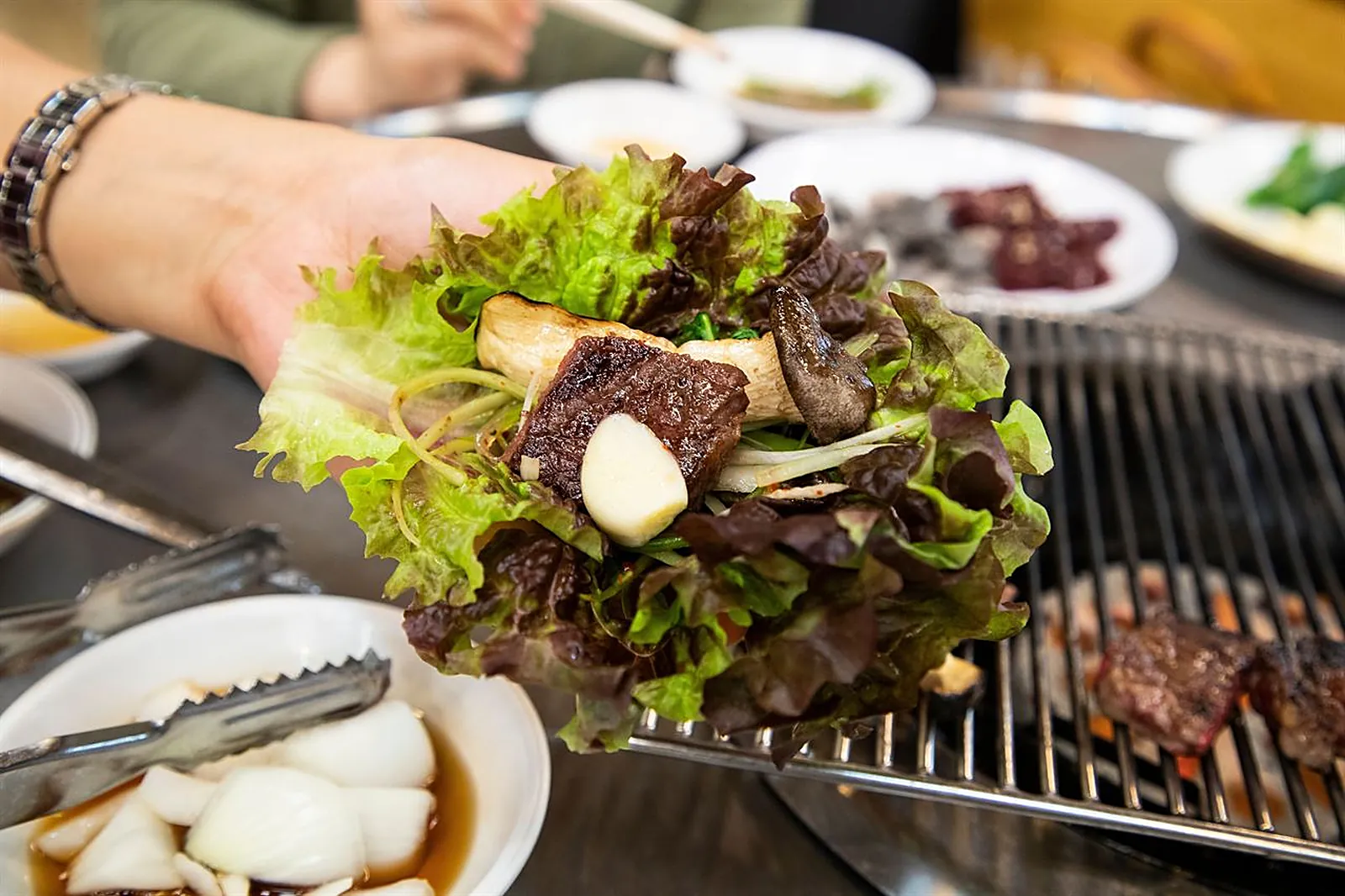
Step 4: Build the perfect wrap (ssam)
- Take a lettuce or perilla leaf in your palm
- Add a piece of meat
- A dab of ssamjang (the thick brown chilli-soybean paste)
- Optional: a slice of grilled or raw garlic, a sliver of green chilli, some rice or kimchi
- Fold it closed and eat it in one bite
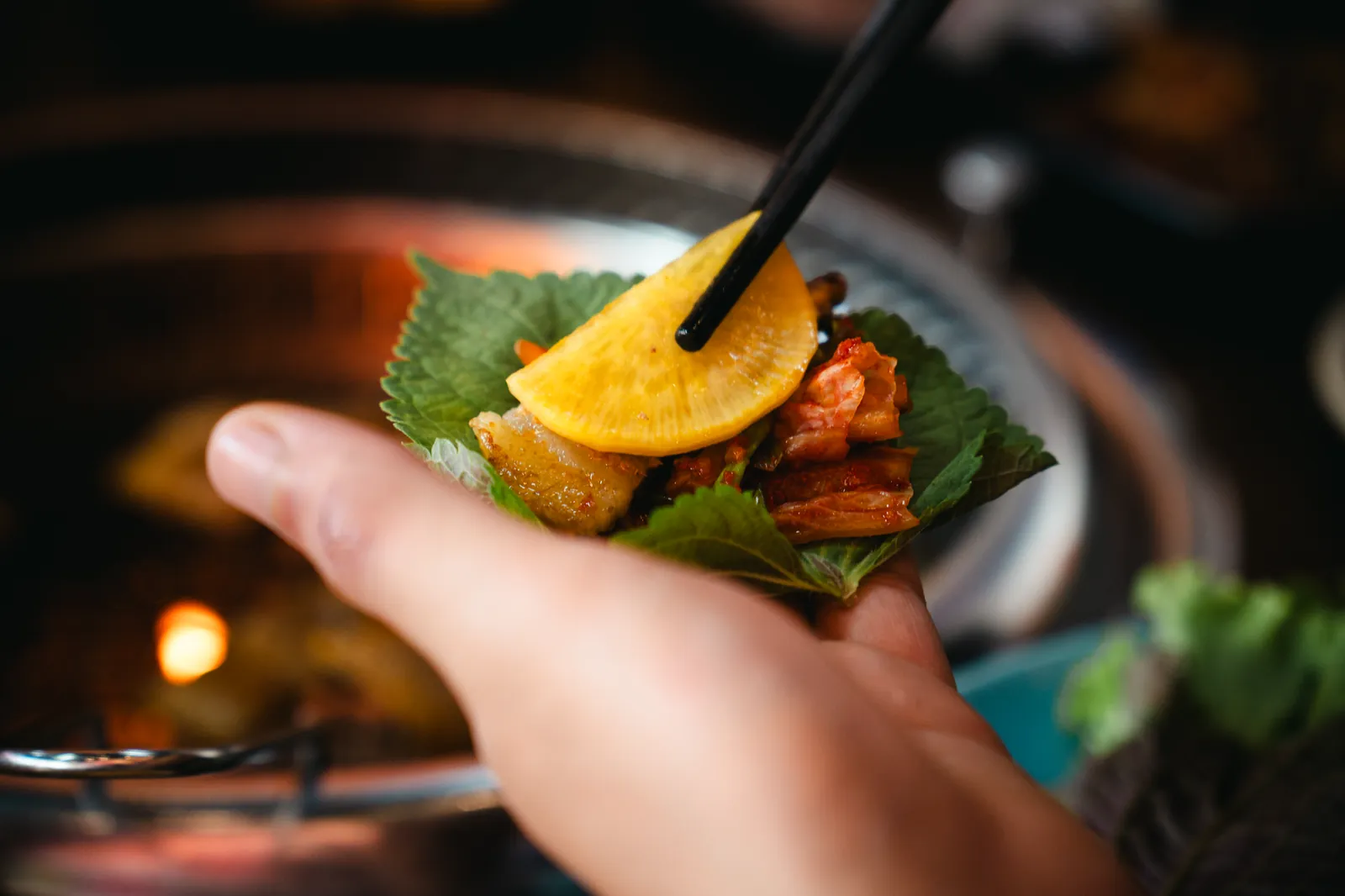
Nibbling a ssam in three bites is the one thing that instantly marks you as a first-timer. If it's too big, make the next one smaller.
Step 5: Side dishes are unlimited
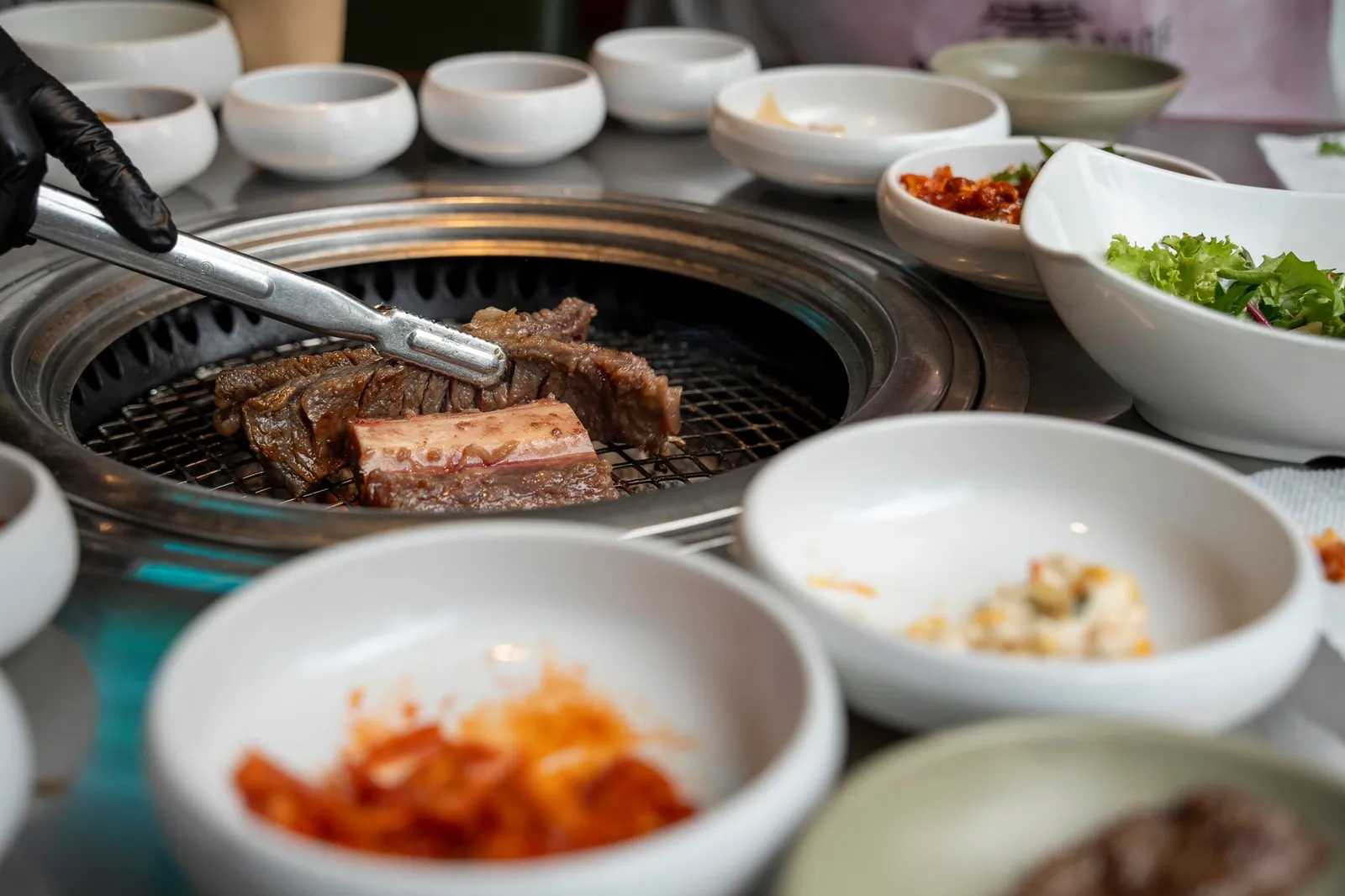
The banchan — kimchi, pickled radish, bean sprouts, salad, steamed egg — are free and refillable at almost every restaurant. Ask for more (or look for a self-serve refill station). Nobody will think it's excessive.
Step 6: Finish like a local
When the meat's done, Koreans rarely just stop. Common finishes:
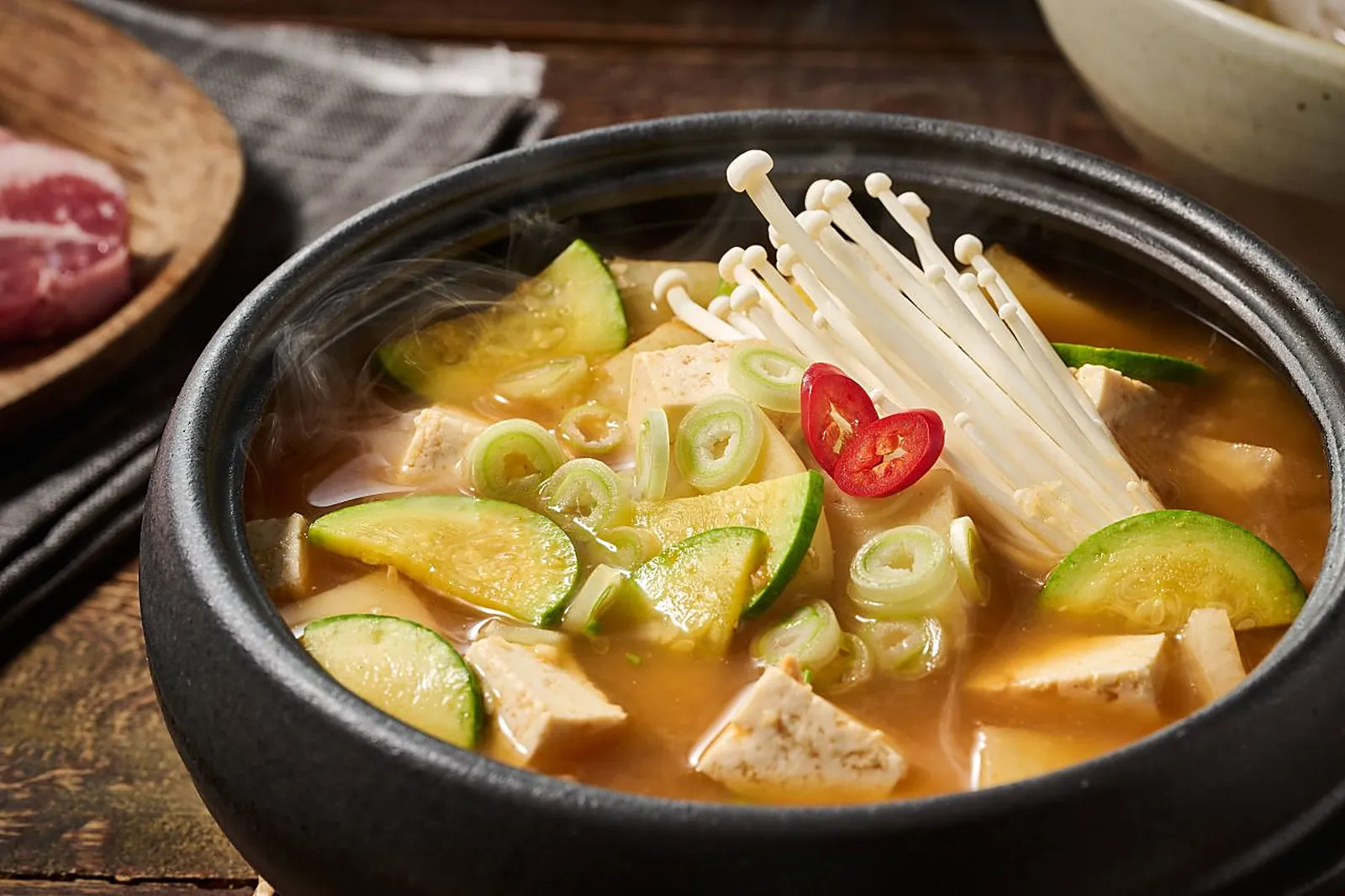
- Doenjang-jjigae — a bubbling soybean-paste stew with rice
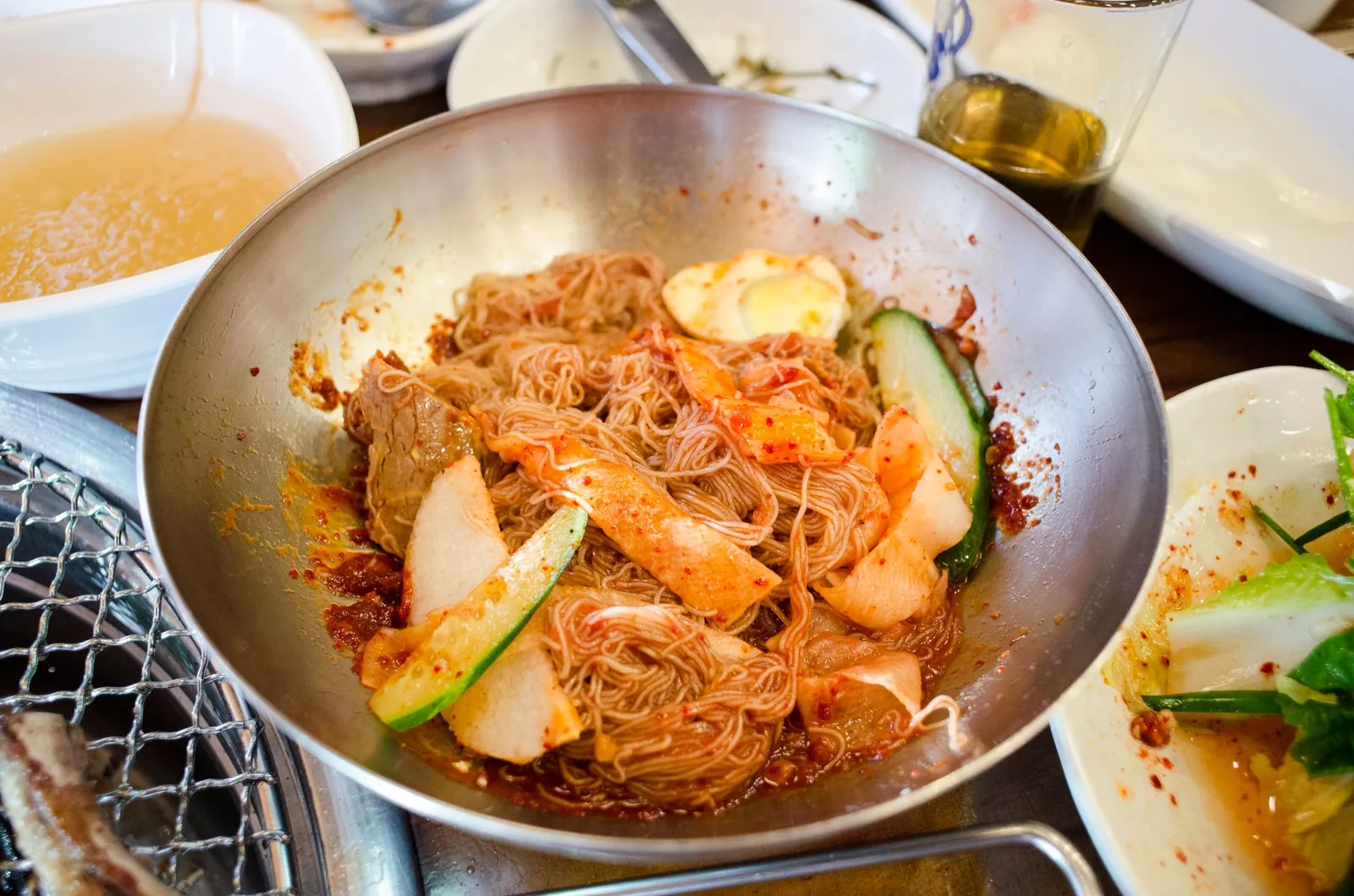
- Naengmyeon — cold buckwheat noodles, perfect after all that grease
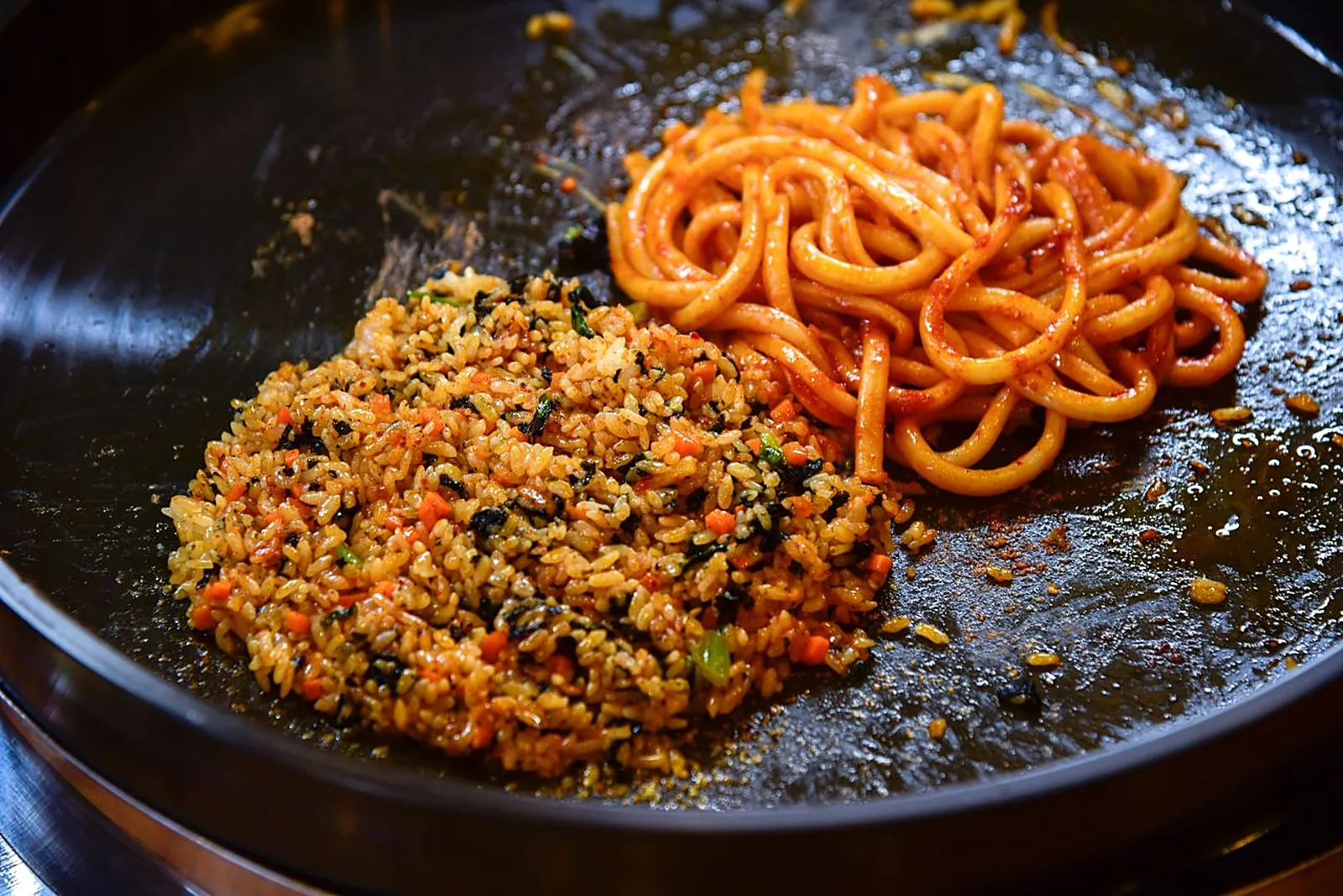
- Bokkeumbap — the staff fry rice right on the grill with the leftover bits
Drinks and table manners
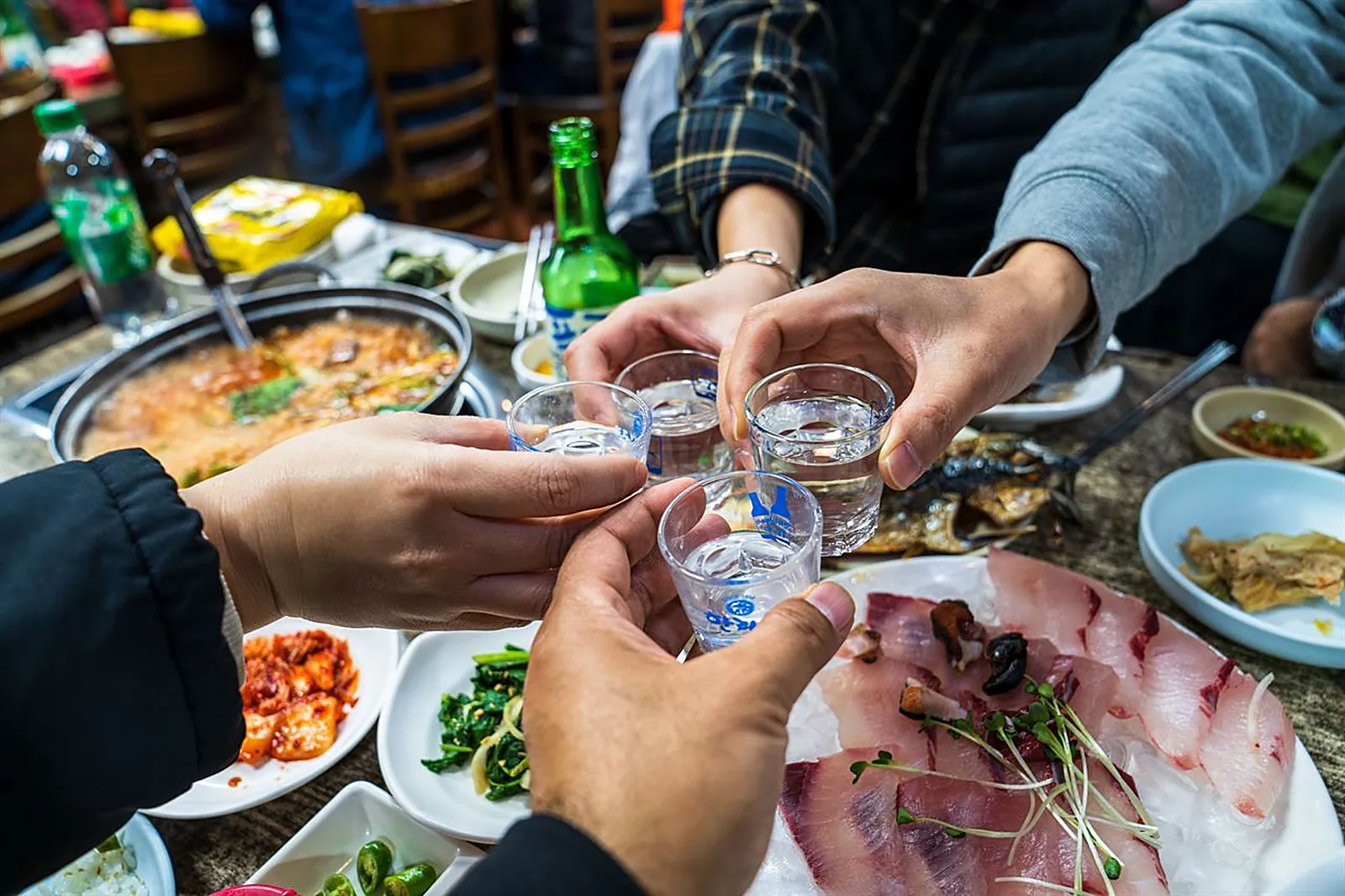
- Soju and beer are the classic pairing; somaek is soju mixed into beer
- Pour for others, not yourself — keep an eye on your friends' glasses
- When someone older pours for you, hold your glass with both hands. When you drink in front of someone much older, turning your head slightly to the side is a traditional courtesy (not expected of foreigners, but appreciated)
Paying
You don't ask for the bill at the table. Take the order slip (or just remember your table number) to the counter by the door when you leave. Splitting the bill ("dutch pay") is fine; say how many ways at the counter.
Eating Korean BBQ solo
With the two-portion minimum, solo diners have three options: order two portions and take your time, look for restaurants advertising 1인 (single-person) sets, or go at lunch when some places sell set meals. Solo dining in Korea is increasingly normal — nobody will stare.
Beyond the basics: cuts to try
Once you've done pork belly, try these:
- Hangjeongsal (항정살) — pork jowl, fatty and crisp at the edges
- Galmaegisal (갈매기살) — pork skirt, lean and chewy with a smoky flavour
- Kkotsal (꽃살) — well-marbled beef, cooked quickly
- Hanwoo (한우) — premium Korean beef. Expensive, and worth it once
- Gopchang (곱창) and makchang (막창) — grilled intestines, a late-night favourite with soju. More adventurous, but very popular
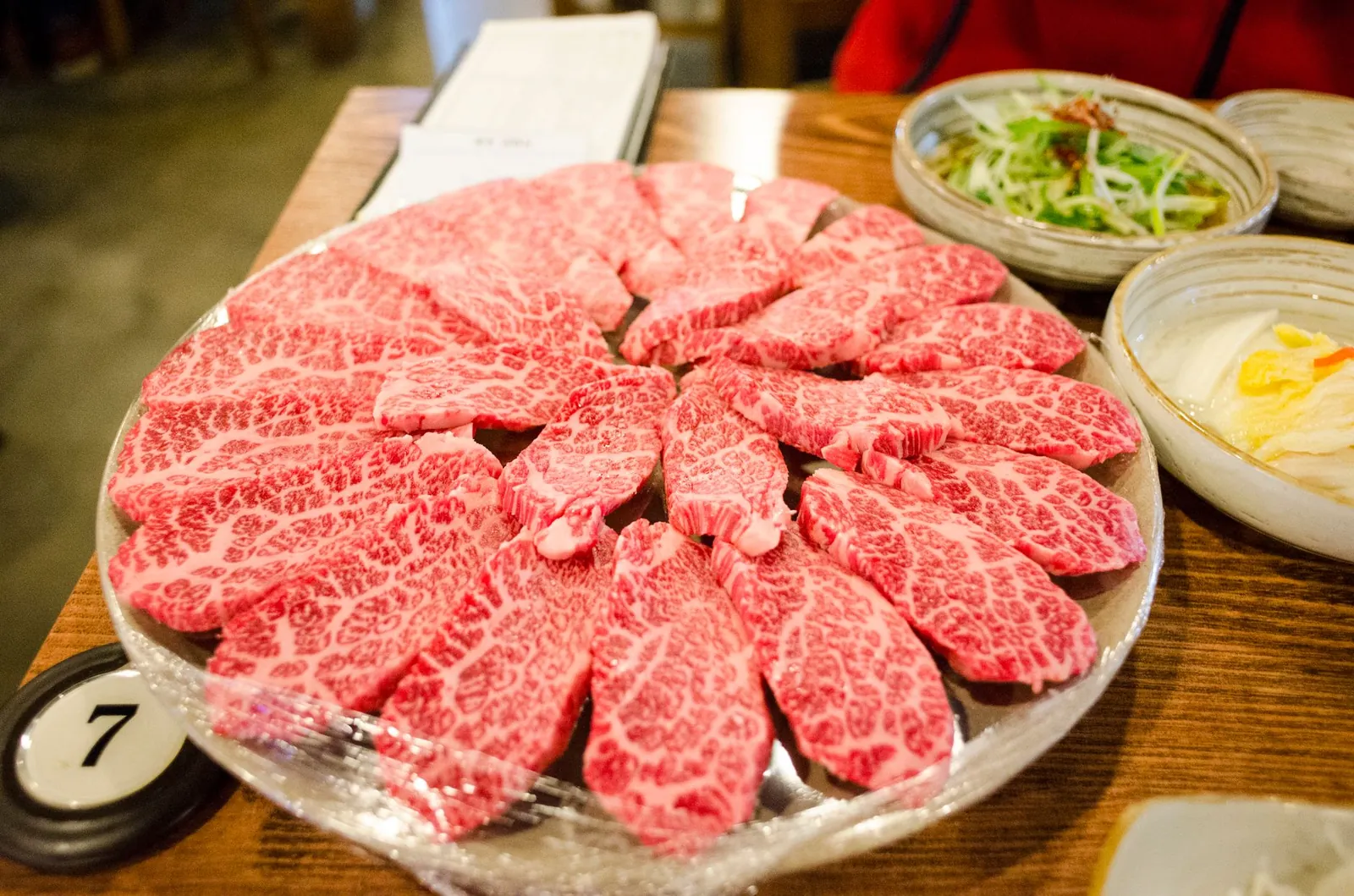
Reading a BBQ menu
A few words cover most menus:
- 1인분 — one portion
- 국내산 — domestic (Korean-raised)
- 수입산 — imported
- 생 — fresh (never frozen)
- 냉동 — frozen, usually cheaper, often served thinly sliced
- 양념 — marinated
- 추가 — extra order
Menus often list meat prices only; rice, stew and noodles are ordered separately at the end.
Charcoal or gas?
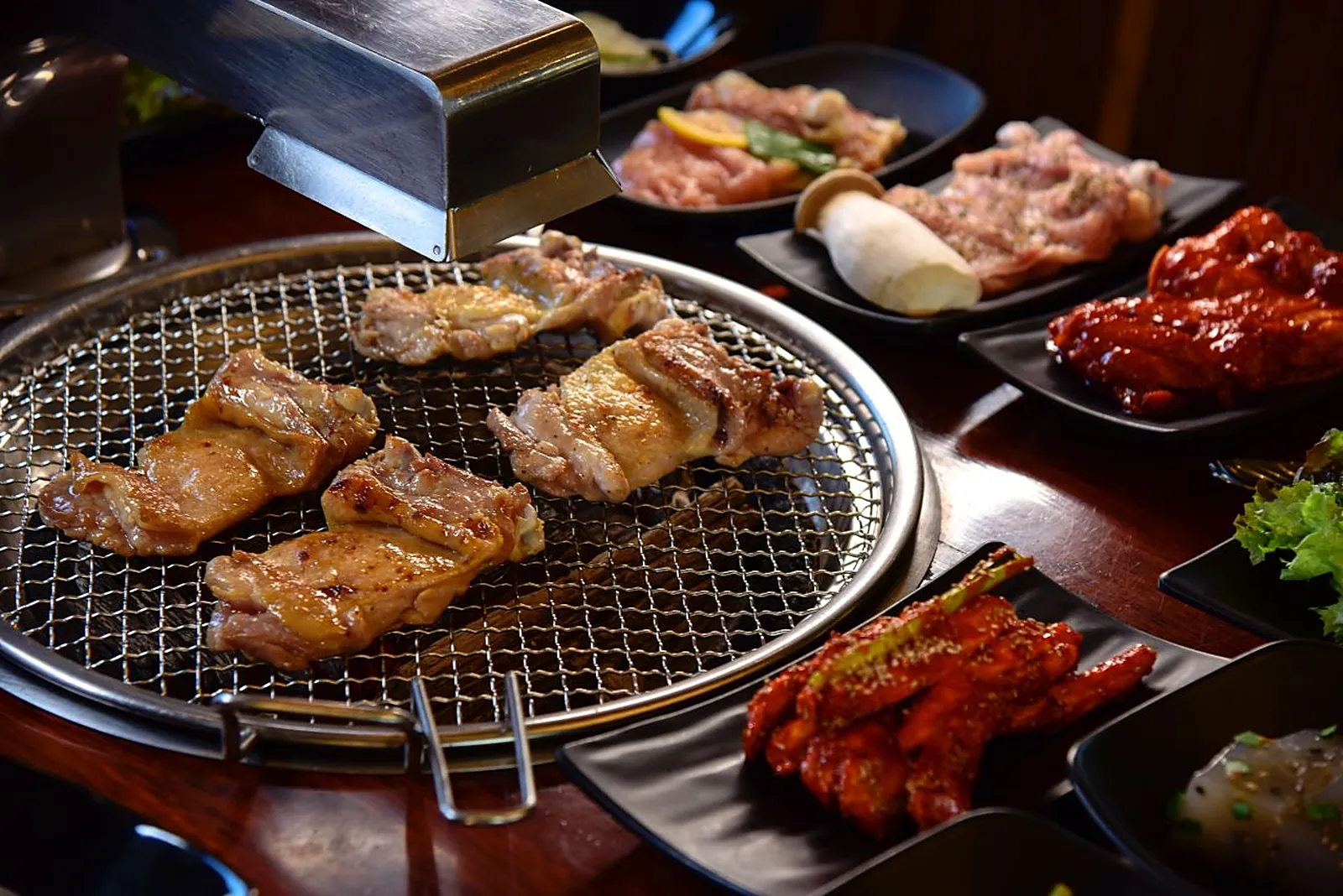
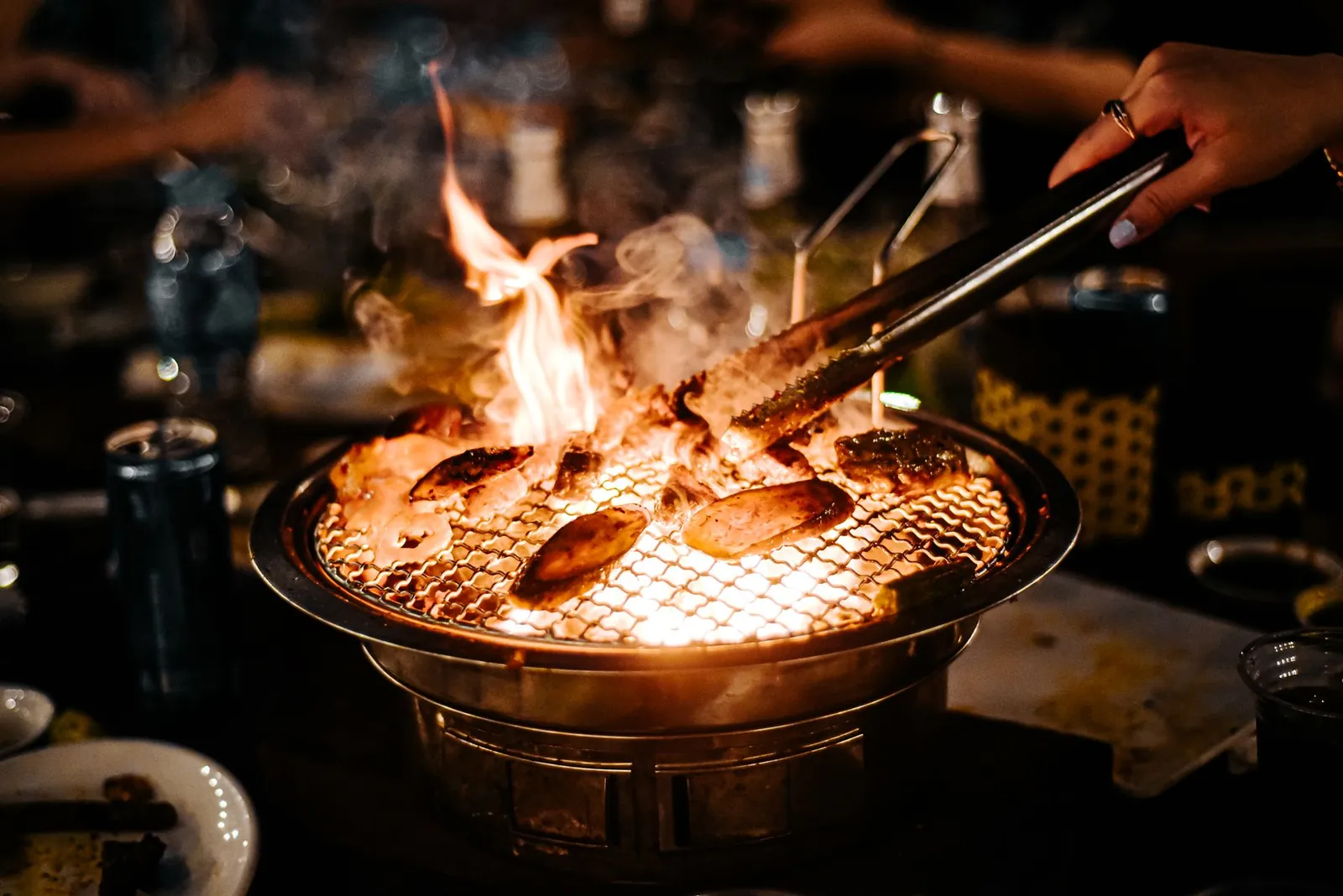
- Charcoal (숯불) gives a smoky flavour and is common for pork and marinated galbi
- Gas or electric grills heat evenly and are common in chain restaurants
- Stone or iron plates are used for thinly sliced cuts and fried rice at the end
None is "better" — it depends on the cut and the restaurant's style.
Where to go
Every neighbourhood has good BBQ, and you don't need to cross the city for it. Busy restaurants with local office workers at dinner are a safe bet. Mapo, Jongno and the streets around university areas have many affordable pork places; Gangnam has more premium beef restaurants.
Frequently asked questions
Is it rude to cook the meat myself?
Not at all. If a server's busy with the first round, let them; after that, grill away.
What do I do with the raw garlic and chillies?
Put them on the grill to soften or eat them raw in your wrap. Both are normal.
Is there anything for vegetarians?
Limited. The banchan are often vegetarian, and some places grill mushrooms or tofu on request, but BBQ is fundamentally a meat meal.
How much should I budget?
It varies a lot. Pork belly places are affordable for a group; premium beef is a genuine splurge. Check menu prices on Naver Map before you go.
Do I tip?
No — Korea doesn't have a tipping culture. Here's why.